Abdominal Aortic Aneurysm: Systematic Review with ☸️SAIMSARA.


saimsara.com Download PDF

Abstract: The aim of this paper is to synthesize current research on abdominal aortic aneurysm (AAA) by systematically extracting and structuring information from a diverse body of scientific literature, identifying key themes, and highlighting clinical and research implications. The review utilises 410 studies with 150739 total participants (naïve ΣN). The prevalence of abdominal aortic aneurysm (AAA) in general and screened populations varies, with a median prevalence of 3.05% and a range from 0.7% to 5.1%. While screening programs demonstrate a mortality benefit, and endovascular repair shows promise for ruptured AAAs, the heterogeneity of study designs and variable follow-up periods limit definitive conclusions. The most significant limitation affecting certainty is the Heterogeneity of Study Designs, which impedes direct comparisons and broad generalizability. A concrete next step is to conduct sex-specific clinical trials to evaluate AAA interventions and therapies in women, addressing current gaps in evidence.

Keywords: Abdominal Aortic Aneurysm; Endovascular Aneurysm Repair; Aneurysm Rupture; Aneurysm Growth; Inflammation; Genetic Factors; Smooth Muscle Cells; Endoleak; Open Surgical Repair; Cardiometabolic Traits

Review Stats
Identification of studies via Semantic Scholar (all fields) Identification Screening Included Records identified:n=98848Records excluded:n=97848 Records assessed for eligibilityn=1000Records excluded:n=590 Studies included in reviewn=410 PRISMA Diagram generated by ☸️ SAIMSARA
⛛OSMA Triangle Effect-of Predictor → Outcome abdominal aortic aneurysm  →  Outcome Beneficial for patients ΣN=0 (0%) Harmful for patients ΣN=139055 (92%) Neutral ΣN=11684 (8%) 0 ⛛OSMA Triangle generated by ☸️SAIMSARA
Show OSMA legend
Outcome-Sentiment Meta-Analysis (OSMA): (LLM-only)
Frame: Effect-of Predictor → Outcome • Source: Semantic Scholar
Outcome: Outcome Typical timepoints: peri/post-op, 30-day. Reported metrics: %, CI, p.
Common endpoints: Common endpoints: mortality, complications, survival.
Predictor: abdominal aortic aneurysm — exposure/predictor. Routes seen: subcutaneous. Typical comparator: no p-t2el. older age, placebo, open repair, open repair in patients with….

  • 1) Beneficial for patients — Outcome with abdominal aortic aneurysm — — — ΣN=0
  • 2) Harmful for patients — Outcome with abdominal aortic aneurysm — [2], [26], [29], [50], [53], [83], [165], [262], [341], [344], [402] — ΣN=139055
  • 3) No clear effect — Outcome with abdominal aortic aneurysm — [1], [3], [4], [5], [6], [7], [8], [9], [10], [11], [12], [13], [14], [15], [16], [17], [18], [19], [20], [21], [22], [23], [24], [25], [27], [28], [30], [31], [32], [33], [34], [35], [36], [37], [38], [39], [40], [41], [42], [43], [44], [45], [46], [47], [48], [49], [51], [52], [54], [55], [56], [57], [58], [59], [60], [61], [62], [63], [64], [65], [66], [67], [68], [69], [70], [71], [72], [73], [74], [75], [76], [77], [78], [79], [80], [81], [82], [84], [85], [86], [87], [88], [89], [90], [91], [92], [93], [94], [95], [96], [97], [98], [99], [100], [101], [102], [103], [104], [105], [106], [107], [108], [109], [110], [111], [112], [113], [114], [115], [116], [117], [118], [119], [120], [121], [122], [123], [124], [125], [126], [127], [128], [129], [130], [131], [132], [133], [134], [135], [136], [137], [138], [139], [140], [141], [142], [143], [144], [145], [146], [147], [148], [149], [150], [151], [152], [153], [154], [155], [156], [157], [158], [159], [160], [161], [162], [163], [164], [166], [167], [168], [169], [170], [171], [172], [173], [174], [175], [176], [177], [178], [179], [180], [181], [182], [183], [184], [185], [186], [187], [188], [189], [190], [191], [192], [193], [194], [195], [196], [197], [198], [199], [200], [201], [202], [203], [204], [205], [206], [207], [208], [209], [210], [211], [212], [213], [214], [215], [216], [217], [218], [219], [220], [221], [222], [223], [224], [225], [226], [227], [228], [229], [230], [231], [232], [233], [234], [235], [236], [237], [238], [239], [240], [241], [242], [243], [244], [245], [246], [247], [248], [249], [250], [251], [252], [253], [254], [255], [256], [257], [258], [259], [260], [261], [263], [264], [265], [266], [267], [268], [269], [270], [271], [272], [273], [274], [275], [276], [277], [278], [279], [280], [281], [282], [283], [284], [285], [286], [287], [288], [289], [290], [291], [292], [293], [294], [295], [296], [297], [298], [299], [300], [301], [302], [303], [304], [305], [306], [307], [308], [309], [310], [311], [312], [313], [314], [315], [316], [317], [318], [319], [320], [321], [322], [323], [324], [325], [326], [327], [328], [329], [330], [331], [332], [333], [334], [335], [336], [337], [338], [339], [340], [342], [343], [345], [346], [347], [348], [349], [350], [351], [352], [353], [354], [355], [356], [357], [358], [359], [360], [361], [362], [363], [364], [365], [366], [367], [368], [369], [370], [371], [372], [373], [374], [375], [376], [377], [378], [379], [380], [381], [382], [383], [384], [385], [386], [387], [388], [389], [390], [391], [392], [393], [394], [395], [396], [397], [398], [399], [400], [401], [403], [404], [405], [406], [407], [408], [409], [410] — ΣN=11684
1) Introduction
Abdominal aortic aneurysm (AAA) is a localized dilatation of the abdominal aorta, characterized by progressive weakening and expansion of the arterial wall. Its rupture is a life-threatening event, necessitating a comprehensive understanding of its pathophysiology, risk factors, diagnosis, and management strategies. Research into AAA spans from elucidating complex molecular mechanisms and genetic predispositions to evaluating the efficacy and cost-effectiveness of various screening and therapeutic interventions.

2) Aim
The aim of this paper is to synthesize current research on abdominal aortic aneurysm (AAA) by systematically extracting and structuring information from a diverse body of scientific literature, identifying key themes, and highlighting clinical and research implications.

3) Methods
Systematic review with multilayer AI research agent: keyword normalization, retrieval & structuring, and paper synthesis (see SAIMSARA About section for details).


4) Results
4.1 Study characteristics
The reviewed literature comprises a wide array of study designs, including numerous randomized controlled trials (RCTs) evaluating screening programs and surgical interventions, alongside cohort studies, case-control studies, and mixed-design investigations exploring pathophysiology, risk factors, and outcomes. Many studies employed murine models to investigate molecular mechanisms and potential therapeutic targets, while others focused on human populations ranging from specific patient cohorts (e.g., those undergoing endovascular repair) to large population-based screenings. Follow-up periods varied significantly, from short-term (e.g., 30 days) to long-term (e.g., up to 14 years for surgical outcomes or 15 years for screening efficacy).

4.2 Main numerical result aligned to the query
The prevalence of abdominal aortic aneurysm (AAA) in general and screened populations varies, with a median prevalence of 3.05% and a range from 0.7% to 5.1% [29, 341]. Specifically, one study reported a prevalence of 5.1% in men aged 65-74 years with an aortic diameter ≥30 mm [29], while another found an overall prevalence of 2.1% in a total population, with 4.0% in men and 0.7% in women [341].

4.3 Topic synthesis


5) Discussion
5.1 Principal finding
The prevalence of abdominal aortic aneurysm (AAA) in general and screened populations varies, with a median prevalence of 3.05% and a range from 0.7% to 5.1% [29, 341].

5.2 Clinical implications


5.3 Research implications / key gaps


5.4 Limitations


5.5 Future directions


6) Conclusion
The prevalence of abdominal aortic aneurysm (AAA) in general and screened populations varies, with a median prevalence of 3.05% and a range from 0.7% to 5.1% [29, 341]. While screening programs demonstrate a mortality benefit, and endovascular repair shows promise for ruptured AAAs, the heterogeneity of study designs and variable follow-up periods limit definitive conclusions. The most significant limitation affecting certainty is the Heterogeneity of Study Designs, which impedes direct comparisons and broad generalizability. A concrete next step is to conduct sex-specific clinical trials to evaluate AAA interventions and therapies in women, addressing current gaps in evidence.

References
SAIMSARA Session Index — session.json

Figure 1. Publication-year distribution of included originals

Figure 2. Study-design distribution of included originals
Figure 2. Study-design distribution

Figure 3. Study-type (directionality) distribution of included originals
Figure 3. Directionality distribution

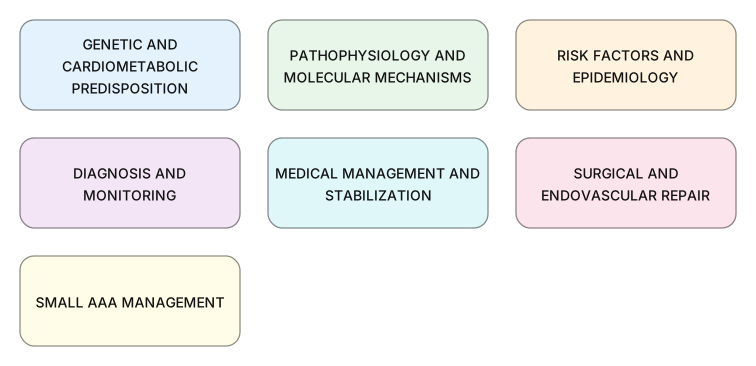
Figure 4. Main extracted research topics
Figure 4. Main extracted research topics (Results)

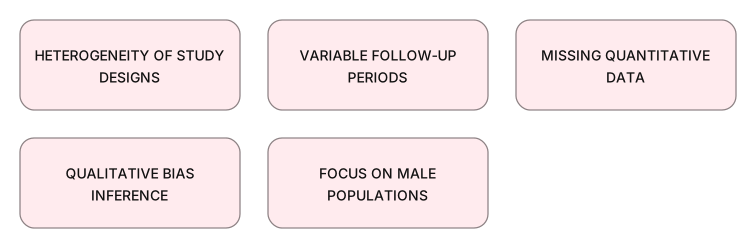
Figure 5. Limitations of current studies (topics)

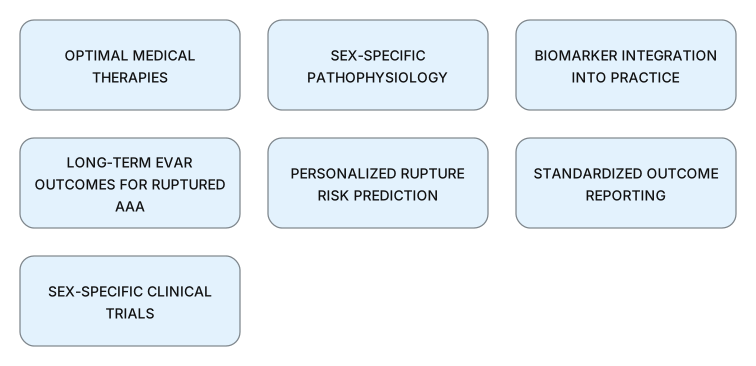
Figure 6. Future research directions (topics)