Abdominal Aortic Aneurysm and CT: Systematic Review with ☸️SAIMSARA.


saimsara.com Download PDF

Abstract: The study aims to systematically review the role of computed tomography in the diagnosis, assessment, monitoring, and management of abdominal aortic aneurysms, synthesizing key findings and identifying emerging research directions. The review utilises 260 studies with 42115 total participants (naïve ΣN). Artificial intelligence for opportunistic screening of abdominal aortic aneurysms in CT scans demonstrated a median diagnostic accuracy of 87.83%, with a range from 85.6% to 95.3%. This high accuracy suggests a promising role for automated CT analysis in improving early AAA detection in diverse clinical settings. However, the methodological heterogeneity across studies, particularly in CT acquisition and measurement protocols, remains a significant limitation affecting the certainty and generalizability of findings. A concrete next step for clinicians is to explore the integration of AI-powered opportunistic screening tools into routine CT workflows to enhance early detection and patient care.

Keywords: Abdominal Aortic Aneurysm; Computed Tomography; CT Angiography; Deep Learning; Image Segmentation; Aneurysm Rupture; Aneurysm Progression; Radiomics Analysis; Body Composition; EVAR Surveillance

Review Stats
Identification of studies via Semantic Scholar (all fields) Identification Screening Included Records identified:n=4162Records excluded:n=3162 Records assessed for eligibilityn=1000Records excluded:n=740 Studies included in reviewn=260 PRISMA Diagram generated by ☸️ SAIMSARA
⛛OSMA Triangle Effect-of Predictor → Outcome CT  →  abdominal aortic aneurysm Beneficial for patients ΣN=0 (0%) Harmful for patients ΣN=77 (0%) Neutral ΣN=42038 (100%) 0 ⛛OSMA Triangle generated by ☸️SAIMSARA
Show OSMA legend
Outcome-Sentiment Meta-Analysis (OSMA): (LLM-only)
Frame: Effect-of Predictor → Outcome • Source: Semantic Scholar
Outcome: abdominal aortic aneurysm Typical timepoints: 3-day, peri/post-op. Reported metrics: %, CI, p.
Common endpoints: Common endpoints: complications, mortality, survival.
Predictor: CT — procedure/intervention. Routes seen: intravenous. Typical comparator: multiplanar reformation, clinical factors and, saline controls, physician-controlled manual….

  • 1) Beneficial for patients — abdominal aortic aneurysm with CT — — — ΣN=0
  • 2) Harmful for patients — abdominal aortic aneurysm with CT — [98] — ΣN=77
  • 3) No clear effect — abdominal aortic aneurysm with CT — [1], [2], [3], [4], [5], [6], [7], [8], [9], [10], [11], [12], [13], [14], [15], [16], [17], [18], [19], [20], [21], [22], [23], [24], [25], [26], [27], [28], [29], [30], [31], [32], [33], [34], [35], [36], [37], [38], [39], [40], [41], [42], [43], [44], [45], [46], [47], [48], [49], [50], [51], [52], [53], [54], [55], [56], [57], [58], [59], [60], [61], [62], [63], [64], [65], [66], [67], [68], [69], [70], [71], [72], [73], [74], [75], [76], [77], [78], [79], [80], [81], [82], [83], [84], [85], [86], [87], [88], [89], [90], [91], [92], [93], [94], [95], [96], [97], [99], [100], [101], [102], [103], [104], [105], [106], [107], [108], [109], [110], [111], [112], [113], [114], [115], [116], [117], [118], [119], [120], [121], [122], [123], [124], [125], [126], [127], [128], [129], [130], [131], [132], [133], [134], [135], [136], [137], [138], [139], [140], [141], [142], [143], [144], [145], [146], [147], [148], [149], [150], [151], [152], [153], [154], [155], [156], [157], [158], [159], [160], [161], [162], [163], [164], [165], [166], [167], [168], [169], [170], [171], [172], [173], [174], [175], [176], [177], [178], [179], [180], [181], [182], [183], [184], [185], [186], [187], [188], [189], [190], [191], [192], [193], [194], [195], [196], [197], [198], [199], [200], [201], [202], [203], [204], [205], [206], [207], [208], [209], [210], [211], [212], [213], [214], [215], [216], [217], [218], [219], [220], [221], [222], [223], [224], [225], [226], [227], [228], [229], [230], [231], [232], [233], [234], [235], [236], [237], [238], [239], [240], [241], [242], [243], [244], [245], [246], [247], [248], [249], [250], [251], [252], [253], [254], [255], [256], [257], [258], [259], [260] — ΣN=42038
1) Introduction
Abdominal aortic aneurysm (AAA) represents a critical vascular pathology characterized by localized dilatation of the abdominal aorta. Computed tomography (CT) imaging has emerged as an indispensable tool in the comprehensive management of AAA, spanning from initial detection and diagnostic assessment to pre-operative planning, monitoring of disease progression, and post-intervention surveillance. This paper synthesizes current research on the multifaceted applications of CT in the context of AAA, highlighting advancements in imaging techniques, computational analysis, and artificial intelligence (AI) integration.

2) Aim
The study aims to systematically review the role of computed tomography in the diagnosis, assessment, monitoring, and management of abdominal aortic aneurysms, synthesizing key findings and identifying emerging research directions.

3) Methods
Systematic review with multilayer AI research agent: keyword normalization, retrieval & structuring, and paper synthesis (see SAIMSARA About section for details).


4) Results
4.1 Study characteristics
The structured extraction summarized 260 studies, predominantly mixed designs and cohort studies, with some randomized controlled trials (RCTs) and case reports. Populations varied from patients undergoing elective AAA intervention to those with small or ruptured AAAs, as well as mouse models and phantom studies. Follow-up periods, when specified, ranged from 12 months to 3.3 years.

4.2 Main numerical result aligned to the query
Artificial intelligence (AI) for opportunistic screening of abdominal aortic aneurysms in CT scans demonstrated a median accuracy of 87.83% [5, 7, 70, 207], with a range from 85.6% to 95.3% [5, 7]. Specifically, one systematic review reported a mean sensitivity of 95% (95% CI 100–87%), mean specificity of 96.6% (95% CI 100–75.7%), and mean accuracy of 95.2% (95% CI 100–54.5%) for AI-based opportunistic screening [5].

4.3 Topic synthesis


5) Discussion
5.1 Principal finding
The integration of artificial intelligence into computed tomography protocols for opportunistic screening of abdominal aortic aneurysms demonstrates a median diagnostic accuracy of 87.83% [5, 7, 70, 207], indicating a high potential for automated and efficient detection.

5.2 Clinical implications


5.3 Research implications / key gaps


5.4 Limitations


5.5 Future directions


6) Conclusion
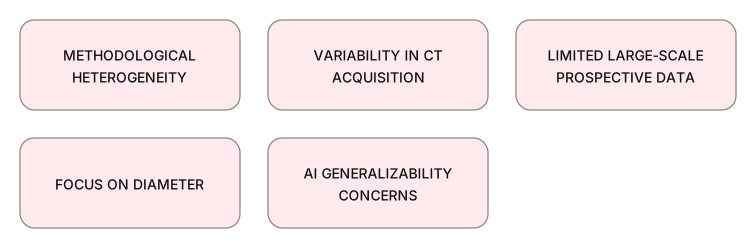
Artificial intelligence for opportunistic screening of abdominal aortic aneurysms in CT scans demonstrated a median diagnostic accuracy of 87.83% [5, 7, 70, 207], with a range from 85.6% to 95.3% [5, 7]. This high accuracy suggests a promising role for automated CT analysis in improving early AAA detection in diverse clinical settings. However, the methodological heterogeneity across studies, particularly in CT acquisition and measurement protocols, remains a significant limitation affecting the certainty and generalizability of findings. A concrete next step for clinicians is to explore the integration of AI-powered opportunistic screening tools into routine CT workflows to enhance early detection and patient care.

References
SAIMSARA Session Index — session.json

Figure 1. Publication-year distribution of included originals

Figure 2. Study-design distribution of included originals
Figure 2. Study-design distribution

Figure 3. Study-type (directionality) distribution of included originals
Figure 3. Directionality distribution

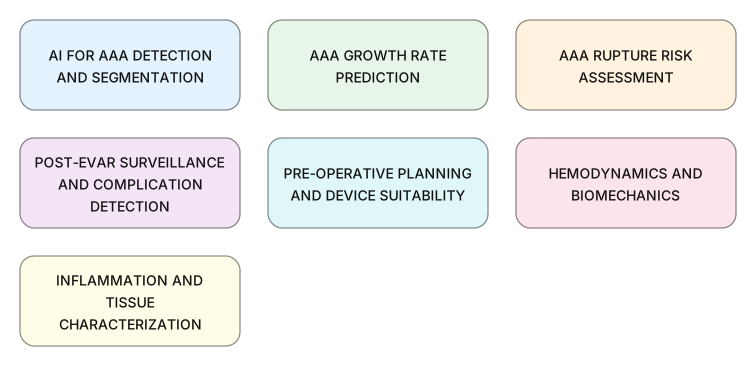
Figure 4. Main extracted research topics
Figure 4. Main extracted research topics (Results)

Figure 5. Limitations of current studies (topics)

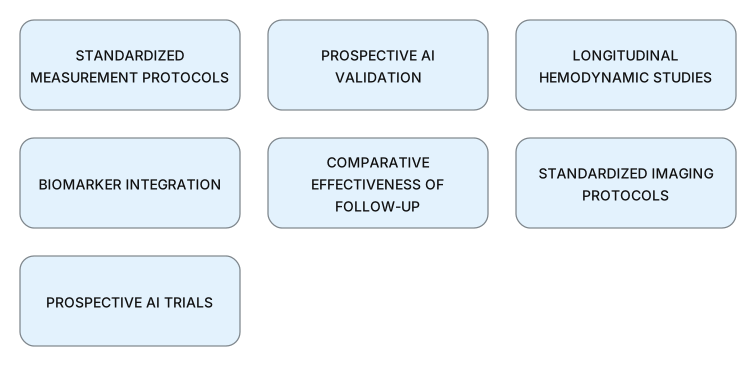
Figure 6. Future research directions (topics)