Abdominal Aortic Aneurysm and Gender: Systematic Review with ☸️SAIMSARA.


saimsara.com Download PDF

Abstract: This paper aims to systematically review and synthesize the current evidence on gender differences in the epidemiology, pathophysiology, clinical presentation, and outcomes of abdominal aortic aneurysm, identifying key research trends and implications for clinical practice. The review utilises 281 studies with 2287059 total participants (naïve ΣN). The pooled prevalence of abdominal aortic aneurysms (AAAs) in the general population showed a significant gender difference, with a median male prevalence of 5.16% (range 3.9–9.5%) compared to a median female prevalence of 1.6% (range 1.23–2.9%). While AAA is more prevalent in men, women often experience worse clinical outcomes, including higher mortality rates and reduced long-term survival after repair. The generalizability of some findings is limited by the retrospective nature and male predominance in many studies. A critical next step is to update national and international AAA guidelines to incorporate gender-specific recommendations for screening and management, ensuring equitable care for all patients.

Keywords: Abdominal aortic aneurysm; Gender differences; AAA rupture; Mortality; Endovascular repair; Open repair; Survival outcomes; Aortic anatomy; Screening practices; Pathophysiology

Review Stats
Identification of studies via Semantic Scholar (all fields) Identification Screening Included Records identified:n=979Records excluded:n=0 Records assessed for eligibilityn=979Records excluded:n=698 Studies included in reviewn=281 PRISMA Diagram generated by ☸️ SAIMSARA
⛛OSMA Triangle Effect-of Predictor → Outcome gender  →  abdominal aortic aneurysm Beneficial for patients ΣN=200096 (9%) Harmful for patients ΣN=123765 (5%) Neutral ΣN=1963198 (86%) 0 ⛛OSMA Triangle generated by ☸️SAIMSARA
Show OSMA legend
Outcome-Sentiment Meta-Analysis (OSMA): (LLM-only)
Frame: Effect-of Predictor → Outcome • Source: Semantic Scholar
Outcome: abdominal aortic aneurysm Typical timepoints: peri/post-op, 30-day. Reported metrics: %, CI, p.
Common endpoints: Common endpoints: mortality, survival, complications.
Predictor: gender — exposure/predictor. Doses/units seen: 100 ml. Routes seen: topical. Typical comparator: men, patients without aaa, aortic diameter in predicting, women….

  • 1) Beneficial for patients — abdominal aortic aneurysm with gender — [15], [112], [156] — ΣN=200096
  • 2) Harmful for patients — abdominal aortic aneurysm with gender — [1], [7], [9], [12], [50], [66], [68], [84], [92], [123], [154], [234], [237], [239], [240], [249], [251], [252], [253], [255], [257], [258], [260], [261], [265], [267] — ΣN=123765
  • 3) No clear effect — abdominal aortic aneurysm with gender — [2], [3], [4], [5], [6], [8], [10], [11], [13], [14], [16], [17], [18], [19], [20], [21], [22], [23], [24], [25], [26], [27], [28], [29], [30], [31], [32], [33], [34], [35], [36], [37], [38], [39], [40], [41], [42], [43], [44], [45], [46], [47], [48], [49], [51], [52], [53], [54], [55], [56], [57], [58], [59], [60], [61], [62], [63], [64], [65], [67], [69], [70], [71], [72], [73], [74], [75], [76], [77], [78], [79], [80], [81], [82], [83], [85], [86], [87], [88], [89], [90], [91], [93], [94], [95], [96], [97], [98], [99], [100], [101], [102], [103], [104], [105], [106], [107], [108], [109], [110], [111], [113], [114], [115], [116], [117], [118], [119], [120], [121], [122], [124], [125], [126], [127], [128], [129], [130], [131], [132], [133], [134], [135], [136], [137], [138], [139], [140], [141], [142], [143], [144], [145], [146], [147], [148], [149], [150], [151], [152], [153], [155], [157], [158], [159], [160], [161], [162], [163], [164], [165], [166], [167], [168], [169], [170], [171], [172], [173], [174], [175], [176], [177], [178], [179], [180], [181], [182], [183], [184], [185], [186], [187], [188], [189], [190], [191], [192], [193], [194], [195], [196], [197], [198], [199], [200], [201], [202], [203], [204], [205], [206], [207], [208], [209], [210], [211], [212], [213], [214], [215], [216], [217], [218], [219], [220], [221], [222], [223], [224], [225], [226], [227], [228], [229], [230], [231], [232], [233], [235], [236], [238], [241], [242], [243], [244], [245], [246], [247], [248], [250], [254], [256], [259], [262], [263], [264], [266], [268], [269], [270], [271], [272], [273], [274], [275], [276], [277], [278], [279], [280], [281] — ΣN=1963198
1) Introduction
Abdominal aortic aneurysm (AAA) is a significant cardiovascular pathology characterized by a localized dilatation of the abdominal aorta. While traditionally considered a disease predominantly affecting men, a growing body of research highlights critical gender-based differences in its prevalence, pathophysiology, anatomical presentation, clinical course, and treatment outcomes. These disparities underscore the necessity for gender-specific approaches in screening, diagnosis, and management strategies. This paper synthesizes current findings on the intricate relationship between abdominal aortic aneurysm and gender, drawing from a comprehensive structured extraction summary of recent academic literature.

2) Aim
This paper aims to systematically review and synthesize the current evidence on gender differences in the epidemiology, pathophysiology, clinical presentation, and outcomes of abdominal aortic aneurysm, identifying key research trends and implications for clinical practice.

3) Methods
Systematic review with multilayer AI research agent: keyword normalization, retrieval & structuring, and paper synthesis (see SAIMSARA About section for details).


4) Results
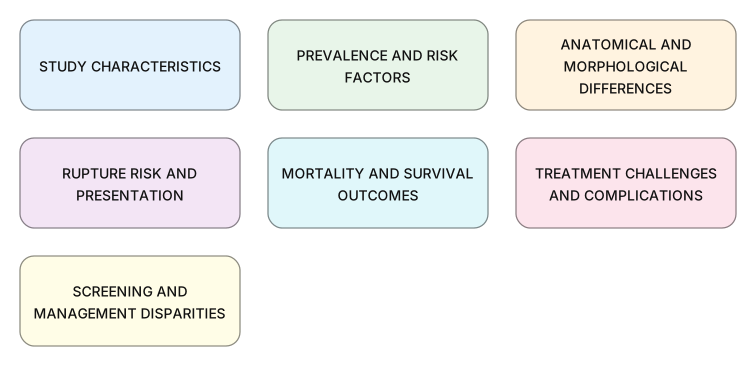
4.1 Study characteristics: The included studies primarily comprised retrospective cohort analyses, mixed-design studies, and cross-sectional investigations, with some prospective cohorts and experimental animal models. Populations ranged from large national databases and screening programs to smaller cohorts of patients undergoing specific surgical repairs, dialysis patients, and animal models. Follow-up periods varied widely, from immediate perioperative outcomes to long-term surveillance extending up to 24 years.

4.2 Main numerical result aligned to the query:
The pooled prevalence of abdominal aortic aneurysms (AAAs) in the general population showed a significant gender difference, with a median male prevalence of 5.16% (range 3.9–9.5%) [40, 112, 245, 267] compared to a median female prevalence of 1.6% (range 1.23–2.9%) [40, 112, 245]. Among patients diagnosed with AAA, males consistently comprised the majority, with a median of 83% (range 66.7–92%) [7, 46, 76, 83, 106, 178, 217, 238, 244, 253, 257]. While perioperative mortality for open AAA repair was similar between men (5.7%) and women (6.5%) in one large cohort [1], long-term survival after 9 years was significantly better in men (55.0%) than in women (43.8%) (P = .006) [1].

4.3 Topic synthesis:


5) Discussion
5.1 Principal finding: This review highlights that while the pooled prevalence of abdominal aortic aneurysms is significantly higher in males (median 5.16%, range 3.9–9.5%) compared to females (median 1.6%, range 1.23–2.9%) [40, 112, 245, 267], women with AAA often face worse clinical outcomes, including higher mortality rates after both ruptured and elective repairs, and reduced long-term survival compared to men [1, 7, 9, 12, 123].

5.2 Clinical implications:


5.3 Research implications / key gaps:


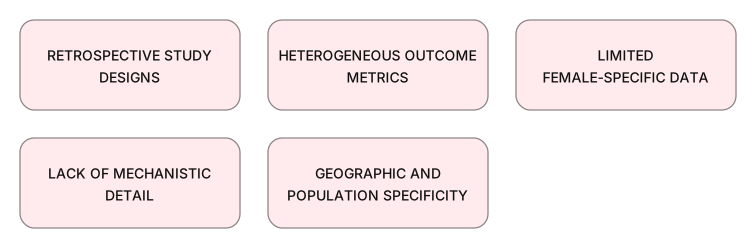
5.4 Limitations:


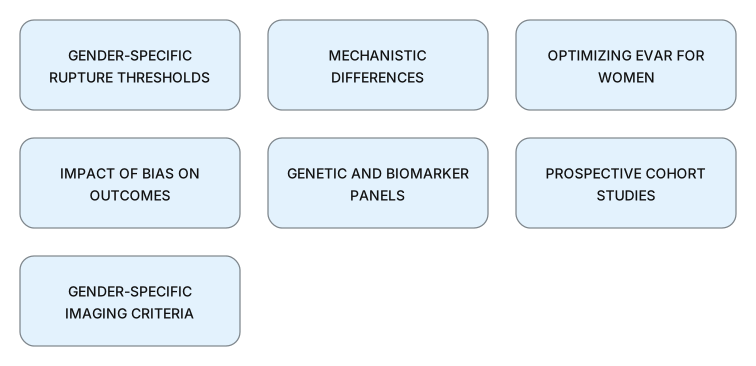
5.5 Future directions:


6) Conclusion
The pooled prevalence of abdominal aortic aneurysms (AAAs) in the general population showed a significant gender difference, with a median male prevalence of 5.16% (range 3.9–9.5%) [40, 112, 245, 267] compared to a median female prevalence of 1.6% (range 1.23–2.9%) [40, 112, 245]. While AAA is more prevalent in men, women often experience worse clinical outcomes, including higher mortality rates and reduced long-term survival after repair. The generalizability of some findings is limited by the retrospective nature and male predominance in many studies. A critical next step is to update national and international AAA guidelines to incorporate gender-specific recommendations for screening and management, ensuring equitable care for all patients.

References
SAIMSARA Session Index — session.json

Figure 1. Publication-year distribution of included originals

Figure 2. Study-design distribution of included originals
Figure 2. Study-design distribution

Figure 3. Study-type (directionality) distribution of included originals
Figure 3. Directionality distribution

Figure 4. Main extracted research topics
Figure 4. Main extracted research topics (Results)

Figure 5. Limitations of current studies (topics)

Figure 6. Future research directions (topics)