Abdominal Aortic Aneurysm and MRI: Systematic Review with ☸️SAIMSARA.


saimsara.com Download PDF

Abstract: The aim of this paper is to systematically review and synthesize the current landscape of research on abdominal aortic aneurysms and Magnetic Resonance Imaging, identifying key applications, emerging technologies, and critical areas for future investigation based solely on the provided structured extraction summary. The review utilises 254 studies with 559726 total participants (naïve ΣN). The median reported abdominal aortic aneurysm growth rate across multiple studies using MRI or MRI-derived data was 1.95 mm/year, with values ranging from 0.8 mm/year to 4.2 mm/year. This range highlights the inherent variability in AAA progression and the potential for MRI to provide nuanced insights beyond simple diameter. The generalizability of these findings is most affected by the heterogeneous study designs and the frequent lack of reported sample sizes or long-term follow-up. Clinicians should be aware of the potential for significant measurement error with non-standardized techniques, emphasizing the need for rigorous protocols in MRI-based AAA assessment.

Keywords: Abdominal Aortic Aneurysm; Magnetic Resonance Imaging; 4D Flow MRI; Wall Shear Stress; Aneurysm Inflammation; Endovascular Aneurysm Repair; Endoleak Detection; Aneurysm Growth Rate; Aneurysm Wall Strain; Non-contrast MRI

Review Stats
Identification of studies via Semantic Scholar (all fields) Identification Screening Included Records identified:n=879Records excluded:n=0 Records assessed for eligibilityn=879Records excluded:n=625 Studies included in reviewn=254 PRISMA Diagram generated by ☸️ SAIMSARA
⛛OSMA Triangle Effect-of Predictor → Outcome abdominal aortic aneurysm and MRI  →  Outcome Beneficial for patients ΣN=0 (0%) Harmful for patients ΣN=16388 (3%) Neutral ΣN=543338 (97%) 0 ⛛OSMA Triangle generated by ☸️SAIMSARA
Show OSMA legend
Outcome-Sentiment Meta-Analysis (OSMA): (LLM-only)
Frame: Effect-of Predictor → Outcome • Source: Semantic Scholar
Outcome: Outcome Typical timepoints: 4-day, 1-y. Reported metrics: %, CI, p.
Common endpoints: Common endpoints: mortality, survival, complications.
Predictor: abdominal aortic aneurysm and MRI — exposure/predictor. Routes seen: iv, sc. Typical comparator: ct angiography for abdominal, homogeneous models, healthy controls. the whole, control….

  • 1) Beneficial for patients — Outcome with abdominal aortic aneurysm and MRI — — — ΣN=0
  • 2) Harmful for patients — Outcome with abdominal aortic aneurysm and MRI — [15], [22], [23], [24], [36], [81], [138], [230], [232], [239] — ΣN=16388
  • 3) No clear effect — Outcome with abdominal aortic aneurysm and MRI — [1], [2], [3], [4], [5], [6], [7], [8], [9], [10], [11], [12], [13], [14], [16], [17], [18], [19], [20], [21], [25], [26], [27], [28], [29], [30], [31], [32], [33], [34], [35], [37], [38], [39], [40], [41], [42], [43], [44], [45], [46], [47], [48], [49], [50], [51], [52], [53], [54], [55], [56], [57], [58], [59], [60], [61], [62], [63], [64], [65], [66], [67], [68], [69], [70], [71], [72], [73], [74], [75], [76], [77], [78], [79], [80], [82], [83], [84], [85], [86], [87], [88], [89], [90], [91], [92], [93], [94], [95], [96], [97], [98], [99], [100], [101], [102], [103], [104], [105], [106], [107], [108], [109], [110], [111], [112], [113], [114], [115], [116], [117], [118], [119], [120], [121], [122], [123], [124], [125], [126], [127], [128], [129], [130], [131], [132], [133], [134], [135], [136], [137], [139], [140], [141], [142], [143], [144], [145], [146], [147], [148], [149], [150], [151], [152], [153], [154], [155], [156], [157], [158], [159], [160], [161], [162], [163], [164], [165], [166], [167], [168], [169], [170], [171], [172], [173], [174], [175], [176], [177], [178], [179], [180], [181], [182], [183], [184], [185], [186], [187], [188], [189], [190], [191], [192], [193], [194], [195], [196], [197], [198], [199], [200], [201], [202], [203], [204], [205], [206], [207], [208], [209], [210], [211], [212], [213], [214], [215], [216], [217], [218], [219], [220], [221], [222], [223], [224], [225], [226], [227], [228], [229], [231], [233], [234], [235], [236], [237], [238], [240], [241], [242], [243], [244], [245], [246], [247], [248], [249], [250], [251], [252], [253], [254] — ΣN=543338
1) Introduction
Abdominal aortic aneurysm (AAA) is a significant cardiovascular pathology characterized by localized dilatation of the abdominal aorta. The assessment of AAA involves not only size measurement for rupture risk stratification but also a deeper understanding of its complex pathophysiology, including inflammation, hemodynamics, and wall integrity. Magnetic Resonance Imaging (MRI) has emerged as a versatile and increasingly sophisticated tool for the diagnosis, surveillance, and research of AAAs, offering advantages in soft tissue contrast, functional assessment, and avoidance of ionizing radiation. This paper synthesizes current research on the application of MRI in the context of AAAs, ranging from advanced hemodynamic analysis and molecular imaging to post-repair surveillance and computational modeling.

2) Aim
The aim of this paper is to systematically review and synthesize the current landscape of research on abdominal aortic aneurysms and Magnetic Resonance Imaging, identifying key applications, emerging technologies, and critical areas for future investigation based solely on the provided structured extraction summary.

3) Methods
Systematic review with multilayer AI research agent: keyword normalization, retrieval & structuring, and paper synthesis (see SAIMSARA About section for details).


4) Results
4.1 Study characteristics
The included studies predominantly feature mixed designs, cohort studies, and experimental investigations, with a considerable number not specifying their design or directionality. Populations studied range from patients with various types of abdominal aortic aneurysms (AAAs), including IgG4-related and fusiform AAAs, to healthy volunteers, murine models, and phantoms. Follow-up periods, when reported, vary widely from a few days to several years, with many studies lacking explicit follow-up information.

4.2 Main numerical result aligned to the query
The median reported abdominal aortic aneurysm growth rate across multiple studies using MRI or MRI-derived data was 1.95 mm/year, with values ranging from 0.8 mm/year to 4.2 mm/year [36, 59, 81, 102, 123]. These rates were observed in various patient cohorts and experimental settings, sometimes differentiated by factors such as the presence of intraluminal thrombus or specific inflammatory markers. Heterogeneity in measurement techniques and patient populations contributes to the observed range.

4.3 Topic synthesis


5) Discussion
5.1 Principal finding
The median reported abdominal aortic aneurysm growth rate across multiple studies using MRI or MRI-derived data was 1.95 mm/year, with values ranging from 0.8 mm/year to 4.2 mm/year [36, 59, 81, 102, 123]. This finding underscores the variable nature of AAA progression and highlights the need for precise, individualized monitoring strategies.

5.2 Clinical implications


5.3 Research implications / key gaps


5.4 Limitations


5.5 Future directions


6) Conclusion
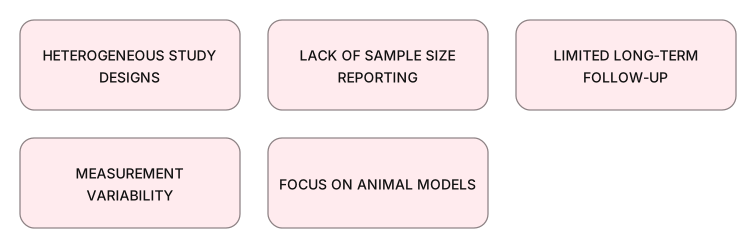
The median reported abdominal aortic aneurysm growth rate across multiple studies using MRI or MRI-derived data was 1.95 mm/year, with values ranging from 0.8 mm/year to 4.2 mm/year [36, 59, 81, 102, 123]. This range highlights the inherent variability in AAA progression and the potential for MRI to provide nuanced insights beyond simple diameter. The generalizability of these findings is most affected by the heterogeneous study designs and the frequent lack of reported sample sizes or long-term follow-up. Clinicians should be aware of the potential for significant measurement error with non-standardized techniques, emphasizing the need for rigorous protocols in MRI-based AAA assessment.

References
SAIMSARA Session Index — session.json

Figure 1. Publication-year distribution of included originals

Figure 2. Study-design distribution of included originals
Figure 2. Study-design distribution

Figure 3. Study-type (directionality) distribution of included originals
Figure 3. Directionality distribution

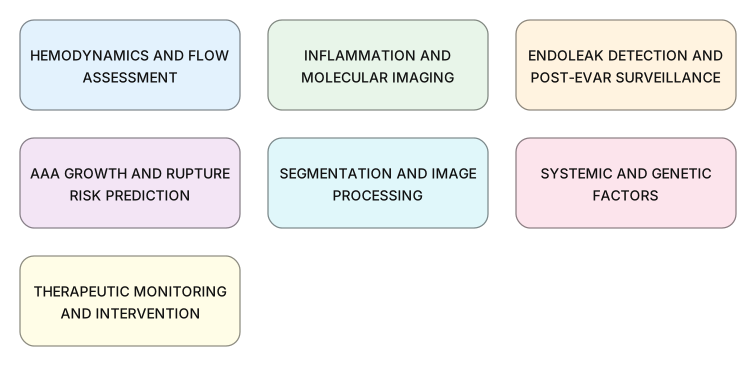
Figure 4. Main extracted research topics
Figure 4. Main extracted research topics (Results)

Figure 5. Limitations of current studies (topics)

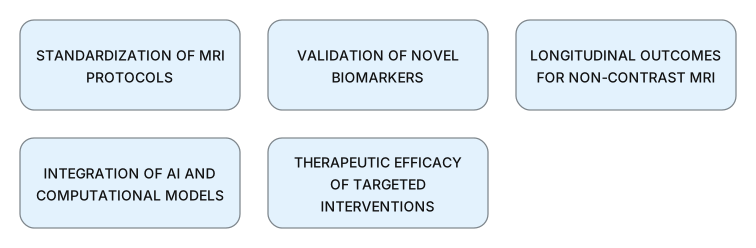
Figure 6. Future research directions (topics)