Abdominal Aortic Aneurysm Prevalence: Systematic Review with ☸️SAIMSARA.


saimsara.com Download PDF

Abstract: The aim of this study is to systematically review the prevalence of abdominal aortic aneurysms and associated factors based on structured extraction from scientific literature. The review utilises 296 studies with 596979 total participants (naïve ΣN). The median prevalence of abdominal aortic aneurysm (AAA) in general populations and screening cohorts was 1.9%, with reported values ranging widely from 0.12% to 8.8%. These figures highlight AAA as a significant vascular disease, particularly affecting older men and those with cardiovascular comorbidities. The considerable variability in reported prevalence across studies, largely due to heterogeneous study designs and populations, represents the most significant limitation affecting the certainty of a single global estimate. A practical takeaway for clinicians is to maintain a high index of suspicion for AAA in elderly male patients and those with known cardiovascular risk factors or related vascular pathologies, recommending screening as appropriate.

Keywords: Abdominal Aortic Aneurysm; AAA prevalence; Older adults; Sex differences; Coronary artery disease; Cancer prevalence; Diabetes mellitus; Inguinal hernia; Non-alcoholic fatty liver disease; Thoracic aortic aneurysm

Review Stats
Identification of studies via Semantic Scholar (all fields) Identification Screening Included Records identified:n=1650Records excluded:n=650 Records assessed for eligibilityn=1000Records excluded:n=704 Studies included in reviewn=296 PRISMA Diagram generated by ☸️ SAIMSARA
⛛OSMA Triangle Effect-of Predictor → Outcome abdominal aortic aneurysm  →  Outcome Beneficial for patients ΣN=0 (0%) Harmful for patients ΣN=143196 (24%) Neutral ΣN=453783 (76%) 0 ⛛OSMA Triangle generated by ☸️SAIMSARA
Show OSMA legend
Outcome-Sentiment Meta-Analysis (OSMA): (LLM-only)
Frame: Effect-of Predictor → Outcome • Source: Semantic Scholar
Outcome: Outcome Typical timepoints: 65-y, 30-day. Reported metrics: %, CI, p.
Common endpoints: Common endpoints: mortality, complications, survival.
Predictor: abdominal aortic aneurysm — exposure/predictor. Routes seen: topical. Typical comparator: those without hs, the control group, control, controls. inguinal hernia….

  • 1) Beneficial for patients — Outcome with abdominal aortic aneurysm — — — ΣN=0
  • 2) Harmful for patients — Outcome with abdominal aortic aneurysm — [26], [30], [32], [35], [36], [38], [40], [41], [43], [46], [48], [49], [50], [58], [113], [119], [159], [161], [163], [251], [263], [273], [276] — ΣN=143196
  • 3) No clear effect — Outcome with abdominal aortic aneurysm — [1], [2], [3], [4], [5], [6], [7], [8], [9], [10], [11], [12], [13], [14], [15], [16], [17], [18], [19], [20], [21], [22], [23], [24], [25], [27], [28], [29], [31], [33], [34], [37], [39], [42], [44], [45], [47], [51], [52], [53], [54], [55], [56], [57], [59], [60], [61], [62], [63], [64], [65], [66], [67], [68], [69], [70], [71], [72], [73], [74], [75], [76], [77], [78], [79], [80], [81], [82], [83], [84], [85], [86], [87], [88], [89], [90], [91], [92], [93], [94], [95], [96], [97], [98], [99], [100], [101], [102], [103], [104], [105], [106], [107], [108], [109], [110], [111], [112], [114], [115], [116], [117], [118], [120], [121], [122], [123], [124], [125], [126], [127], [128], [129], [130], [131], [132], [133], [134], [135], [136], [137], [138], [139], [140], [141], [142], [143], [144], [145], [146], [147], [148], [149], [150], [151], [152], [153], [154], [155], [156], [157], [158], [160], [162], [164], [165], [166], [167], [168], [169], [170], [171], [172], [173], [174], [175], [176], [177], [178], [179], [180], [181], [182], [183], [184], [185], [186], [187], [188], [189], [190], [191], [192], [193], [194], [195], [196], [197], [198], [199], [200], [201], [202], [203], [204], [205], [206], [207], [208], [209], [210], [211], [212], [213], [214], [215], [216], [217], [218], [219], [220], [221], [222], [223], [224], [225], [226], [227], [228], [229], [230], [231], [232], [233], [234], [235], [236], [237], [238], [239], [240], [241], [242], [243], [244], [245], [246], [247], [248], [249], [250], [252], [253], [254], [255], [256], [257], [258], [259], [260], [261], [262], [264], [265], [266], [267], [268], [269], [270], [271], [272], [274], [275], [277], [278], [279], [280], [281], [282], [283], [284], [285], [286], [287], [288], [289], [290], [291], [292], [293], [294], [295], [296] — ΣN=453783
1) Introduction
Abdominal aortic aneurysm (AAA), a localized dilation of the abdominal aorta, represents a significant public health concern due to its potential for rupture, which carries high mortality rates. Understanding the prevalence of AAA is crucial for informing screening guidelines, risk stratification, and resource allocation in healthcare systems. This paper synthesizes current evidence on AAA prevalence, exploring its demographic distribution, associated comorbidities, and risk factors, as well as geographic and temporal trends.

2) Aim
The aim of this study is to systematically review the prevalence of abdominal aortic aneurysms and associated factors based on structured extraction from scientific literature.

3) Methods
Systematic review with multilayer AI research agent: keyword normalization, retrieval & structuring, and paper synthesis (see SAIMSARA About section for details).


4) Results
4.1 Study characteristics:
The review encompassed a diverse range of study designs, including mixed-design studies, cohort studies (both prospective and retrospective), cross-sectional analyses, case-control studies, randomized controlled trials (RCTs), experimental studies, and case series. Populations varied widely, from general elderly populations (e.g., individuals aged 60 years and above [1], 65-year-old men [58]), to specific patient cohorts such as those with acute coronary syndrome (ACS) [4], cerebrovascular disease [5, 101], chronic obstructive pulmonary disease (COPD) [22, 90], hypertension [35, 128], manifest vascular disease [46], various cancers [6, 12, 47], and HIV infection [33, 217]. Geographical settings spanned multiple continents, including Europe (e.g., Poland [16], Denmark [42], Sweden [66], Italy [94]), Asia (e.g., Turkey [49], Korea [111], Iran [55], China [180]), Africa [20], North America (e.g., United States [28]), Australia [200], and South America (e.g., Brazil [105]). Follow-up periods, when specified, ranged from short-term (e.g., 30 days [45], 3 months [25], 6 months [32]) to long-term (e.g., 5 years [14, 145, 244], 7 years [18], 8.7 years [33], 14 years [58], 15 years [99], 20 years [275], 22 years [109]). Many studies did not specify a follow-up duration.

4.2 Main numerical result aligned to the query:
The prevalence of abdominal aortic aneurysm (AAA) in general populations and screening cohorts demonstrates considerable variability across studies. The median prevalence observed was 1.9% [145, 219], with a wide range from 0.12% [1] to 8.8% [103]. Specific studies reported prevalence rates such as 0.6% in a large screening population in the UK/US [43], 1.2% in men invited to a screening program in Stockholm [41], 2.49% in men aged 60 years and older in primary healthcare settings [51], and 4.8% in a meta-analysis of the general population [200]. Higher rates were noted in specific demographics, reaching 8.8% in a population above 65 years [103] and 4.32% in men in Poland [16], compared to 1.23% in women in the same region [16]. Geographic differences were also apparent, with prevalence ranging from 0.89% to 4.9% in Eastern countries and 4.57% to 19% in Western countries [173].

4.3 Topic synthesis:


5) Discussion
5.1 Principal finding:
The median prevalence of abdominal aortic aneurysm (AAA) in general populations and screening cohorts was found to be 1.9% [145, 219], with reported values ranging widely from 0.12% [1] to 8.8% [103]. This broad range underscores the heterogeneous nature of AAA epidemiology and detection.

5.2 Clinical implications:


5.3 Research implications / key gaps:


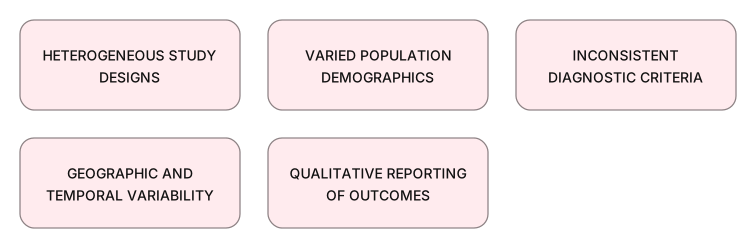
5.4 Limitations:


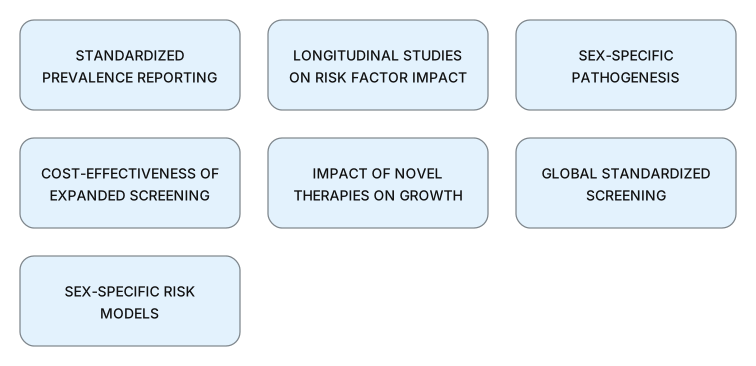
5.5 Future directions:


6) Conclusion
The median prevalence of abdominal aortic aneurysm (AAA) in general populations and screening cohorts was 1.9% [145, 219], with reported values ranging widely from 0.12% [1] to 8.8% [103]. These figures highlight AAA as a significant vascular disease, particularly affecting older men and those with cardiovascular comorbidities. The considerable variability in reported prevalence across studies, largely due to heterogeneous study designs and populations, represents the most significant limitation affecting the certainty of a single global estimate. A practical takeaway for clinicians is to maintain a high index of suspicion for AAA in elderly male patients and those with known cardiovascular risk factors or related vascular pathologies, recommending screening as appropriate.

References
SAIMSARA Session Index — session.json

Figure 1. Publication-year distribution of included originals

Figure 2. Study-design distribution of included originals
Figure 2. Study-design distribution

Figure 3. Study-type (directionality) distribution of included originals
Figure 3. Directionality distribution

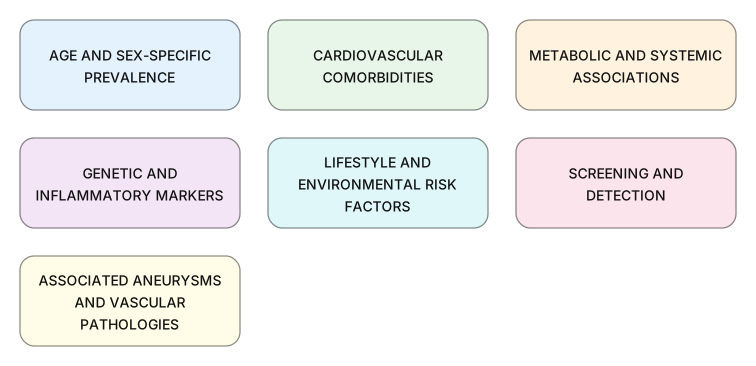
Figure 4. Main extracted research topics
Figure 4. Main extracted research topics (Results)

Figure 5. Limitations of current studies (topics)

Figure 6. Future research directions (topics)