Abdominal Aortic Aneurysm and Survival: Systematic Review with ☸️SAIMSARA.


saimsara.com Download PDF

Abstract: The aim of this paper is to systematically review and synthesize the available evidence on factors influencing survival in patients with abdominal aortic aneurysms, encompassing various treatment modalities, patient demographics, and clinical contexts. The review utilises 344 studies with 329232 total participants (naïve ΣN). For elective repair of intact abdominal aortic aneurysms, the median 30-day mortality rate for open surgical repair was 2.95%, while for endovascular aneurysm repair, it was 1.1%. For ruptured AAAs, EVAR offered a lower median 30-day mortality of 16.5% compared to 35% for OSR. While these findings suggest an early survival advantage for EVAR, particularly in ruptured cases, the generalizability is limited by the diverse study designs and patient populations. The most significant limitation affecting certainty is the prevalence of retrospective cohort studies, which are prone to selection and confounding biases. A concrete next step is to conduct large-scale, long-term randomized controlled trials to definitively compare EVAR and OAR across various patient subgroups, focusing on both early and late survival and quality of life.

Keywords: Abdominal aortic aneurysm; AAA repair; Patient survival; Endovascular aneurysm repair; Open aneurysm repair; Statin therapy; Socioeconomic factors; Elderly patients; Cancer comorbidity; Prognostic factors

Review Stats
Identification of studies via Semantic Scholar (all fields) Identification Screening Included Records identified:n=2550Records excluded:n=1550 Records assessed for eligibilityn=1000Records excluded:n=656 Studies included in reviewn=344 PRISMA Diagram generated by ☸️ SAIMSARA
⛛OSMA Triangle Effect-of Predictor → Outcome abdominal aortic aneurysm  →  survival Beneficial for patients ΣN=0 (0%) Harmful for patients ΣN=9076 (3%) Neutral ΣN=320156 (97%) 0 ⛛OSMA Triangle generated by ☸️SAIMSARA
Show OSMA legend
Outcome-Sentiment Meta-Analysis (OSMA): (LLM-only)
Frame: Effect-of Predictor → Outcome • Source: Semantic Scholar
Outcome: survival Typical timepoints: 5-y, peri/post-op. Reported metrics: %, CI, p.
Common endpoints: Common endpoints: survival, mortality, recurrence.
Predictor: abdominal aortic aneurysm — exposure/predictor. Doses/units seen: 11 ml. Routes seen: intravenous, subcutaneous. Typical comparator: patients without cancer, statin or no treatment groups, open aneurysm repair, 52% for or. elderly patients….

  • 1) Beneficial for patients — survival with abdominal aortic aneurysm — — — ΣN=0
  • 2) Harmful for patients — survival with abdominal aortic aneurysm — [39], [62], [75], [77], [88], [232], [239], [258] — ΣN=9076
  • 3) No clear effect — survival with abdominal aortic aneurysm — [1], [2], [3], [4], [5], [6], [7], [8], [9], [10], [11], [12], [13], [14], [15], [16], [17], [18], [19], [20], [21], [22], [23], [24], [25], [26], [27], [28], [29], [30], [31], [32], [33], [34], [35], [36], [37], [38], [40], [41], [42], [43], [44], [45], [46], [47], [48], [49], [50], [51], [52], [53], [54], [55], [56], [57], [58], [59], [60], [61], [63], [64], [65], [66], [67], [68], [69], [70], [71], [72], [73], [74], [76], [78], [79], [80], [81], [82], [83], [84], [85], [86], [87], [89], [90], [91], [92], [93], [94], [95], [96], [97], [98], [99], [100], [101], [102], [103], [104], [105], [106], [107], [108], [109], [110], [111], [112], [113], [114], [115], [116], [117], [118], [119], [120], [121], [122], [123], [124], [125], [126], [127], [128], [129], [130], [131], [132], [133], [134], [135], [136], [137], [138], [139], [140], [141], [142], [143], [144], [145], [146], [147], [148], [149], [150], [151], [152], [153], [154], [155], [156], [157], [158], [159], [160], [161], [162], [163], [164], [165], [166], [167], [168], [169], [170], [171], [172], [173], [174], [175], [176], [177], [178], [179], [180], [181], [182], [183], [184], [185], [186], [187], [188], [189], [190], [191], [192], [193], [194], [195], [196], [197], [198], [199], [200], [201], [202], [203], [204], [205], [206], [207], [208], [209], [210], [211], [212], [213], [214], [215], [216], [217], [218], [219], [220], [221], [222], [223], [224], [225], [226], [227], [228], [229], [230], [231], [233], [234], [235], [236], [237], [238], [240], [241], [242], [243], [244], [245], [246], [247], [248], [249], [250], [251], [252], [253], [254], [255], [256], [257], [259], [260], [261], [262], [263], [264], [265], [266], [267], [268], [269], [270], [271], [272], [273], [274], [275], [276], [277], [278], [279], [280], [281], [282], [283], [284], [285], [286], [287], [288], [289], [290], [291], [292], [293], [294], [295], [296], [297], [298], [299], [300], [301], [302], [303], [304], [305], [306], [307], [308], [309], [310], [311], [312], [313], [314], [315], [316], [317], [318], [319], [320], [321], [322], [323], [324], [325], [326], [327], [328], [329], [330], [331], [332], [333], [334], [335], [336], [337], [338], [339], [340], [341], [342], [343], [344] — ΣN=320156
1) Introduction
Abdominal aortic aneurysm (AAA) represents a significant cardiovascular pathology associated with substantial morbidity and mortality, particularly upon rupture. Advances in surgical techniques, including open aneurysm repair (OAR) and endovascular aneurysm repair (EVAR), alongside improved perioperative management, have continuously reshaped patient outcomes. Understanding the multifaceted factors influencing survival across different patient cohorts, aneurysm characteristics, and treatment strategies is crucial for optimizing clinical decision-making and patient care. This paper synthesizes current research on AAA and its impact on survival, drawing from a comprehensive body of evidence.

2) Aim
The aim of this paper is to systematically review and synthesize the available evidence on factors influencing survival in patients with abdominal aortic aneurysms, encompassing various treatment modalities, patient demographics, and clinical contexts.

3) Methods
Systematic review with multilayer AI research agent: keyword normalization, retrieval & structuring, and paper synthesis (see SAIMSARA About section for details).


4) Results
4.1 Study characteristics:
The evidence base comprises a diverse range of study designs, predominantly retrospective cohort studies and mixed designs, with several randomized controlled trials and experimental animal models. Populations studied include patients undergoing elective or emergency repair of intact, ruptured, infrarenal, juxtarenal, and complex AAAs, as well as specific subgroups such as octogenarians, nonagenarians, and those with comorbidities like cancer or chronic kidney disease. Follow-up periods vary widely, from 30-day perioperative outcomes to long-term assessments spanning up to 25 years.

4.2 Main numerical result aligned to the query:
For elective repair of intact abdominal aortic aneurysms, the median 30-day mortality rate for open surgical repair (OSR) was 2.95% (range: 1.9% [56] to 5.3% [225]), while for endovascular aneurysm repair (EVAR), it was 1.1% (range: 0% [80] to 2.7% [116]). In cases of ruptured AAA, the median 30-day mortality for EVAR was 16.5% (range: 8.7% [42] to 42.8% [80]), significantly lower than for OSR, which had a median of 35% (range: 24.2% [39] to 57.1% [42]).

4.3 Topic synthesis:


5) Discussion
5.1 Principal finding:
The central finding is that for elective repair of intact abdominal aortic aneurysms, the median 30-day mortality rate for open surgical repair was 2.95%, while for endovascular aneurysm repair, it was 1.1% [56, 80, 116, 140, 177, 225, 226, 233, 324, 343]. For ruptured AAAs, EVAR offered a lower median 30-day mortality of 16.5% compared to 35% for OSR [39, 42, 43, 66, 80, 83, 188].

5.2 Clinical implications:


5.3 Research implications / key gaps:


5.4 Limitations:


5.5 Future directions:


6) Conclusion
For elective repair of intact abdominal aortic aneurysms, the median 30-day mortality rate for open surgical repair was 2.95%, while for endovascular aneurysm repair, it was 1.1% [56, 80, 116, 140, 177, 225, 226, 233, 324, 343]. For ruptured AAAs, EVAR offered a lower median 30-day mortality of 16.5% compared to 35% for OSR [39, 42, 43, 66, 80, 83, 188]. While these findings suggest an early survival advantage for EVAR, particularly in ruptured cases, the generalizability is limited by the diverse study designs and patient populations. The most significant limitation affecting certainty is the prevalence of retrospective cohort studies, which are prone to selection and confounding biases. A concrete next step is to conduct large-scale, long-term randomized controlled trials to definitively compare EVAR and OAR across various patient subgroups, focusing on both early and late survival and quality of life.

References
SAIMSARA Session Index — session.json

Figure 1. Publication-year distribution of included originals

Figure 2. Study-design distribution of included originals
Figure 2. Study-design distribution

Figure 3. Study-type (directionality) distribution of included originals
Figure 3. Directionality distribution

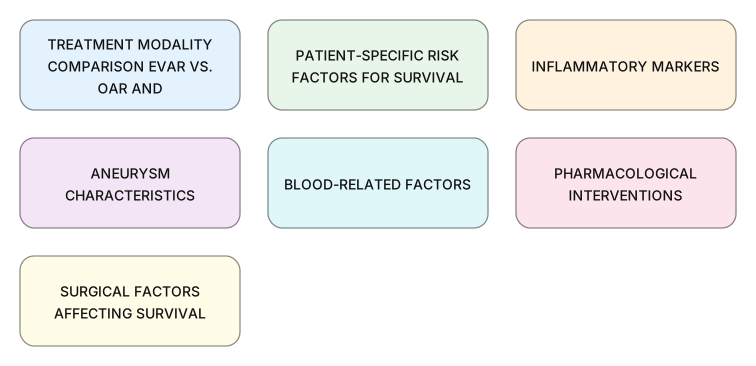
Figure 4. Main extracted research topics
Figure 4. Main extracted research topics (Results)

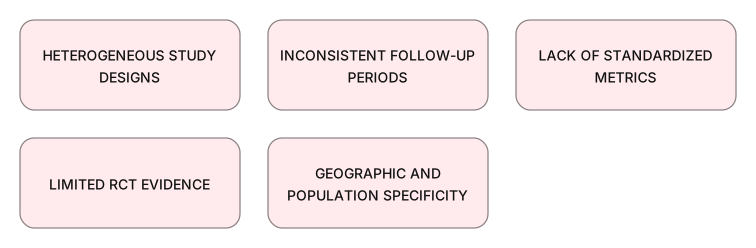
Figure 5. Limitations of current studies (topics)

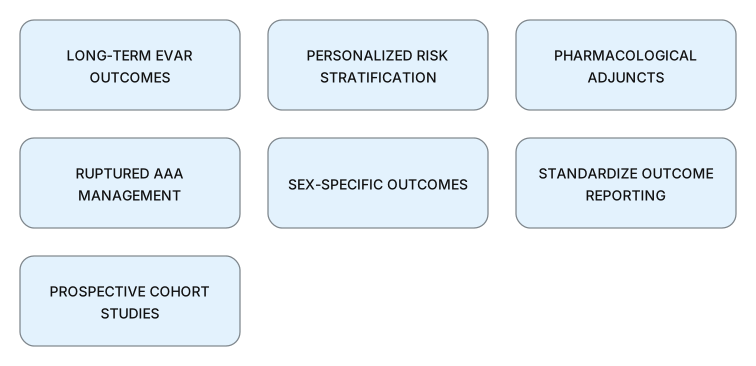
Figure 6. Future research directions (topics)