Aortic Aneurysm and Diameter: Systematic Review with ☸️SAIMSARA.


saimsara.com Download PDF

Abstract: To comprehensively synthesize current research on the relationship between aortic aneurysm and diameter, including its role in disease progression, rupture risk, diagnostic methods, and therapeutic interventions. The review utilises 289 studies with 148337 total participants (naïve ΣN). The median maximum diameter reported for ruptured abdominal aortic aneurysms was 72.0 mm, with a range of 60.0 mm to 86.0 mm. This finding highlights the critical role of diameter in assessing rupture risk for abdominal aortic aneurysms, though its generalizability is impacted by the diverse populations and methodologies across studies. The heterogeneous study designs, particularly the reliance on animal models and retrospective human cohorts, most affects certainty. A concrete next step is to develop and validate integrated risk assessment models that combine diameter with biomechanical parameters, genetic markers, and inflammatory biomarkers for improved prediction of aneurysm events.

Keywords: Aortic aneurysm; Aneurysm diameter; Abdominal aortic aneurysm; Thoracic aortic aneurysm; Aneurysm rupture; Aneurysm growth; Aortic dimensions; Endovascular repair; Aortic stiffness; Ascending aorta

Review Stats
Identification of studies via Semantic Scholar (all fields) Identification Screening Included Records identified:n=8612Records excluded:n=7612 Records assessed for eligibilityn=1000Records excluded:n=711 Studies included in reviewn=289 PRISMA Diagram generated by ☸️ SAIMSARA
⛛OSMA Triangle Effect-of Predictor → Outcome diameter  →  aortic aneurysm Beneficial for patients ΣN=12 (0%) Harmful for patients ΣN=73023 (49%) Neutral ΣN=75302 (51%) 0 ⛛OSMA Triangle generated by ☸️SAIMSARA
Show OSMA legend
Outcome-Sentiment Meta-Analysis (OSMA): (LLM-only)
Frame: Effect-of Predictor → Outcome • Source: Semantic Scholar
Outcome: aortic aneurysm Typical timepoints: 28-day, 2-y. Reported metrics: %, CI, p.
Common endpoints: Common endpoints: mortality, complications, survival.
Predictor: diameter — exposure/predictor. Routes seen: intravenous, oral. Typical comparator: 3d, lower levels, placebo did not significantly, placebo….

  • 1) Beneficial for patients — aortic aneurysm with diameter — [76] — ΣN=12
  • 2) Harmful for patients — aortic aneurysm with diameter — [2], [4], [9], [22], [23], [26], [27], [39], [41], [51], [64], [65], [79], [81], [82], [84], [85], [145], [157], [179], [180], [182], [208], [210], [214], [226], [228], [233], [234], [235], [236], [240], [242], [243], [244], [251] — ΣN=73023
  • 3) No clear effect — aortic aneurysm with diameter — [1], [3], [5], [6], [7], [8], [10], [11], [12], [13], [14], [15], [16], [17], [18], [19], [20], [21], [24], [25], [28], [29], [30], [31], [32], [33], [34], [35], [36], [37], [38], [40], [42], [43], [44], [45], [46], [47], [48], [49], [50], [52], [53], [54], [55], [56], [57], [58], [59], [60], [61], [62], [63], [66], [67], [68], [69], [70], [71], [72], [73], [74], [75], [77], [78], [80], [83], [86], [87], [88], [89], [90], [91], [92], [93], [94], [95], [96], [97], [98], [99], [100], [101], [102], [103], [104], [105], [106], [107], [108], [109], [110], [111], [112], [113], [114], [115], [116], [117], [118], [119], [120], [121], [122], [123], [124], [125], [126], [127], [128], [129], [130], [131], [132], [133], [134], [135], [136], [137], [138], [139], [140], [141], [142], [143], [144], [146], [147], [148], [149], [150], [151], [152], [153], [154], [155], [156], [158], [159], [160], [161], [162], [163], [164], [165], [166], [167], [168], [169], [170], [171], [172], [173], [174], [175], [176], [177], [178], [181], [183], [184], [185], [186], [187], [188], [189], [190], [191], [192], [193], [194], [195], [196], [197], [198], [199], [200], [201], [202], [203], [204], [205], [206], [207], [209], [211], [212], [213], [215], [216], [217], [218], [219], [220], [221], [222], [223], [224], [225], [227], [229], [230], [231], [232], [237], [238], [239], [241], [245], [246], [247], [248], [249], [250], [252], [253], [254], [255], [256], [257], [258], [259], [260], [261], [262], [263], [264], [265], [266], [267], [268], [269], [270], [271], [272], [273], [274], [275], [276], [277], [278], [279], [280], [281], [282], [283], [284], [285], [286], [287], [288], [289] — ΣN=75302
Introduction
Aortic aneurysms represent a critical cardiovascular pathology characterized by localized dilation of the aorta, posing significant risks of rupture and dissection. The diameter of an aortic aneurysm is widely recognized as a primary indicator for disease progression, rupture risk, and the necessity for intervention. Understanding the multifaceted relationship between aortic diameter and various pathophysiological, genetic, and environmental factors is crucial for effective diagnosis, surveillance, and therapeutic management. This paper synthesizes current research on aortic aneurysm and diameter, exploring its role in risk stratification, disease mechanisms, and treatment outcomes across different aortic segments and patient populations.

Aim
To comprehensively synthesize current research on the relationship between aortic aneurysm and diameter, including its role in disease progression, rupture risk, diagnostic methods, and therapeutic interventions.

Methods
Systematic review with multilayer AI research agent: keyword normalization, retrieval & structuring, and paper synthesis (see SAIMSARA About section for details).


Results
4.1 Study characteristics
The included studies comprise a diverse range of designs, predominantly cohort studies, mixed methods, and experimental animal models. Retrospective analyses are common for human patient data, while animal models frequently investigate mechanistic pathways and therapeutic interventions. Follow-up periods vary significantly, from short-term (e.g., 7 days in animal models [62, 229]) to long-term (e.g., 10 years for post-EVAR reintervention [214] or mortality follow-up [157]). Patient populations include those with abdominal aortic aneurysms (AAAs), thoracic aortic aneurysms (TAAs), ascending aortic aneurysms (AsAAs), and specific genetic conditions like Marfan syndrome, as well as healthy controls and various rodent models.

4.2 Main numerical result aligned to the query
The median maximum diameter reported for ruptured abdominal aortic aneurysms (AAAs) was 72.0 mm, with a range of 60.0 mm to 86.0 mm [4, 9, 65, 73].

4.3 Topic synthesis


Discussion
5.1 Principal finding
The median maximum diameter reported for ruptured abdominal aortic aneurysms was 72.0 mm, with a range of 60.0 mm to 86.0 mm [4, 9, 65, 73], underscoring diameter as a critical, albeit not sole, indicator of rupture risk.

5.2 Clinical implications


5.3 Research implications / key gaps


5.4 Limitations


5.5 Future directions


Conclusion
The median maximum diameter reported for ruptured abdominal aortic aneurysms was 72.0 mm, with a range of 60.0 mm to 86.0 mm [4, 9, 65, 73]. This finding highlights the critical role of diameter in assessing rupture risk for abdominal aortic aneurysms, though its generalizability is impacted by the diverse populations and methodologies across studies. The heterogeneous study designs, particularly the reliance on animal models and retrospective human cohorts, most affects certainty. A concrete next step is to develop and validate integrated risk assessment models that combine diameter with biomechanical parameters, genetic markers, and inflammatory biomarkers for improved prediction of aneurysm events.

References
SAIMSARA Session Index — session.json

Figure 1. Publication-year distribution of included originals

Figure 2. Study-design distribution of included originals
Figure 2. Study-design distribution

Figure 3. Study-type (directionality) distribution of included originals
Figure 3. Directionality distribution

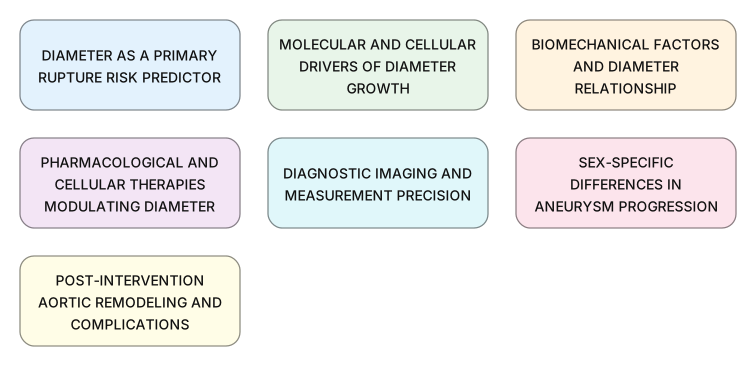
Figure 4. Main extracted research topics
Figure 4. Main extracted research topics (Results)

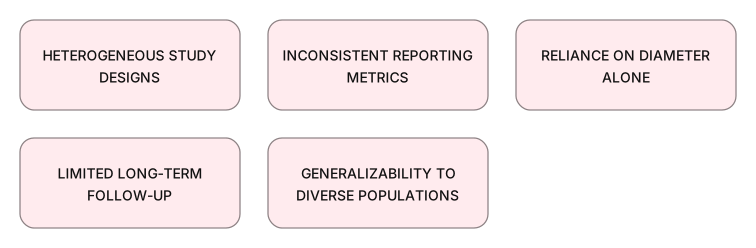
Figure 5. Limitations of current studies (topics)

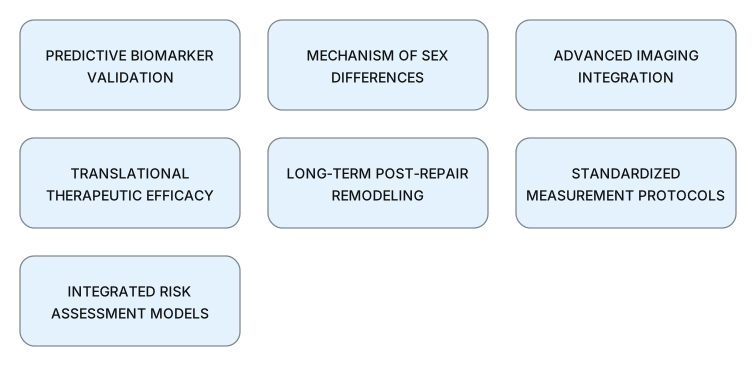
Figure 6. Future research directions (topics)