Aortic Aneurysm and Genetics: Systematic Review with ☸️SAIMSARA.


saimsara.com Download PDF

Abstract: This paper aims to systematically review and synthesize the current understanding of genetic factors associated with aortic aneurysms, including specific gene variants, polygenic risk, hereditary syndromes, and the interplay between genetics and environmental factors, to identify key research trends and future directions. The review utilises 223 studies with 1133940 total participants (naïve ΣN). Genetic factors are consistently associated with an increased risk of aortic aneurysms, with observed risk multipliers ranging from 1.08 to 13.5, and a median increased risk of 1.75 across various genetic markers and polygenic risk scores. This genetic influence is evident across different aneurysm types, affecting both syndromic and sporadic cases, and interacts with environmental and clinical risk factors. The generalizability of these findings is somewhat limited by the heterogeneity of study designs and populations. The most significant limitation affecting certainty is the Study Design Heterogeneity, which complicates the synthesis of a unified understanding of genetic contributions. A crucial next step for clinicians is to consider family history and genetic testing, particularly for heritable thoracic aortic diseases, to facilitate early diagnosis and personalized management.

Keywords: Aortic Aneurysm; Genetics; Genetic Variants; Abdominal Aortic Aneurysm; Thoracic Aortic Aneurysm; Polygenic Risk Score; Genome-Wide Association Study; Hereditary Aortopathy; Bicuspid Aortic Valve; Molecular Genetics

Review Stats
Identification of studies via Semantic Scholar (all fields) Identification Screening Included Records identified:n=800Records excluded:n=0 Records assessed for eligibilityn=800Records excluded:n=577 Studies included in reviewn=223 PRISMA Diagram generated by ☸️ SAIMSARA
⛛OSMA Triangle Effect-of Predictor → Outcome genetics  →  aortic aneurysm Beneficial for patients ΣN=128 (0%) Harmful for patients ΣN=70400 (6%) Neutral ΣN=1063412 (94%) 0 ⛛OSMA Triangle generated by ☸️SAIMSARA
Show OSMA legend
Outcome-Sentiment Meta-Analysis (OSMA): (LLM-only)
Frame: Effect-of Predictor → Outcome • Source: Semantic Scholar
Outcome: aortic aneurysm Typical timepoints: peri/post-op, 65-y. Reported metrics: %, CI, p.
Common endpoints: Common endpoints: mortality, complications, survival.
Predictor: genetics — exposure/predictor. Doses/units seen: 100 ml. Routes seen: oral. Typical comparator: those without hs, clinical risk factors alone, control subjects, control….

  • 1) Beneficial for patients — aortic aneurysm with genetics — [49] — ΣN=128
  • 2) Harmful for patients — aortic aneurysm with genetics — [26], [32], [42], [45], [52], [53], [71], [73], [75], [92], [96], [138], [148], [176] — ΣN=70400
  • 3) No clear effect — aortic aneurysm with genetics — [1], [2], [3], [4], [5], [6], [7], [8], [9], [10], [11], [12], [13], [14], [15], [16], [17], [18], [19], [20], [21], [22], [23], [24], [25], [27], [28], [29], [30], [31], [33], [34], [35], [36], [37], [38], [39], [40], [41], [43], [44], [46], [47], [48], [50], [51], [54], [55], [56], [57], [58], [59], [60], [61], [62], [63], [64], [65], [66], [67], [68], [69], [70], [72], [74], [76], [77], [78], [79], [80], [81], [82], [83], [84], [85], [86], [87], [88], [89], [90], [91], [93], [94], [95], [97], [98], [99], [100], [101], [102], [103], [104], [105], [106], [107], [108], [109], [110], [111], [112], [113], [114], [115], [116], [117], [118], [119], [120], [121], [122], [123], [124], [125], [126], [127], [128], [129], [130], [131], [132], [133], [134], [135], [136], [137], [139], [140], [141], [142], [143], [144], [145], [146], [147], [149], [150], [151], [152], [153], [154], [155], [156], [157], [158], [159], [160], [161], [162], [163], [164], [165], [166], [167], [168], [169], [170], [171], [172], [173], [174], [175], [177], [178], [179], [180], [181], [182], [183], [184], [185], [186], [187], [188], [189], [190], [191], [192], [193], [194], [195], [196], [197], [198], [199], [200], [201], [202], [203], [204], [205], [206], [207], [208], [209], [210], [211], [212], [213], [214], [215], [216], [217], [218], [219], [220], [221], [222], [223] — ΣN=1063412
1) Introduction
Aortic aneurysms (AA), encompassing abdominal aortic aneurysms (AAA) and thoracic aortic aneurysms (TAA), represent a significant cardiovascular health burden. These conditions involve localized dilation of the aorta, increasing the risk of rupture and dissection, which are often fatal events [105, 162]. While traditional risk factors such as age, smoking, and hypertension are well-established, a substantial body of evidence increasingly points to a complex genetic architecture underlying aneurysm susceptibility, initiation, and progression [22, 23, 30, 33, 35, 44, 48, 132, 162, 164]. Genetic factors contribute to both syndromic forms, like Marfan and Loeys-Dietz syndromes, and nonsyndromic, sporadic cases, influencing various molecular pathways critical for aortic wall integrity [17, 41, 46, 159, 180, 191]. Understanding these genetic predispositions is crucial for improved risk stratification, early diagnosis, and the development of personalized therapeutic strategies.

2) Aim
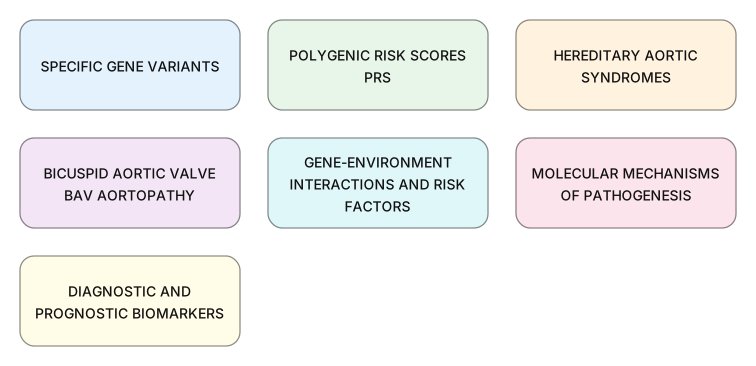
This paper aims to systematically review and synthesize the current understanding of genetic factors associated with aortic aneurysms, including specific gene variants, polygenic risk, hereditary syndromes, and the interplay between genetics and environmental factors, to identify key research trends and future directions.

3) Methods
Systematic review with multilayer AI research agent: keyword normalization, retrieval & structuring, and paper synthesis (see SAIMSARA About section for details).


4) Results
4.1 Study characteristics
The included studies primarily comprised cohort, case-control, and mixed-design investigations, with a significant number of reviews and articles where the study design or directionality was not specified. Populations varied, including patients with AAA, TAA, ascending aortic aneurysm (AscAA), bicuspid aortic valve (BAV), Marfan syndrome, and general population cohorts. Sample sizes ranged from individual case reports [37, 194, 223] to large multi-ethnic cohorts of hundreds of thousands of participants [26, 42, 66, 69, 114, 129, 218, 221]. Follow-up periods, when reported, varied from short-term (e.g., 14 days [95, 129]) to long-term (e.g., 24.3 years [77], 25 years [184], 50 years [91]).

4.2 Main numerical result aligned to the query
Genetic factors are consistently associated with an increased risk of aortic aneurysms, with reported risk multipliers (Odds Ratios, Hazard Ratios, or fold increases) ranging from 1.08 to 13.5. The median increased risk observed across various genetic associations and polygenic risk scores was 1.75 [6, 42, 53, 148, 193, 212]. For instance, pathogenic variants in hereditary thoracic aortic aneurysm and dissection (HTAAD) genes conferred a 13.5-fold increased risk of thoracic aortic aneurysm and dissection (TAAD) [4], while specific HLA alleles showed an Odds Ratio (OR) of 4.7 for AAA in Mexican Mestizo patients [148]. Polygenic risk scores (PRS) for thoracic aortic aneurysm (TAA) demonstrated an OR of 1.50 per standard deviation increase [42] and a Hazard Ratio (HR) of 1.42 per standard deviation [53]. This highlights significant heterogeneity in the magnitude of genetic risk across different aneurysm types and genetic markers.

4.3 Topic synthesis


5) Discussion
5.1 Principal finding
Genetic factors are significantly associated with an increased risk of aortic aneurysms, with observed risk multipliers ranging from 1.08 to 13.5, and a median increased risk of 1.75 across various genetic markers and polygenic risk scores [4, 6, 42, 53, 148, 193, 212].

5.2 Clinical implications


5.3 Research implications / key gaps


5.4 Limitations


5.5 Future directions


6) Conclusion
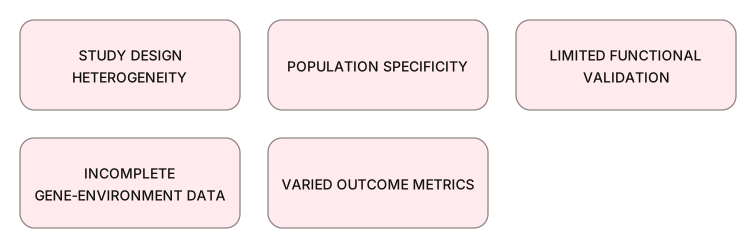
Genetic factors are consistently associated with an increased risk of aortic aneurysms, with observed risk multipliers ranging from 1.08 to 13.5, and a median increased risk of 1.75 across various genetic markers and polygenic risk scores [4, 6, 42, 53, 148, 193, 212]. This genetic influence is evident across different aneurysm types, affecting both syndromic and sporadic cases, and interacts with environmental and clinical risk factors. The generalizability of these findings is somewhat limited by the heterogeneity of study designs and populations. The most significant limitation affecting certainty is the Study Design Heterogeneity, which complicates the synthesis of a unified understanding of genetic contributions. A crucial next step for clinicians is to consider family history and genetic testing, particularly for heritable thoracic aortic diseases, to facilitate early diagnosis and personalized management.

References
SAIMSARA Session Index — session.json

Figure 1. Publication-year distribution of included originals

Figure 2. Study-design distribution of included originals
Figure 2. Study-design distribution

Figure 3. Study-type (directionality) distribution of included originals
Figure 3. Directionality distribution

Figure 4. Main extracted research topics
Figure 4. Main extracted research topics (Results)

Figure 5. Limitations of current studies (topics)

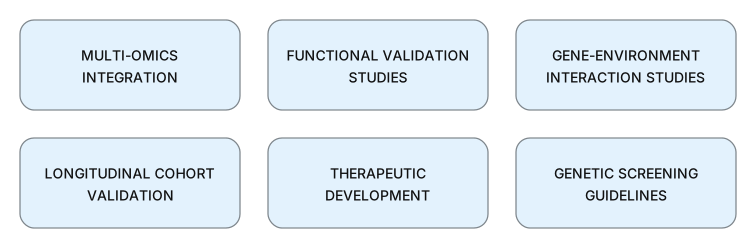
Figure 6. Future research directions (topics)