Arterial Thrombolysis: Systematic Review with ☸️SAIMSARA.


saimsara.com Download PDF

Abstract: The aim of this paper is to systematically review and synthesize the current evidence regarding the efficacy, safety, and predictive factors associated with arterial thrombolysis across various clinical indications. The review utilises 203 studies with 17836 total participants (naïve ΣN). Arterial thrombolysis demonstrates a median recanalization rate of 74.3% (TICI ≥ IIb) across various arterial occlusions, with reported rates ranging from 30% to 100%. This treatment is broadly applicable across conditions like acute ischemic stroke, central retinal artery occlusion, and peripheral arterial disease. However, the heterogeneous study designs and varied outcome reporting across the literature represent the most significant limitation, impacting the certainty of generalized findings. A critical next step is to conduct large-scale, prospective randomized controlled trials to standardize outcome reporting and definitively compare IAT with other reperfusion strategies.

Keywords: Intra-arterial Thrombolysis; Acute Ischemic Stroke; Mechanical Thromb

Review Stats
Identification of studies via Semantic Scholar (all fields) Identification Screening Included Records identified:n=790646Records excluded:n=789646 Records assessed for eligibilityn=1000Records excluded:n=797 Studies included in reviewn=203 PRISMA Diagram generated by ☸️ SAIMSARA
⛛OSMA Triangle Effect-of Predictor → Outcome arterial thrombolysis  →  Outcome Beneficial for patients ΣN=4414 (25%) Harmful for patients ΣN=4010 (22%) Neutral ΣN=9412 (53%) 0 ⛛OSMA Triangle generated by ☸️SAIMSARA
Show OSMA legend
Outcome-Sentiment Meta-Analysis (OSMA): (LLM-only)
Frame: Effect-of Predictor → Outcome • Source: Semantic Scholar
Outcome: Outcome Typical timepoints: 3-mo, peri/post-op. Reported metrics: %, CI, p.
Common endpoints: Common endpoints: complications, occlusion, mortality.
Predictor: arterial thrombolysis — exposure/predictor. Routes seen: intravenous, iv. Typical comparator: nonsmokers, combined, computed tomography after, combined intravenous….

  • 1) Beneficial for patients — Outcome with arterial thrombolysis — [179], [182], [184], [186], [190], [192], [193], [194], [197], [199], [201], [202] — ΣN=4414
  • 2) Harmful for patients — Outcome with arterial thrombolysis — [178], [185], [198], [200] — ΣN=4010
  • 3) No clear effect — Outcome with arterial thrombolysis — [1], [2], [3], [4], [5], [6], [7], [8], [9], [10], [11], [12], [13], [14], [15], [16], [17], [18], [19], [20], [21], [22], [23], [24], [25], [26], [27], [28], [29], [30], [31], [32], [33], [34], [35], [36], [37], [38], [39], [40], [41], [42], [43], [44], [45], [46], [47], [48], [49], [50], [51], [52], [53], [54], [55], [56], [57], [58], [59], [60], [61], [62], [63], [64], [65], [66], [67], [68], [69], [70], [71], [72], [73], [74], [75], [76], [77], [78], [79], [80], [81], [82], [83], [84], [85], [86], [87], [88], [89], [90], [91], [92], [93], [94], [95], [96], [97], [98], [99], [100], [101], [102], [103], [104], [105], [106], [107], [108], [109], [110], [111], [112], [113], [114], [115], [116], [117], [118], [119], [120], [121], [122], [123], [124], [125], [126], [127], [128], [129], [130], [131], [132], [133], [134], [135], [136], [137], [138], [139], [140], [141], [142], [143], [144], [145], [146], [147], [148], [149], [150], [151], [152], [153], [154], [155], [156], [157], [158], [159], [160], [161], [162], [163], [164], [165], [166], [167], [168], [169], [170], [171], [172], [173], [174], [175], [176], [177], [180], [181], [183], [187], [188], [189], [191], [195], [196], [203] — ΣN=9412
1) Introduction
Arterial thrombolysis, a critical intervention aimed at dissolving blood clots obstructing arterial flow, is a cornerstone in the management of various acute ischemic conditions. These conditions, ranging from acute ischemic stroke (AIS) to peripheral arterial occlusions and central retinal artery occlusion (CRAO), pose significant threats to organ function and patient survival. The efficacy and safety of intra-arterial thrombolysis (IAT) have been extensively investigated across diverse clinical scenarios, often in combination with or as an alternative to other reperfusion strategies like mechanical thrombectomy (MT). This paper synthesizes findings on the application, outcomes, and challenges associated with arterial thrombolysis.

2) Aim
The aim of this paper is to systematically review and synthesize the current evidence regarding the efficacy, safety, and predictive factors associated with arterial thrombolysis across various clinical indications.

3) Methods
Systematic review with multilayer AI research agent: keyword normalization, retrieval & structuring, and paper synthesis (see SAIMSARA About section for details).


4) Results
4.1 Study characteristics:
The included studies predominantly comprised mixed study designs (n=82), followed by retrospective analyses (n=20) and prospective cohort studies (n=8), with a smaller number of randomized controlled trials (n=7). Populations varied widely, encompassing patients with acute ischemic stroke, central retinal artery occlusion, peripheral arterial occlusions, and other specific thrombotic events. Follow-up periods, when reported, ranged from short-term (e.g., 24 hours, 30 days) to intermediate (e.g., 3 months, 6 months) and long-term (e.g., 1 year, 24 months, long-term).

4.2 Main numerical result aligned to the query:
Arterial thrombolysis demonstrates a median recanalization rate of 74.3% (TICI ≥ IIb) [16] across various arterial occlusions, with reported rates ranging from 30% [19] to 100% [116]. This heterogeneity in recanalization rates reflects differences in patient populations, occlusion sites, thrombolytic agents, and adjunctive therapies employed across studies.

4.3 Topic synthesis:


5) Discussion
5.1 Principal finding:
Arterial thrombolysis achieves a median recanalization rate of 74.3% (TICI ≥ IIb) [16] across various arterial occlusions, with reported rates ranging from 30% [19] to 100% [116]. This highlights its significant potential in restoring blood flow to ischemic tissues.

5.2 Clinical implications:


5.3 Research implications / key gaps:


5.4 Limitations:


5.5 Future directions:


6) Conclusion
Arterial thrombolysis demonstrates a median recanalization rate of 74.3% (TICI ≥ IIb) [16] across various arterial occlusions, with reported rates ranging from 30% [19] to 100% [116]. This treatment is broadly applicable across conditions like acute ischemic stroke, central retinal artery occlusion, and peripheral arterial disease. However, the heterogeneous study designs and varied outcome reporting across the literature represent the most significant limitation, impacting the certainty of generalized findings. A critical next step is to conduct large-scale, prospective randomized controlled trials to standardize outcome reporting and definitively compare IAT with other reperfusion strategies.

References
SAIMSARA Session Index — session.json

Figure 1. Publication-year distribution of included originals

Figure 2. Study-design distribution of included originals
Figure 2. Study-design distribution

Figure 3. Study-type (directionality) distribution of included originals
Figure 3. Directionality distribution

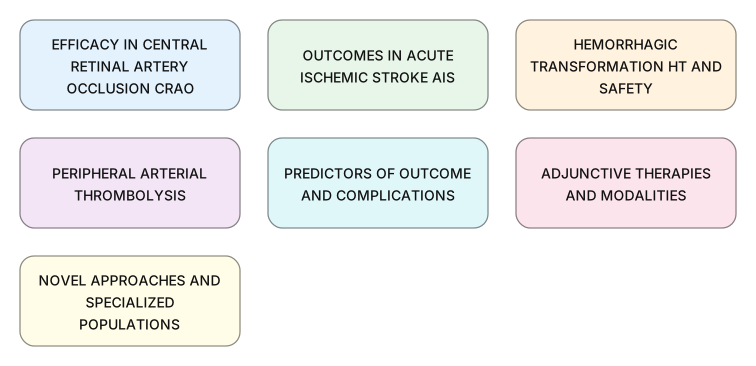
Figure 4. Main extracted research topics
Figure 4. Main extracted research topics (Results)

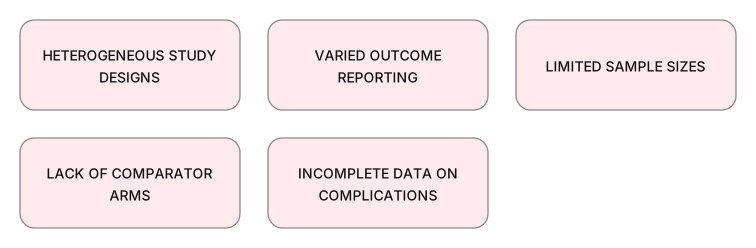
Figure 5. Limitations of current studies (topics)

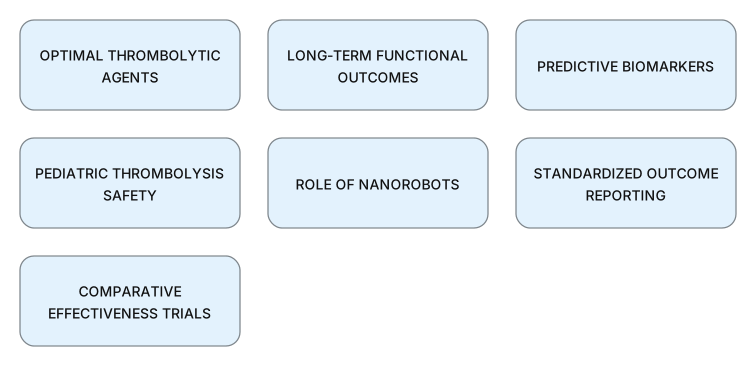
Figure 6. Future research directions (topics)