
SAIMSARA Journal

Machine Generated Science • ISSN 3054-3991

Artificial Intelligence in Drug Discovery: Scoping Review with ☸️SAIMSARA.

Digital Health icon

Digital Health

Issue 3, Volume 1, 2026

DOI: 10.62487/saimsara62d4eb26

Editorial note
• Last update: 2026-04-27 08:57:33
What is this paper about
This review shows where AI is already delivering real value in drug discovery: not just faster predictions, but experimentally validated hits, better ADMET screening, large-scale virtual screening, and even early human translation. It maps which AI advances are truly credible, which claims remain fragile, and where the field is genuinely moving from hype to practical therapeutic impact.
Human-verified editorial review Verified by World ID proof-of-human. This editorial layer was submitted from a SAIMSARA account verified as a unique human.

Evidence preview · Did you know?
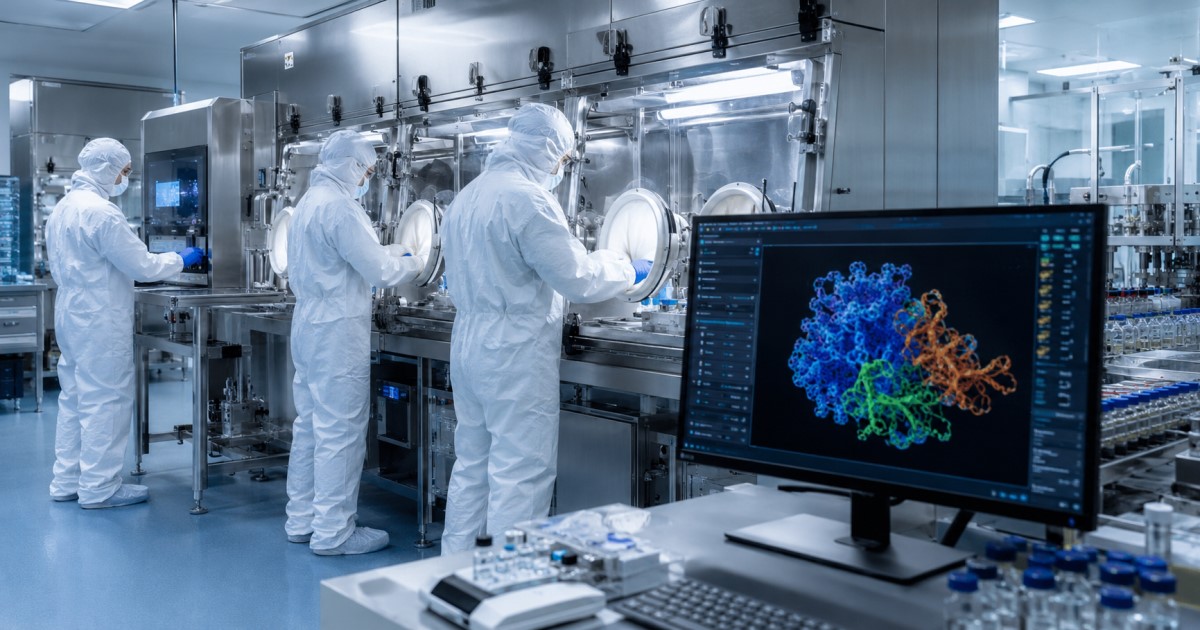
Realistic medical research scene showing AI-supported drug discovery moving from laboratory analysis toward human clinical testing.

AI-designed drugs are reaching humans

Did you know? An AI-discovered TNIK inhibitor advanced to Phase I testing with favorable safety and pharmacokinetics in 78 healthy participants.

This moves AI drug discovery beyond software prediction into early human translational evidence.

Realistic high-performance computing and molecular screening scene showing large-scale AI search across chemical space.

Billions of molecules can be searched fast

Did you know? One AI-accelerated workflow screened one billion compounds in under 24 hours.

The discovery bottleneck is shifting from “can we search this space?” to “which hits are biologically real?”

Realistic medicinal chemistry review meeting with scientists evaluating AI-generated drug candidates and safety predictions.

The machine still needs experts

Did you know? Collective intelligence from 92 researchers outperformed an AI model on most ADMET endpoints.

This is the safeguard signal: powerful AI still needs expert review, realistic validation, and human-in-the-loop decisions.

Swipe sideways on mobile · full evidence map opens after unlock

Abstract: The aim of this review is to evaluate the efficacy, accuracy, and utility of AI-driven methodologies in drug discovery, focusing on target identification, molecular generation, pharmacokinetic prediction, and clinical trial forecasting across diverse therapeutic areas. The review utilises 516 original studies with 5027003 total participants (topic deduplicated ΣN). The mapped evidence suggests that AI now has a substantive role across the drug discovery continuum, with prominent signals in target identification, ultra-large-scale virtual screening, generative molecular design, repurposing, and absorption, distribution, metabolism, excretion, and toxicity prediction. Particularly notable findings included 79% accuracy for forecasting Phase II clinical trial outcomes, an AUROC of 0.88 for blood-brain barrier permeability, 90.4% accuracy for cytochrome P450 inhibition, and a 68% hit rate in one AI-designed liver X receptor agonist program. The evidence map also indicates that the most credible advances are those coupled to biological validation, including organoid, zebrafish, murine, and early human studies, which supports a practical role for AI in prioritizing compounds, reducing attrition, and accelerating repurposing and lead optimization. At the same time, the literature remains methodologically heterogeneous, and several studies highlight that benchmark choice, data curation, interpretability, and realistic validation strongly influence apparent model performance. Overall, this scoping review supports a role for AI as an enabling and increasingly translational layer in drug discovery, while future research should prioritize standardized external validation, explainable multi-objective models, and prospective human-in-the-loop studies that test whether computational gains translate into reproducible therapeutic success.

Keywords: Artificial Intelligence; Drug Discovery; Machine Learning; Generative Chemistry; Lead Optimization; ADMET Prediction; De Novo Drug Design; Virtual Screening; Graph Neural Networks; Drug Repurposing

Review Stats

Get access to the full paper

Unlock the full evidence map

The full evidence review, including the Introduction, Methods, Results, Discussion, Conclusion, figures, and complete reference index, opens after purchase or sign-in. The Evidence Object JSON is a separate machine-readable evidence product: a concentrated synthesis of results, topic-level evidence, and discussion across original and non-original studies. It can be directly input into your LLM, agent, or RAG workflow.

Reference Index (171)