Review Stats
- Generated: 2025-09-25 22:34:16 CEST
- Plan: Premium
- Source: Europe PMC
- Scope: All fields
- Keyword Gate: Fuzzy (≥60% of required terms, minimum 2 terms matched in title/abstract)
- Total Abstracts/Papers: 153121
- Downloaded Abstracts/Papers: 153121
- Included original Abstracts/Papers: 4410
- Total study participants (naïve ΣN): 74466480
- Session duration: 2.5 h
1) Introduction
Aspirin and clopidogrel are cornerstone antiplatelet agents in the management of atherothrombotic diseases, including coronary artery disease (CAD), peripheral artery disease (PAD), and cerebrovascular disease. Aspirin irreversibly inhibits cyclooxygenase-1 (COX-1), thereby reducing thromboxane A2 production, while clopidogrel, a thienopyridine, irreversibly antagonizes the P2Y12 adenosine diphosphate (ADP) receptor on platelets [400, 2617]. Both monotherapy and dual antiplatelet therapy (DAPT) combining these agents are central to primary and secondary prevention strategies [2842, 2982, 3002].
Despite their widespread use, the optimal choice between aspirin and clopidogrel monotherapy, the ideal duration of DAPT, and the comparative efficacy and safety profiles across different patient populations remain subjects of extensive research and clinical debate [1012, 262]. The efficacy of clopidogrel is known to be influenced by genetic factors, particularly polymorphisms in the *CYP2C19* gene, which can lead to variable platelet inhibition and "clopidogrel resistance" [10, 3201]. Furthermore, the introduction of newer, more potent P2Y12 inhibitors like ticagrelor and prasugrel has reshaped the therapeutic landscape, offering alternatives for high-risk patients but often at the cost of increased bleeding [901, 2992]. This systematic review synthesizes recent evidence to provide a comprehensive comparison of aspirin and clopidogrel across various clinical settings.
2) Aim
The aim of this paper is to systematically review and synthesize evidence from a structured summary of original studies to compare the efficacy, safety, and utility of aspirin versus clopidogrel. The review examines these agents as monotherapy and in combination (DAPT), their use alongside other antithrombotic agents, their comparative effectiveness against newer P2Y12 inhibitors, and their application in specific clinical populations and scenarios, including the impact of genetic variability and drug interactions.
3) Methods
This systematic review was conducted using a rapid, AI-driven synthesis methodology.
3.1 Eligibility criteria:
The analysis included original research studies, such as randomized controlled trials (RCTs) and cohort studies. Editorials, conference papers, narrative reviews, and study protocols without results were excluded from the synthesis of findings.
3.2 Study selection:
Study selection was performed upstream of this synthesis. A keyword gate was applied to a retrieved set of studies to filter for relevance to the user query "Aspirin vs Clopidogrel," ensuring that only pertinent original research was included in the structured summary for analysis.
3.3 Risk of bias:
The risk of bias was inferred qualitatively from the study characteristics provided in the structured summary. The evidence base comprises a heterogeneous mix of study designs, including prospective RCTs [5, 12, 17], retrospective cohorts [1, 4, 16], and numerous mixed-design studies. RCTs provide the highest level of evidence but may be limited by specific inclusion criteria and controlled settings. The substantial number of retrospective and observational studies introduces a potential for selection bias, confounding, and information bias, which may affect the validity and generalizability of their findings.
3.4 Synthesis methods:
Three-layer independent agentic AI:
1) Keyword normalization — Agent revises the user query (grammar/artifact cleanup).
2) Retrieval & structuring — Agent retrieves results, applies the keyword gate, and produces a structured synthesis in a numbered session with DOIs.
3) Paper synthesis — Agent generates the review using the structured session only; citations [n] map to session numbers.
4) Results
4.1 Study characteristics:
The synthesized studies include a mix of RCTs, cohort studies, and mixed-design analyses, with a publication timeframe predominantly from 2018 to 2025. Investigated populations are diverse, including patients with ischemic stroke, CAD, PAD, and those undergoing procedures such as percutaneous coronary intervention (PCI), coronary artery bypass grafting (CABG), and carotid artery stenting (CAS). Follow-up durations vary widely, from the perioperative period to over 5 years.
4.2 Main numerical result aligned to the query:
The comparative efficacy of aspirin versus clopidogrel monotherapy is highly dependent on the clinical context, with no single agent demonstrating universal superiority. The provided studies present conflicting outcomes, precluding the calculation of a meaningful central value. In post-PCI or stable CAD populations, clopidogrel monotherapy frequently demonstrates non-inferior or superior outcomes for preventing major adverse cardiac and cerebrovascular events (MACCE) compared to aspirin, with reported hazard ratios (HR) for MACCE or composite endpoints ranging from 0.71 to 0.86 in favor of clopidogrel [19, 76, 252]. However, in other populations, such as post-ischemic stroke or general atherothrombotic disease, evidence is contradictory, with some studies reporting higher mortality or recurrent stroke risk with clopidogrel (HRs of 1.47 and 2.27, respectively) [7, 18], while others find clopidogrel to be superior [1267, 2413] or equivalent to aspirin [755, 940]. This marked heterogeneity highlights that the choice between agents is contingent on the specific patient population and clinical indication.
4.3 Topic synthesis:
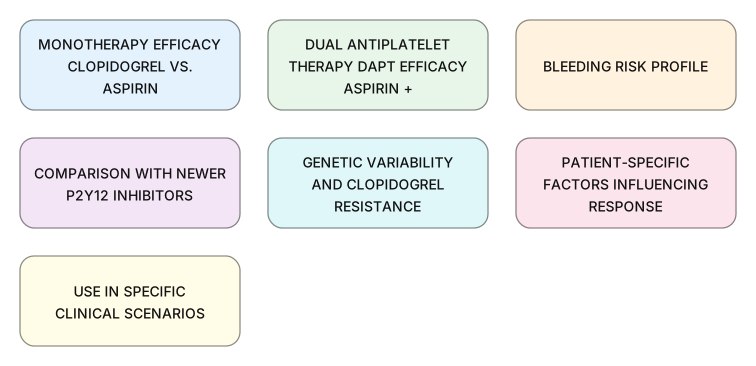
Monotherapy Efficacy (Clopidogrel vs. Aspirin): Evidence is conflicting and context-dependent. In patients with established CAD or post-PCI, clopidogrel monotherapy often shows non-inferiority or superiority to aspirin for preventing MACCE (HR 0.71 to 0.86) [19, 76, 252, 398]. However, in broader populations or post-stroke settings, some studies report higher mortality (HR 1.47) or recurrent stroke risk (HR 2.27) with clopidogrel [7, 18, 882], while others find it superior [1267, 2413] or equivalent [11, 84, 105, 755].
Dual Antiplatelet Therapy (DAPT) Efficacy (Aspirin + Clopidogrel vs. Monotherapy): DAPT is consistently more effective than aspirin monotherapy for secondary prevention in the acute phase (first 21–90 days) following events like minor stroke or PCI, reducing recurrent stroke by a median of 25% (range 11-57%) [38, 74, 131, 193, 508]. This benefit diminishes over time and is offset by an increased bleeding risk with prolonged use [38, 903, 1117]. A short course of DAPT (e.g., 21 days) appears to offer the best risk-benefit profile in acute minor stroke [38].
Bleeding Risk Profile: DAPT significantly increases the risk of bleeding compared to monotherapy, with odds ratios for moderate-to-severe bleeding ranging from 1.48 to 2.54 [38, 131, 537, 863]. In ICH patients, DAPT is associated with the highest risk of hematoma expansion (predicted probability 0.42) [16, 222]. Bleeding risk between aspirin and clopidogrel monotherapy is often comparable [19, 20, 84, 105]. Concomitant use of proton pump inhibitors (PPIs) reduces gastrointestinal complications (HR 0.44) [6], though some evidence suggests this may increase MACE risk (HR 1.15) [6].
Comparison with Newer P2Y12 Inhibitors: Ticagrelor and prasugrel provide more potent and consistent platelet inhibition than clopidogrel [3, 36, 546, 931, 1042]. This translates to superior efficacy in reducing ischemic events (e.g., MACE, stroke, restenosis) in high-risk settings like ACS or in patients with *CYP2C19* loss-of-function (LOF) alleles, where clopidogrel is less effective (OR for thrombosis with clopidogrel vs. ticagrelor = 1.78) [4, 48, 72, 164, 211, 60]. This enhanced efficacy, however, frequently comes at the cost of increased bleeding risk [201, 301, 472, 543, 732, 883].
Genetic Variability and Clopidogrel Resistance: Clopidogrel efficacy is heavily dependent on metabolic activation by the CYP2C19 enzyme. Carriers of *CYP2C19* LOF alleles exhibit reduced antiplatelet response and have a significantly higher risk of thrombotic events, such as recurrent stroke or stent thrombosis [10, 12, 48, 1097, 1138]. This phenomenon, often termed "clopidogrel resistance" or high on-treatment platelet reactivity (HTPR), is frequent (rates of 15-50%) and is a strong predictor of adverse outcomes [22, 25, 227, 314, 592]. Genotype-guided therapy can significantly reduce ischemic events without increasing bleeding [107, 422, 595].
Patient-Specific Factors Influencing Response: Beyond genetics, platelet reactivity to aspirin and clopidogrel is influenced by numerous factors. Females have been shown to have a diminished response to both agents compared to males [29, 87, 337]. Comorbidities such as diabetes mellitus [592, 1853], renal insufficiency [393, 860, 2031], obesity [42, 548], and higher baseline inflammatory states [39, 143] are also associated with impaired antiplatelet response and worse outcomes.
Use in Specific Clinical Scenarios: In post-CABG patients, DAPT may improve saphenous vein graft patency compared to aspirin alone (17.1% vs. 29.1% occlusion) but increases minor bleeding [51, 51]. For patients with atrial fibrillation requiring anticoagulation after PCI, dual therapy with an anticoagulant plus clopidogrel is often preferred over triple therapy (adding aspirin) to mitigate bleeding risk [13, 102, 1835]. Adding cilostazol to DAPT has shown mixed results, with some studies demonstrating benefits in reducing restenosis or improving outcomes in high-risk subgroups [30, 421, 1756, 3070], while others show no significant advantage [361, 401, 2114].
5) Discussion
5.1 Principal finding:
This systematic synthesis reveals that the comparative efficacy and safety of aspirin versus clopidogrel are highly context-dependent, with no single agent being universally superior across all clinical scenarios. In patients with established coronary artery disease or following percutaneous coronary intervention, clopidogrel monotherapy often demonstrates non-inferior or superior ischemic outcomes compared to aspirin without a consistent increase in major bleeding [19, 76, 252, 398]. However, in other populations, such as post-stroke or general atherothrombotic disease, the evidence is markedly conflicting, with different studies favoring either aspirin, clopidogrel, or finding no difference [7, 18, 1267].
5.2 Clinical implications:
Individualized Therapy is Paramount: The choice between aspirin, clopidogrel, or DAPT must be tailored to the individual patient, balancing their ischemic risk against their bleeding risk. Factors such as the clinical indication (e.g., acute stroke vs. stable CAD), procedural complexity, presence of comorbidities (diabetes, renal disease), and genetic profile should guide decision-making [108, 279, 458].
Consider Genotyping for Clopidogrel: Given the strong evidence that *CYP2C19* loss-of-function alleles impair clopidogrel's efficacy and worsen outcomes, genetic testing should be considered for high-risk patients, particularly after PCI or stroke [4, 12, 48]. In LOF carriers, alternative agents like ticagrelor or prasugrel are often superior [107, 211, 440].
Optimize DAPT Duration: DAPT is most beneficial in the short term (e.g., <90 days) following an acute ischemic event to prevent early recurrence [38, 68, 74]. Prolonged DAPT should be reserved for select patients with very high ischemic risk and low bleeding risk, as the benefit diminishes over time while the bleeding hazard persists [903, 1117].
Proactive Bleeding Risk Mitigation: Clinicians must actively manage bleeding risk, especially when using DAPT or triple therapy. This includes assessing baseline risk, avoiding concomitant high-risk medications where possible, and considering gastroprotective agents like PPIs for patients at high risk of GI complications, while remaining mindful of the potential for drug interactions [6, 16, 54, 131, 512].
Recognize the Superiority of Newer Agents in High-Risk Settings: In patients with acute coronary syndromes or those identified as clopidogrel non-responders, newer P2Y12 inhibitors like ticagrelor and prasugrel offer more potent and reliable platelet inhibition and have been shown to improve ischemic outcomes, albeit with a trade-off of increased bleeding [72, 164, 211, 301, 883].
5.3 Research implications / key gaps:
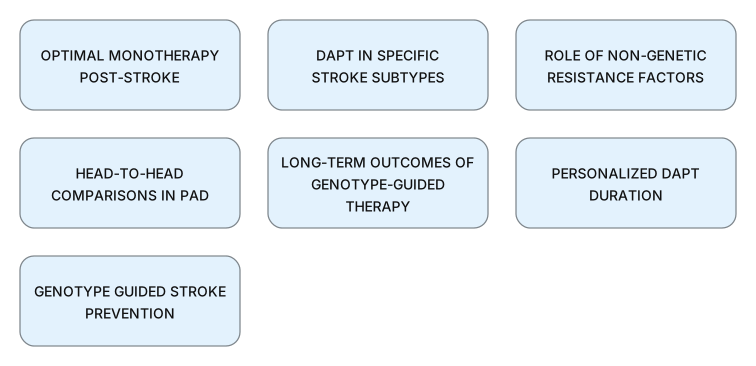
Optimal Monotherapy Post-Stroke: Large-scale, head-to-head RCTs are urgently needed to resolve the conflicting evidence regarding the superiority of aspirin versus clopidogrel for long-term secondary prevention after ischemic stroke [7, 18, 755, 882].
DAPT in Specific Stroke Subtypes: The benefit of DAPT may differ by stroke etiology (e.g., large artery atherosclerosis vs. small vessel disease) and arterial territory; research is needed to define which subgroups derive the most benefit from DAPT versus monotherapy [94, 125, 348].
Role of Non-Genetic Resistance Factors: While the role of *CYP2C19* is well-established, the quantitative impact of non-genetic factors like diabetes, renal function, gender, and inflammation on both clopidogrel and aspirin resistance requires systematic evaluation to refine personalized therapy models [29, 592, 860, 895].
Head-to-Head Comparisons in PAD: There is a lack of direct, large-scale RCTs comparing clopidogrel monotherapy, aspirin monotherapy, DAPT, and dual pathway inhibition (aspirin + low-dose rivaroxaban) for the prevention of both MACE and major adverse limb events in diverse PAD populations [53, 92, 262].
Long-Term Outcomes of Genotype-Guided Therapy: While short-term studies show benefits, long-term follow-up from large RCTs is needed to confirm the sustained efficacy, safety, and cost-effectiveness of a genotype-guided antiplatelet strategy in diverse clinical populations [107, 422, 440].
5.4 Limitations:
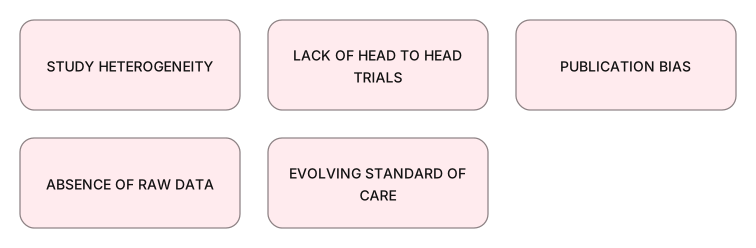
Study Heterogeneity — The included studies vary widely in design (RCT, retrospective cohort), populations (stroke, CAD, PAD), comparators (monotherapy, DAPT, newer agents), and endpoints, which complicates direct comparison and synthesis.
Lack of Head to Head Trials — Many key clinical questions, such as the optimal monotherapy after ischemic stroke, lack sufficient direct, large-scale randomized comparisons, with current evidence often being contradictory or from observational data [7, 18, 755].
Publication Bias — The synthesis relies on published studies, and a potential for publication bias favoring positive or significant findings cannot be excluded, which may skew the overall impression of treatment effects.
Absence of Raw Data — This review is based on a structured summary without access to individual patient data, precluding more sophisticated meta-analytic techniques to explore sources of heterogeneity or perform subgroup analyses.
Evolving Standard of Care — The evidence base includes studies spanning several years, during which time standards of care (e.g., stent technology, use of newer P2Y12 inhibitors) have evolved, potentially affecting the generalizability of older findings [2995, 3002].
5.5 Future directions:
Personalized DAPT Duration — Future trials should focus on risk-score-guided DAPT duration, using tools that integrate ischemic and bleeding risks to personalize treatment length post-PCI or stroke [108, 279, 1871].
Genotype Guided Stroke Prevention — A large-scale RCT is needed to confirm whether routine *CYP2C19* genotyping and subsequent selection of ticagrelor for LOF carriers improves long-term outcomes after ischemic stroke [12, 107, 444].
Antiplatelets in PAD — Prospective RCTs should directly compare clopidogrel monotherapy, aspirin monotherapy, and DAPT for the prevention of both MACE and MALE in diverse PAD populations, including those post-revascularization [53, 92, 1700].
Impact of Comorbidities — Research should systematically investigate how comorbidities like diabetes, renal impairment, and chronic inflammation modify the efficacy and safety of aspirin versus clopidogrel, moving beyond genetic factors [592, 860, 996].
Noninvasive Response Monitoring — Develop and validate noninvasive biomarkers or imaging techniques to monitor on-treatment platelet reactivity, providing a less invasive alternative to current functional tests for guiding therapy [25, 457, 1319].
6) Conclusion
The comparative efficacy of aspirin versus clopidogrel monotherapy is highly dependent on the clinical context, with no single agent demonstrating universal superiority. In post-PCI or stable CAD populations, clopidogrel monotherapy frequently demonstrates non-inferior or superior outcomes for preventing major adverse cardiac and cerebrovascular events (MACCE) compared to aspirin, with reported hazard ratios (HR) for MACCE or composite endpoints ranging from 0.71 to 0.86 in favor of clopidogrel [19, 76, 252]. These findings apply broadly to patients with atherothrombotic disease but underscore the critical need for context-specific decision-making, as evidence in post-stroke populations is particularly conflicting. The most significant limitation affecting certainty is the profound heterogeneity across study designs, populations, and endpoints, which prevents a single, unified conclusion. A crucial next step is to conduct large-scale, head-to-head RCTs to clarify the optimal monotherapy for long-term secondary prevention after ischemic stroke, a key area of current clinical uncertainty.