Asymptomatic Carotid Stenosis: Systematic Review with ☸️SAIMSARA.


saimsara.com Download PDF

Abstract: This paper aims to systematically synthesize the diverse findings related to asymptomatic carotid stenosis, extracting key themes from the provided structured literature summary to illuminate its prevalence, pathophysiology, clinical manifestations, diagnostic approaches, and therapeutic strategies, ultimately identifying current knowledge gaps and future research directions. The review utilises 222 studies with 56552 total participants (naïve ΣN). A prospective randomized controlled trial indicated that 10% to 12% of asymptomatic patients will experience a symptomatic stroke within 5 years, underscoring the inherent risk despite the lack of symptoms. This risk, coupled with observed cognitive impairments and cerebral hypoperfusion, necessitates careful consideration of management strategies. The heterogeneity of study designs and patient populations represents the primary limitation to drawing definitive conclusions. Clinicians should integrate advanced plaque imaging and hemodynamic assessments into risk stratification, moving beyond simple stenosis degree. A crucial next step is to conduct large-scale randomized controlled trials to definitively assess the impact of revascularization on long-term cognitive outcomes in asymptomatic patients.

Keywords: Asymptomatic Carotid Stenosis; Cognitive Impairment; Stroke Prevention;

Review Stats
Identification of studies via Semantic Scholar (all fields) Identification Screening Included Records identified:n=47663Records excluded:n=46663 Records assessed for eligibilityn=1000Records excluded:n=778 Studies included in reviewn=222 PRISMA Diagram generated by ☸️ SAIMSARA
⛛OSMA Triangle Effect-of Predictor → Outcome asymptomatic carotid stenosis  →  Outcome Beneficial for patients ΣN=446 (1%) Harmful for patients ΣN=2114 (4%) Neutral ΣN=53992 (95%) 0 ⛛OSMA Triangle generated by ☸️SAIMSARA
Show OSMA legend
Outcome-Sentiment Meta-Analysis (OSMA): (LLM-only)
Frame: Effect-of Predictor → Outcome • Source: Semantic Scholar
Outcome: Outcome Typical timepoints: 5-y, 30-day. Reported metrics: %, CI, p.
Common endpoints: Common endpoints: complications, mortality, occlusion.
Predictor: asymptomatic carotid stenosis — exposure/predictor. Routes seen: intravenous. Typical comparator: a population-based cohort, controls, healthy controls, endarterectomy for….

  • 1) Beneficial for patients — Outcome with asymptomatic carotid stenosis — [5], [11], [12], [23], [41], [149], [199] — ΣN=446
  • 2) Harmful for patients — Outcome with asymptomatic carotid stenosis — [2], [3], [4], [6], [16], [25], [28], [42], [43], [135], [139], [185], [197] — ΣN=2114
  • 3) No clear effect — Outcome with asymptomatic carotid stenosis — [1], [7], [8], [9], [10], [13], [14], [15], [17], [18], [19], [20], [21], [22], [24], [26], [27], [29], [30], [31], [32], [33], [34], [35], [36], [37], [38], [39], [40], [44], [45], [46], [47], [48], [49], [50], [51], [52], [53], [54], [55], [56], [57], [58], [59], [60], [61], [62], [63], [64], [65], [66], [67], [68], [69], [70], [71], [72], [73], [74], [75], [76], [77], [78], [79], [80], [81], [82], [83], [84], [85], [86], [87], [88], [89], [90], [91], [92], [93], [94], [95], [96], [97], [98], [99], [100], [101], [102], [103], [104], [105], [106], [107], [108], [109], [110], [111], [112], [113], [114], [115], [116], [117], [118], [119], [120], [121], [122], [123], [124], [125], [126], [127], [128], [129], [130], [131], [132], [133], [134], [136], [137], [138], [140], [141], [142], [143], [144], [145], [146], [147], [148], [150], [151], [152], [153], [154], [155], [156], [157], [158], [159], [160], [161], [162], [163], [164], [165], [166], [167], [168], [169], [170], [171], [172], [173], [174], [175], [176], [177], [178], [179], [180], [181], [182], [183], [184], [186], [187], [188], [189], [190], [191], [192], [193], [194], [195], [196], [198], [200], [201], [202], [203], [204], [205], [206], [207], [208], [209], [210], [211], [212], [213], [214], [215], [216], [217], [218], [219], [220], [221], [222] — ΣN=53992
1) Introduction
Asymptomatic carotid stenosis (ACS) represents a significant clinical challenge due to its silent nature and potential for severe cerebrovascular events, including stroke. While the presence of carotid artery narrowing is identifiable through various imaging modalities, the absence of overt neurological symptoms complicates risk stratification and management decisions. Research into ACS spans decades, evolving from early surgical interventions to contemporary investigations into underlying pathophysiology, advanced imaging biomarkers, cognitive implications, and comparative effectiveness of medical and procedural treatments. Understanding the natural history, identifying high-risk plaque features, and optimizing patient selection for intervention remain central to improving outcomes for individuals with ACS.

2) Aim
This paper aims to systematically synthesize the diverse findings related to asymptomatic carotid stenosis, extracting key themes from the provided structured literature summary to illuminate its prevalence, pathophysiology, clinical manifestations, diagnostic approaches, and therapeutic strategies, ultimately identifying current knowledge gaps and future research directions.

3) Methods
Systematic review with multilayer AI research agent: keyword normalization, retrieval & structuring, and paper synthesis (see SAIMSARA About section for details).


4) Results
4.1 Study characteristics:
The extracted literature comprises a wide range of study designs, predominantly cohort studies and mixed designs, with several randomized controlled trials and case-control studies. Populations varied from general health screening cohorts to specific patient groups, including those with peripheral arterial disease, diabetes mellitus, or those undergoing coronary artery bypass grafting. Sample sizes ranged from single case reports to large cohorts of over 20,000 individuals, with typical follow-up periods varying from immediate post-procedure assessment to long-term observations spanning up to 10 years, though many studies did not specify follow-up duration.

4.2 Main numerical result aligned to the query:
A single comparable numeric outcome for asymptomatic carotid stenosis across the heterogeneous studies is not consistently reported in a format suitable for aggregation (median and range). However, a prospective randomized controlled trial indicated that 10% to 12% of asymptomatic patients will experience a symptomatic stroke within 5 years [190]. Another prospective study reported an 11.7% rate of ipsilateral ischemic cerebrovascular events over a median follow-up of 41.1 months in patients with 50-99% asymptomatic carotid artery stenosis [139].

4.3 Topic synthesis:


5) Discussion
5.1 Principal finding:
A prospective randomized controlled trial indicated that 10% to 12% of asymptomatic patients will experience a symptomatic stroke within 5 years [190], highlighting the non-negligible risk associated with asymptomatic carotid stenosis despite the absence of overt symptoms.

5.2 Clinical implications:


5.3 Research implications / key gaps:


5.4 Limitations:


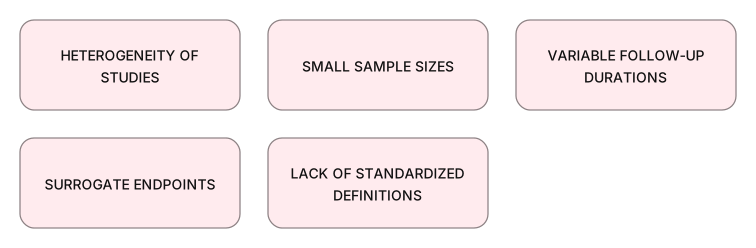
5.5 Future directions:


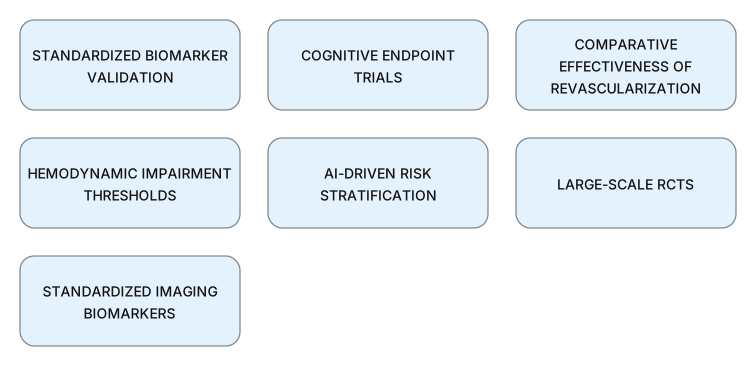
6) Conclusion
A prospective randomized controlled trial indicated that 10% to 12% of asymptomatic patients will experience a symptomatic stroke within 5 years [190], underscoring the inherent risk despite the lack of symptoms. This risk, coupled with observed cognitive impairments and cerebral hypoperfusion, necessitates careful consideration of management strategies. The heterogeneity of study designs and patient populations represents the primary limitation to drawing definitive conclusions. Clinicians should integrate advanced plaque imaging and hemodynamic assessments into risk stratification, moving beyond simple stenosis degree. A crucial next step is to conduct large-scale randomized controlled trials to definitively assess the impact of revascularization on long-term cognitive outcomes in asymptomatic patients.

References
SAIMSARA Session Index — session.json

Figure 1. Publication-year distribution of included originals

Figure 2. Study-design distribution of included originals
Figure 2. Study-design distribution

Figure 3. Study-type (directionality) distribution of included originals
Figure 3. Directionality distribution

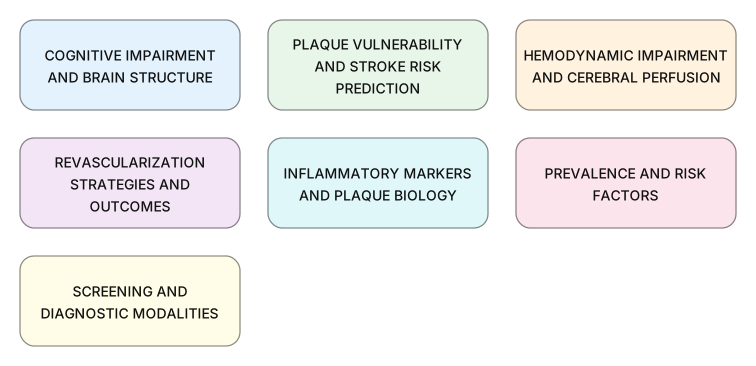
Figure 4. Main extracted research topics
Figure 4. Main extracted research topics (Results)

Figure 5. Limitations of current studies (topics)

Figure 6. Future research directions (topics)