Review Stats
- Generated: 2025-09-27 18:55:12 CEST
- Plan: Premium (expanded craft tokens; source: PubMed)
- Source: PubMed
- Scope: Titles/Abstracts (tiab)
- Keyword Gate: Fuzzy (≥60% of required terms, minimum 2 terms matched in title/abstract)
- Total Abstracts/Papers: 439
- Downloaded Abstracts/Papers: 436
- Included original Abstracts/Papers: 234
- Total study participants (naïve ΣN): 64166
1) Introduction
Bariatric surgery (BS) encompasses a range of procedures aimed at treating severe obesity and its associated comorbidities. The indications for BS have evolved, reflecting a growing understanding of its efficacy and safety profile across diverse patient populations and clinical scenarios. This review synthesizes current evidence on the indications for bariatric surgery, encompassing primary procedures, revisional surgeries, and specific patient cohorts.
2) Aim
To systematically review and synthesize the scientific literature regarding the indications for bariatric surgery based on the provided structured extraction summary.
3) Methods
This review was conducted using a rapid systematic review (SR) methodology, exclusively leveraging the provided structured extraction summary of original studies. No external literature was consulted, and no new screening or abstract re-reading was performed.
3.1 Eligibility criteria
Original studies identified within the structured summary were included. Editorials, conference papers, and reviews were excluded.
3.2 Study selection
The session's keyword gate was applied to filter studies relevant to "bariatric surgery indication."
3.3 Risk of bias
Risk of bias was inferred qualitatively based on study design information available in the structured summary (e.g., cohort, case series, mixed methods). Retrospective designs were noted, which inherently carry potential biases related to data collection and confounding factors.
3.4 Synthesis
The synthesis of information was performed using a three-layer independent agentic AI approach: keyword normalization, retrieval and structuring of data from the provided summary, and subsequent paper synthesis.
4) Results
The reviewed studies encompass a variety of designs, including cohort, mixed-methods, and case series, primarily focusing on patients undergoing bariatric surgery. Populations studied range from general bariatric surgery candidates to specific groups such as the elderly, individuals with type 2 diabetes, and those with prior foregut surgery. Follow-up periods vary widely, from 30 days to several years.
4.1 Study characteristics
The included studies represent a range of retrospective and mixed-design investigations, primarily examining outcomes and indications for bariatric surgery across diverse patient populations. Follow-up periods vary significantly, from short-term (30 days) to long-term (up to 5 years or more).
4.2 Main numerical result aligned to the query
Indications for bariatric surgery are predominantly based on Body Mass Index (BMI) thresholds, with guidelines often recommending surgery for BMI ≥ 40 kg/m² or BMI ≥ 35 kg/m² with significant comorbidities [97, 130, 146, 174, 183, 185, 189, 195, 215, 227, 233]. Type 2 diabetes mellitus (T2DM) is increasingly recognized as an independent indication, particularly for patients with BMI < 35 kg/m² when conservative management fails [137, 186, 189, 193, 199, 215]. Specific comorbidities such as GERD, non-alcoholic fatty liver disease (NAFLD), and idiopathic intracranial hypertension (IIH) are also emerging as indications for bariatric surgery [83, 99, 103, 154, 168, 176]. Revisionary surgery indications commonly include weight regain or insufficient weight loss (ranging from 35% to 71.9% of cases) [7, 20, 34, 45, 51, 115, 118, 151, 184, 196, 197, 204, 205, 207, 214, 217].
4.3 Topic synthesis
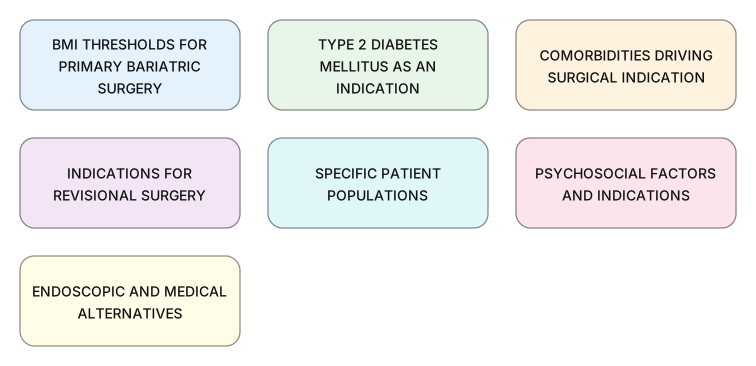
BMI Thresholds for Primary Bariatric Surgery: Indications are frequently established by BMI ≥ 40 kg/m² or ≥ 35 kg/m² with comorbidities [97, 130, 146, 174, 183, 185, 189, 195, 215, 227, 233].
Type 2 Diabetes Mellitus as an Indication: T2DM is an independent indication, especially for BMI < 35 kg/m² when conservative measures fail [137, 186, 189, 193, 199, 215].
Comorbidities Driving Surgical Indication: GERD (45-65% of conversions) [47, 53, 65, 123, 154, 168, 173, 176], NAFLD [99, 103, 169, 201], and IIH [83, 202] are significant indications.
Indications for Revisional Surgery: Weight regain or insufficient weight loss are primary drivers, accounting for 35% to 71.9% of cases [7, 20, 34, 45, 51, 115, 118, 151, 184, 196, 197, 204, 205, 207, 214, 217].
Specific Patient Populations: Elderly patients (≥ 60 years) are candidates for revisional surgery [3], and bariatric surgery is considered for severe obesity with mobility impairment [150] or lymphedema [61].
Psychosocial Factors and Indications: Psychological distress and Axis II disorders may indicate a need for enhanced psychiatric support and do not contraindicate surgery [139, 230].
Endoscopic and Medical Alternatives: Endoscopic bariatric procedures are emerging, and weight loss medications are considered potential non-surgical alternatives for specific indications like kidney transplant eligibility [4, 35].
5) Discussion
5.1 Principal finding
The primary finding is that bariatric surgery indications are multifaceted, extending beyond traditional BMI thresholds to encompass specific comorbidities like type 2 diabetes mellitus, GERD, and NAFLD, as well as patient-specific factors such as age, psychosocial status, and previous surgical history [4, 83, 99, 137, 154, 186, 215]. Revisionary surgery is frequently indicated for weight regain or insufficient weight loss [7, 118, 151].
5.2 Clinical implications
Personalized Indication Assessment: Clinicians should consider a comprehensive assessment of BMI, comorbidities, psychosocial factors, and patient goals when determining bariatric surgery indications.
T2DM Management: Type 2 diabetes, particularly when inadequately controlled by conservative means, is a strong indication for bariatric surgery, even with lower BMI thresholds in some guidelines [137, 186, 189].
GERD and NAFLD: The presence of GERD and NAFLD may warrant bariatric surgery, with specific procedures potentially offering better outcomes for GERD [154, 176].
Revisional Surgery Considerations: Weight regain and insufficient weight loss are common indications for revisional surgery, necessitating careful evaluation of prior procedures and patient selection [115, 118, 151].
Elderly and High-Risk Populations: Bariatric surgery can be safe and effective in elderly patients and those with specific comorbidities, provided it is performed in specialized centers [3, 150].
5.3 Research implications / key gaps
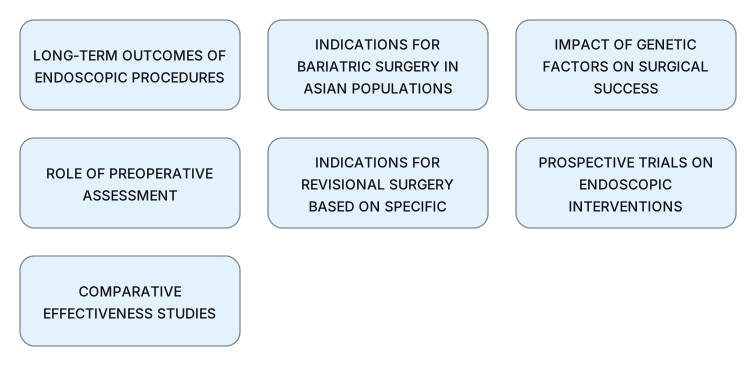
Long-term Outcomes of Endoscopic Procedures: Further research is needed on the long-term efficacy and safety of endoscopic bariatric treatments as alternatives or adjuncts to surgical interventions [4, 35].
Indications for Bariatric Surgery in Asian Populations: More data are required to refine indication criteria for Asian populations, considering their distinct metabolic profiles [97, 183].
Impact of Genetic Factors on Surgical Success: Understanding the influence of genetic mutations (e.g., MC4R) on the effectiveness of different bariatric procedures is crucial for personalized indication setting [84].
Role of Preoperative Assessment: The precise role and yield of preoperative assessments like endoscopy and body composition analysis in refining surgical indications need further clarification [77, 144, 146, 213].
Indications for Revisional Surgery Based on Specific Complications: Detailed guidelines are needed for the indications of revisional surgery based on specific post-bariatric complications beyond weight regain.
5.4 Limitations
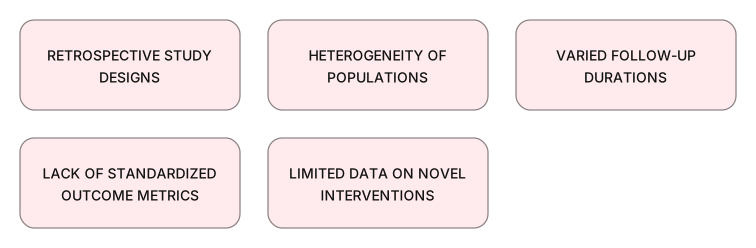
Retrospective Study Designs — A significant proportion of the included studies are retrospective, which can introduce selection bias and confounding variables that limit the certainty of causal inferences.
Heterogeneity of Populations — The studies examine a wide array of patient demographics, comorbidities, and surgical procedures, making direct comparisons and generalizations challenging.
Varied Follow-up Durations — The differing follow-up periods across studies hinder the ability to draw consistent conclusions about long-term outcomes related to specific indications.
Lack of Standardized Outcome Metrics — Inconsistencies in reported outcomes (e.g., different definitions of weight loss, comorbidity remission) make direct quantitative synthesis difficult.
Limited Data on Novel Interventions — While emerging, data on the long-term indications and outcomes of endoscopic bariatric interventions are still developing.
5.5 Future directions
Prospective Trials on Endoscopic Interventions — Conduct prospective, randomized controlled trials to establish definitive indications and long-term outcomes for endoscopic bariatric procedures.
Comparative Effectiveness Studies — Perform comparative studies evaluating the effectiveness of different bariatric procedures for specific indications, such as T2DM or GERD.
Development of Biomarker-Based Indications — Investigate biomarkers (e.g., genetic, metabolic) that could refine indications for bariatric surgery and predict treatment response.
Standardized Core Outcome Sets — Implement and adhere to standardized core outcome sets for assessing long-term results after bariatric surgery to facilitate meta-analyses and evidence synthesis [22].
Real-World Evidence on Revisional Surgery — Gather more real-world evidence on the optimal indications and outcomes for various types of revisional bariatric surgery.
6) Conclusion
Bariatric surgery indications are predominantly based on BMI thresholds (≥ 40 kg/m² or ≥ 35 kg/m² with comorbidities), with type 2 diabetes mellitus emerging as a significant independent indication, particularly when conservative management fails [97, 137, 186]. The generalizability of findings is limited by the retrospective nature of many studies and the heterogeneity of patient populations and follow-up durations. A key limitation is the lack of standardized outcome metrics across studies, hindering direct quantitative comparisons. Future research should focus on prospective trials for endoscopic interventions and comparative effectiveness studies for specific indications.