
SAIMSARA Journal

Machine Generated Science • ISSN 3054-3991

Cosmetic Botulinum Toxin Injections: Efficacy, Safety, Techniques, and Patient Outcomes: Scoping Review with ☸️SAIMSARA.

Skin & Aesthetics

Skin & Aesthetics

Issue 8, Volume 1, 2026

DOI: 10.62487/saimsara25ad2129

Editorial note
• Last update: 2026-05-20 10:41:18
What is this paper about
Cosmetic botulinum toxin is not just “wrinkle treatment”: this evidence map shows where it works, where technique and anatomy decide outcomes, and where real safety risks emerge from unregulated products, poor training, or weak counseling. Built from 201 references and 304 original studies, the full map gives a practical, reference-linked view of efficacy, complications, patient satisfaction, technique choices, and regulatory gaps for modern aesthetic practice.
Human-verified editorial review Verified by World ID proof-of-human. This editorial layer was submitted from a SAIMSARA account verified as a unique human.

Evidence preview · Did you know?
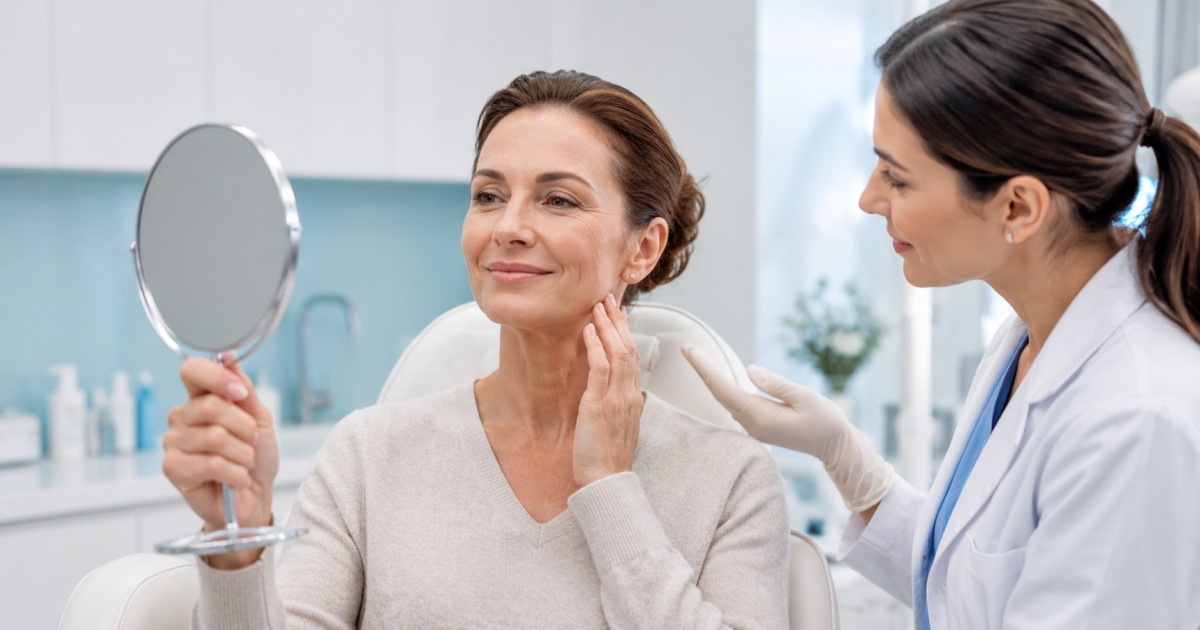
Realistic aesthetic medicine consultation scene with patient and clinician.

Satisfaction is the human signal

Did you know? Cosmetic botulinum toxin cohorts reported 88% satisfaction in one dermatologic practice survey and 85% satisfaction in a UK cosmetic practice.

The strongest patient signal is not only wrinkle reduction, but perceived value, confidence, and appearance satisfaction.
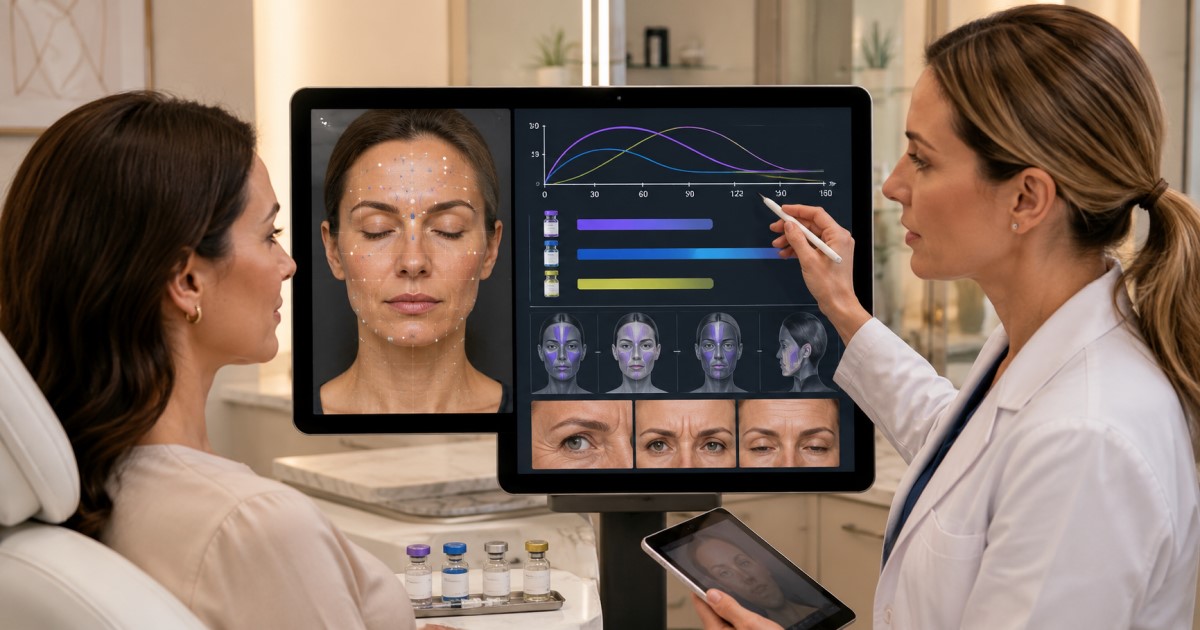
Realistic clinical evidence scene showing aesthetic injection planning and outcome measurement.

Not every toxin behaves the same

Did you know? Long-term onabotulinumtoxinA showed durable benefit across 15 years, 50 patients, and 1,098 treatment cycles, while Type E EB-001 acted within 24 hours but lasted only 14–30 days.

The evidence map separates standard durable neuromodulation from faster, shorter, potentially event-limited toxin strategies.

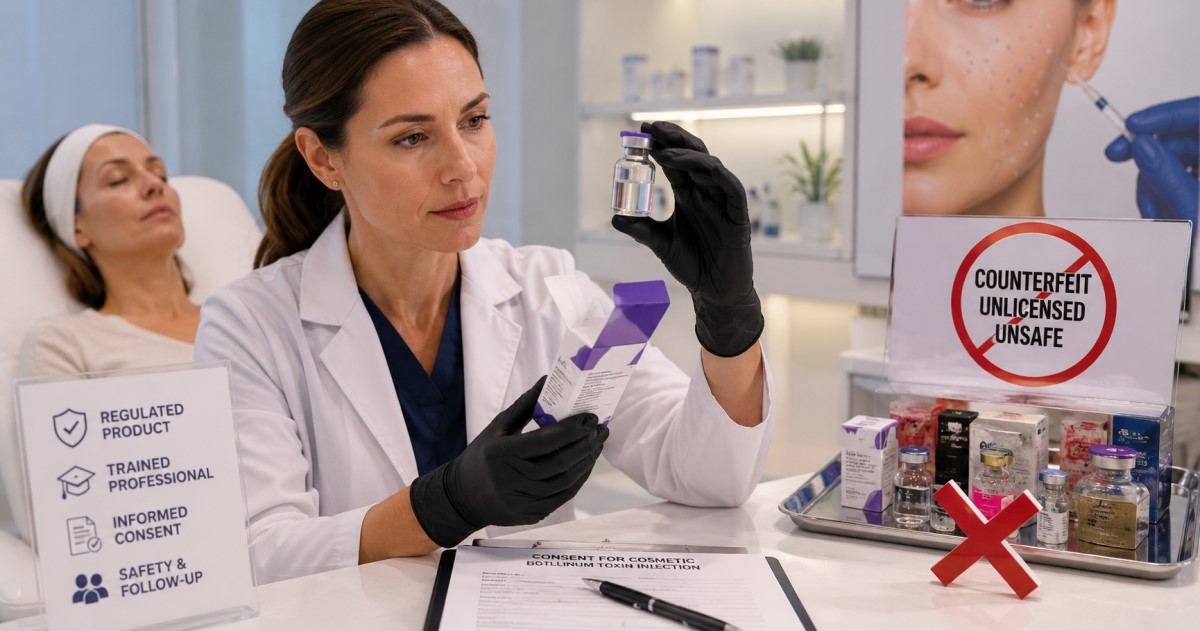
Realistic safety and regulation scene with medical injector, product vial, and clinical documentation.

The real risk is bad systems

Did you know? Serious harms were repeatedly linked to unregulated access, counterfeit toxin, unauthorized online sources, and nonmedical or unlicensed administration; one 919-person UK survey reported 26.1% bruising/swelling, 24.7% headache, and 2.9% toxin resistance.

Cosmetic Botox safety depends on product legitimacy, anatomy, training, consent, and reporting — not only on the molecule.

Swipe sideways on mobile · full evidence map opens after unlock

Abstract: To map and synthesize original research on botulinum toxin in cosmetic contexts, emphasizing clinical efficacy, treatment techniques, patient-centered outcomes, adverse events, education, regulation, and research gaps relevant to aesthetic practice. The review uses 201 references and builds its evidence map from 304 original studies with 100.789 total participants/sample observations (topic-deduplicated ΣN). This scoping review indicates that cosmetic botulinum toxin, particularly type A for dynamic facial lines, is associated with effective minimally invasive rejuvenation and consistently high patient satisfaction, with reported satisfaction rates of 85–88% in cosmetic practice cohorts and durable effects across approximately 3–4 months for glabellar indications. The dominant signal is that real-world value depends less on the molecule itself than on indication selection, anatomy-based technique, practitioner competence, and regulated product supply, given that severe harms such as iatrogenic botulism cluster around unlicensed or self-administered injections. The evidence also highlights expanding applications in scar modulation, masseter contouring, and combination treatments, alongside under-recognized psychosocial and immunogenicity considerations. Practically, this supports integrating standardized counseling, objective outcome measurement, and verified supply chains into routine aesthetic practice. Future research should prioritize large prospective safety registries linking product source, practitioner qualification, and complication trajectories to address the main uncertainty around real-world risk.

Keywords: Botulinum toxin; Cosmetic injections; Botulinum toxin type A; Glabellar lines; Facial wrinkles; Adverse effects; Eyelid ptosis; Patient awareness; Patient education; Quality of life

Review Stats

Get access to the full paper

Unlock the full evidence map

The full evidence review, including the Introduction, Methods, Results, Discussion, Conclusion, figures, and complete reference index, opens after purchase or sign-in. The Evidence Object JSON is a separate machine-readable evidence product: a concentrated synthesis of results, topic-level evidence, and discussion across original and non-original studies. It can be directly input into your LLM, agent, or RAG workflow.

Reference Index (201)