Carotid Disease and CEA: Systematic Review with ☸️SAIMSARA.


saimsara.com Download PDF

Abstract: The aim of this paper is to systematically review and synthesize the current academic landscape concerning carotid disease and carotid endarterectomy (CEA), focusing on diagnostic advancements, perioperative outcomes, comparative effectiveness of revascularization strategies, and long-term prognostic indicators. The review utilises 229 studies with 253324 total participants (naïve ΣN). The median 30-day stroke or death rate following carotid endarterectomy (CEA) was 1.65%, with a range from 0% to 4.2%, indicating that CEA is a generally safe and effective procedure for stroke prevention. This outcome is broadly generalizable to symptomatic and asymptomatic patients with significant carotid stenosis, though specific comorbidities and patient characteristics influence individual risk. The heterogeneity of study designs and inconsistent outcome reporting most significantly affects certainty in drawing broad comparative conclusions. Clinicians should consider individualized risk profiles, including plaque vulnerability and concomitant cardiovascular disease, when selecting revascularization strategies, and future research should focus on large-scale, standardized comparative trials.

Keywords: Carotid Endarterectomy; Carotid Artery Disease; Carotid Stenosis; Stroke Prevention; Asymptomatic Carotid Disease; Symptomatic Carotid Disease; Carotid Artery Stenting; Vulnerable Plaque; Coronary Artery Disease; Perioperative Complications

Review Stats
Identification of studies via Semantic Scholar (all fields) Identification Screening Included Records identified:n=1586Records excluded:n=586 Records assessed for eligibilityn=1000Records excluded:n=771 Studies included in reviewn=229 PRISMA Diagram generated by ☸️ SAIMSARA
⛛OSMA Triangle Effect-of Predictor → Outcome CEA  →  carotid disease Beneficial for patients ΣN=7022 (3%) Harmful for patients ΣN=2522 (1%) Neutral ΣN=243780 (96%) 0 ⛛OSMA Triangle generated by ☸️SAIMSARA
Show OSMA legend
Outcome-Sentiment Meta-Analysis (OSMA): (LLM-only)
Frame: Effect-of Predictor → Outcome • Source: Semantic Scholar
Outcome: carotid disease Typical timepoints: peri/post-op, 30-day. Reported metrics: %, CI, p.
Common endpoints: Common endpoints: complications, mortality, functional.
Predictor: CEA — procedure/intervention. Routes seen: iv. Typical comparator: cas, cea, cea. cas might be as safe as, best medical therapy….

  • 1) Beneficial for patients — carotid disease with CEA — [51], [109], [187], [199] — ΣN=7022
  • 2) Harmful for patients — carotid disease with CEA — [61], [64], [73], [198] — ΣN=2522
  • 3) No clear effect — carotid disease with CEA — [1], [2], [3], [4], [5], [6], [7], [8], [9], [10], [11], [12], [13], [14], [15], [16], [17], [18], [19], [20], [21], [22], [23], [24], [25], [26], [27], [28], [29], [30], [31], [32], [33], [34], [35], [36], [37], [38], [39], [40], [41], [42], [43], [44], [45], [46], [47], [48], [49], [50], [52], [53], [54], [55], [56], [57], [58], [59], [60], [62], [63], [65], [66], [67], [68], [69], [70], [71], [72], [74], [75], [76], [77], [78], [79], [80], [81], [82], [83], [84], [85], [86], [87], [88], [89], [90], [91], [92], [93], [94], [95], [96], [97], [98], [99], [100], [101], [102], [103], [104], [105], [106], [107], [108], [110], [111], [112], [113], [114], [115], [116], [117], [118], [119], [120], [121], [122], [123], [124], [125], [126], [127], [128], [129], [130], [131], [132], [133], [134], [135], [136], [137], [138], [139], [140], [141], [142], [143], [144], [145], [146], [147], [148], [149], [150], [151], [152], [153], [154], [155], [156], [157], [158], [159], [160], [161], [162], [163], [164], [165], [166], [167], [168], [169], [170], [171], [172], [173], [174], [175], [176], [177], [178], [179], [180], [181], [182], [183], [184], [185], [186], [188], [189], [190], [191], [192], [193], [194], [195], [196], [197], [200], [201], [202], [203], [204], [205], [206], [207], [208], [209], [210], [211], [212], [213], [214], [215], [216], [217], [218], [219], [220], [221], [222], [223], [224], [225], [226], [227], [228], [229] — ΣN=243780
1) Introduction
Carotid artery disease, primarily characterized by atherosclerotic stenosis of the extracranial carotid arteries, represents a significant risk factor for ischemic stroke. Carotid endarterectomy (CEA) is a well-established surgical intervention aimed at preventing stroke by removing atherosclerotic plaque from the carotid artery [12, 31]. The management of carotid disease involves complex considerations, including patient symptomatology, degree of stenosis, presence of vulnerable plaque, and co-existing comorbidities such as coronary artery disease (CAD) [6, 10, 25]. Recent advancements in imaging, artificial intelligence (AI), and alternative revascularization techniques like carotid artery stenting (CAS) and transcarotid artery revascularization (TCAR) have further diversified treatment paradigms, necessitating a comprehensive understanding of their comparative efficacy, safety, and long-term outcomes [2, 15, 55]. This paper synthesizes current evidence on carotid disease and CEA, encompassing diagnostic approaches, perioperative risks, treatment comparisons, and prognostic factors.

2) Aim
The aim of this paper is to systematically review and synthesize the current academic landscape concerning carotid disease and carotid endarterectomy (CEA), focusing on diagnostic advancements, perioperative outcomes, comparative effectiveness of revascularization strategies, and long-term prognostic indicators.

3) Methods
Systematic review with multilayer AI research agent: keyword normalization, retrieval & structuring, and paper synthesis (see SAIMSARA About section for details).


4) Results
4.1 Study characteristics:
The evidence base comprises a diverse array of study designs, including prospective and retrospective cohort studies, randomized controlled trials (RCTs), case-control studies, case series, and case reports. Populations frequently include patients undergoing CEA for symptomatic or asymptomatic carotid stenosis, often with concomitant coronary artery disease (CAD) or other multimorbidities. Studies also focus on specific subgroups such as elderly patients, those with vulnerable plaques, or those undergoing alternative revascularization procedures. Follow-up periods vary widely, ranging from immediate perioperative outcomes (30-day) to long-term assessments spanning several years.

4.2 Main numerical result aligned to the query:
The median 30-day stroke or death rate following carotid endarterectomy (CEA) was 1.65%, with a range from 0% to 4.2% [137, 160, 172, 176, 209, 216, 228].

4.3 Topic synthesis:


5) Discussion
5.1 Principal finding:
The median 30-day stroke or death rate following carotid endarterectomy (CEA) was 1.65%, with a range from 0% to 4.2% [137, 160, 172, 176, 209, 216, 228], indicating that CEA is a procedure with generally low perioperative morbidity and mortality.

5.2 Clinical implications:


5.3 Research implications / key gaps:


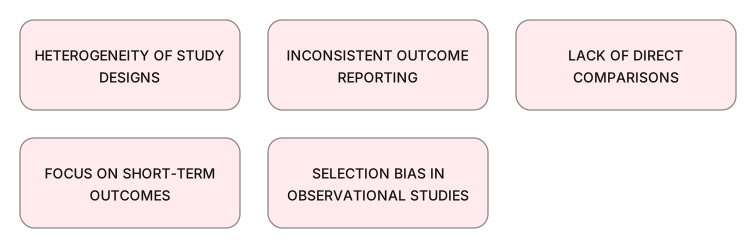
5.4 Limitations:


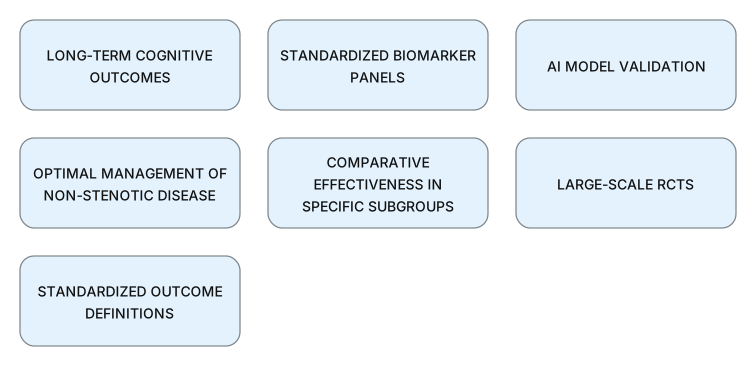
5.5 Future directions:


6) Conclusion
The median 30-day stroke or death rate following carotid endarterectomy (CEA) was 1.65%, with a range from 0% to 4.2% [137, 160, 172, 176, 209, 216, 228], indicating that CEA is a generally safe and effective procedure for stroke prevention. This outcome is broadly generalizable to symptomatic and asymptomatic patients with significant carotid stenosis, though specific comorbidities and patient characteristics influence individual risk. The heterogeneity of study designs and inconsistent outcome reporting most significantly affects certainty in drawing broad comparative conclusions. Clinicians should consider individualized risk profiles, including plaque vulnerability and concomitant cardiovascular disease, when selecting revascularization strategies, and future research should focus on large-scale, standardized comparative trials.

References
SAIMSARA Session Index — session.json

Figure 1. Publication-year distribution of included originals

Figure 2. Study-design distribution of included originals
Figure 2. Study-design distribution

Figure 3. Study-type (directionality) distribution of included originals
Figure 3. Directionality distribution

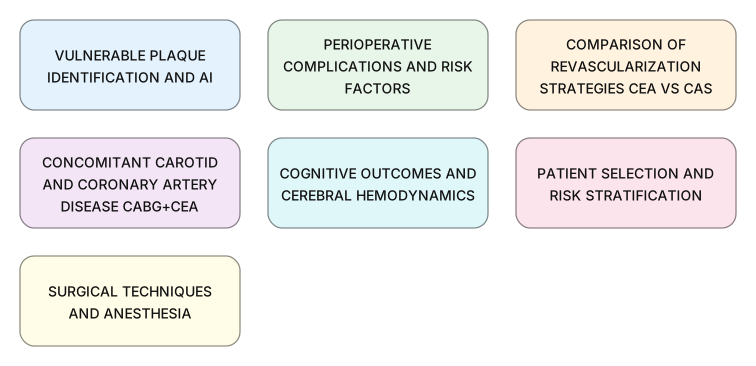
Figure 4. Main extracted research topics
Figure 4. Main extracted research topics (Results)

Figure 5. Limitations of current studies (topics)

Figure 6. Future research directions (topics)