Carotid Disease Pathophysiology: Systematic Review with ☸️SAIMSARA.


saimsara.com Download PDF

Abstract: The aim of this paper is to systematically review and synthesize the current understanding of carotid disease pathophysiology, integrating diverse findings from recent academic literature to identify key mechanisms, associated risk factors, clinical implications, and future research directions. The review utilises 198 studies with 267483 total participants (naïve ΣN). The standardized prevalence of carotid atherosclerosis (CA) in a middle-aged and older Chinese population was 36.2%. This high prevalence underscores the widespread impact of carotid disease, driven by complex interactions between hemodynamic forces, inflammatory processes, molecular dysregulation, and systemic risk factors. The significant heterogeneity in study designs and reporting, particularly the lack of specified methodologies and comprehensive statistical data in many studies, represents the primary limitation affecting the certainty and generalizability of current findings. Future research should focus on large-scale, longitudinal multi-omics studies to elucidate causal pathways and develop precision medicine approaches for diagnosis and treatment.

Keywords: Carotid artery disease; Atherosclerosis; Pathophysiology; Inflammation; Endothelial dysfunction; Hemodynamics; Vascular remodeling; Carotid stenosis; Biomarkers; Moyamoya disease

Review Stats
Identification of studies via Semantic Scholar (all fields) Identification Screening Included Records identified:n=183018Records excluded:n=182018 Records assessed for eligibilityn=1000Records excluded:n=802 Studies included in reviewn=198 PRISMA Diagram generated by ☸️ SAIMSARA
⛛OSMA Triangle Effect-of Predictor → Outcome carotid disease pathophysiology  →  Outcome Beneficial for patients ΣN=5694 (2%) Harmful for patients ΣN=60961 (23%) Neutral ΣN=200828 (75%) 0 ⛛OSMA Triangle generated by ☸️SAIMSARA
Show OSMA legend
Outcome-Sentiment Meta-Analysis (OSMA): (LLM-only)
Frame: Effect-of Predictor → Outcome • Source: Semantic Scholar
Outcome: Outcome Typical timepoints: 12-mo, 4-day. Reported metrics: %, CI, p.
Common endpoints: Common endpoints: complications, occlusion, functional.
Predictor: carotid disease pathophysiology — exposure/predictor. Routes seen: sc. Typical comparator: controls, healthy individuals, less active patients, healthy controls….

  • 1) Beneficial for patients — Outcome with carotid disease pathophysiology — [61], [74], [79], [90], [93], [95], [99], [100] — ΣN=5694
  • 2) Harmful for patients — Outcome with carotid disease pathophysiology — [2], [15], [51], [52], [56], [57], [58], [59], [60], [66], [67], [68], [69], [70], [71], [72], [73], [75], [76], [77], [82], [83], [85], [86], [89], [92], [94], [97], [98] — ΣN=60961
  • 3) No clear effect — Outcome with carotid disease pathophysiology — [1], [3], [4], [5], [6], [7], [8], [9], [10], [11], [12], [13], [14], [16], [17], [18], [19], [20], [21], [22], [23], [24], [25], [26], [27], [28], [29], [30], [31], [32], [33], [34], [35], [36], [37], [38], [39], [40], [41], [42], [43], [44], [45], [46], [47], [48], [49], [50], [53], [54], [55], [62], [63], [64], [65], [78], [80], [81], [84], [87], [88], [91], [96], [101], [102], [103], [104], [105], [106], [107], [108], [109], [110], [111], [112], [113], [114], [115], [116], [117], [118], [119], [120], [121], [122], [123], [124], [125], [126], [127], [128], [129], [130], [131], [132], [133], [134], [135], [136], [137], [138], [139], [140], [141], [142], [143], [144], [145], [146], [147], [148], [149], [150], [151], [152], [153], [154], [155], [156], [157], [158], [159], [160], [161], [162], [163], [164], [165], [166], [167], [168], [169], [170], [171], [172], [173], [174], [175], [176], [177], [178], [179], [180], [181], [182], [183], [184], [185], [186], [187], [188], [189], [190], [191], [192], [193], [194], [195], [196], [197], [198] — ΣN=200828
1) Introduction
Carotid artery disease, primarily atherosclerosis, represents a significant global health burden due to its profound implications for cerebrovascular and cardiovascular events. Understanding the intricate pathophysiology of carotid disease is crucial for developing effective diagnostic tools, therapeutic interventions, and preventive strategies. This paper synthesizes current research on the multifaceted mechanisms underlying carotid disease, ranging from initial plaque formation to its systemic and cerebral manifestations.

2) Aim
The aim of this paper is to systematically review and synthesize the current understanding of carotid disease pathophysiology, integrating diverse findings from recent academic literature to identify key mechanisms, associated risk factors, clinical implications, and future research directions.

3) Methods
Systematic review with multilayer AI research agent: keyword normalization, retrieval & structuring, and paper synthesis (see SAIMSARA About section for details).


4) Results
4.1 Study characteristics:
The review encompassed a broad spectrum of study designs, including prospective and retrospective cohorts, cross-sectional analyses, case-control studies, and numerous experimental investigations utilizing animal models (e.g., mice, rats, minipigs, rabbits) and human tissue samples. Patient populations varied widely, from healthy individuals and those with specific risk factors (e.g., diabetes, hypertension, HIV, rheumatoid arthritis) to patients with advanced carotid stenosis, ischemic stroke, or rare conditions like Moyamoya disease and fibromuscular dysplasia. Follow-up periods, when specified, ranged from short-term (e.g., 7 days to 3 months) to long-term (e.g., 5 to 24 years).

4.2 Main numerical result aligned to the query:
The standardized prevalence of carotid atherosclerosis (CA) in a middle-aged and older Chinese population was 36.2% [106].

4.3 Topic synthesis:


5) Discussion
5.1 Principal finding:
The standardized prevalence of carotid atherosclerosis in a middle-aged and older Chinese population was 36.2% [106], highlighting its significant presence and indicating a widespread subclinical burden of disease.

5.2 Clinical implications:


5.3 Research implications / key gaps:


5.4 Limitations:


5.5 Future directions:


6) Conclusion
The standardized prevalence of carotid atherosclerosis (CA) in a middle-aged and older Chinese population was 36.2% [106]. This high prevalence underscores the widespread impact of carotid disease, driven by complex interactions between hemodynamic forces, inflammatory processes, molecular dysregulation, and systemic risk factors. The significant heterogeneity in study designs and reporting, particularly the lack of specified methodologies and comprehensive statistical data in many studies, represents the primary limitation affecting the certainty and generalizability of current findings. Future research should focus on large-scale, longitudinal multi-omics studies to elucidate causal pathways and develop precision medicine approaches for diagnosis and treatment.

References
SAIMSARA Session Index — session.json

Figure 1. Publication-year distribution of included originals

Figure 2. Study-design distribution of included originals
Figure 2. Study-design distribution

Figure 3. Study-type (directionality) distribution of included originals
Figure 3. Directionality distribution

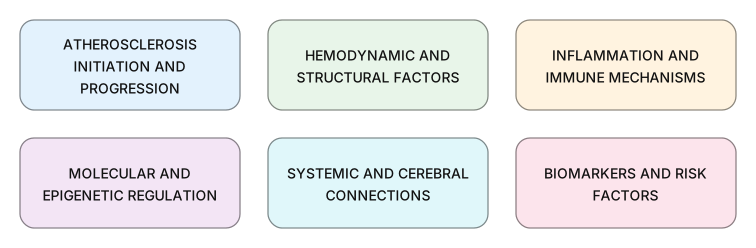
Figure 4. Main extracted research topics
Figure 4. Main extracted research topics (Results)

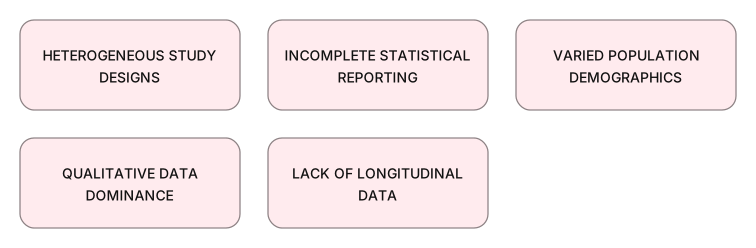
Figure 5. Limitations of current studies (topics)

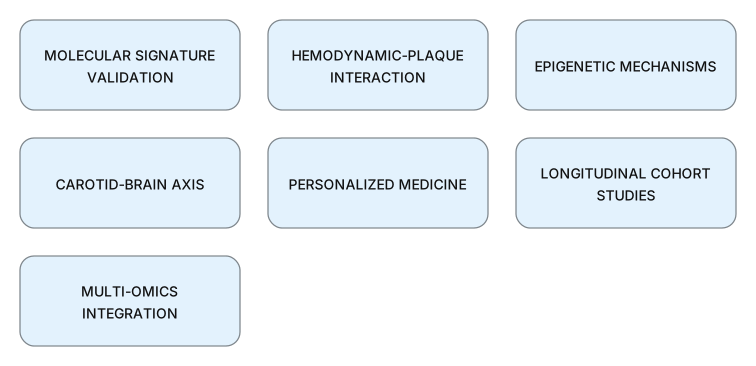
Figure 6. Future research directions (topics)