Carotid Disease Prognosis: Systematic Review with ☸️SAIMSARA.


saimsara.com Download PDF

Abstract: The aim of this paper is to systematically review and synthesize findings related to carotid disease prognosis, drawing exclusively from a structured extraction summary. The review utilises 212 studies with 63594 total participants (naïve ΣN). The collective evidence indicates that various forms of carotid artery disease, including stenosis, plaque presence, and calcification, are associated with an increased risk of adverse cardiovascular and cerebrovascular events, including stroke, myocardial infarction, and all-cause mortality. This finding is generalizable across diverse patient populations, from those with primary prevention needs to those with complex comorbidities like coronary artery disease and chronic kidney disease. The most significant limitation affecting certainty is the heterogeneous reporting of outcomes and study designs, which precludes precise quantitative synthesis. A crucial next step involves developing and validating advanced multimodal imaging techniques to better characterize plaque vulnerability and predict future events beyond stenosis degree, especially in asymptomatic patients.

Keywords: Carotid artery stenosis; Intracranial carotid artery calcification; Carotid plaques; Carotid intima-media thickness; Stroke prognosis; Vascular mortality; Cardiovascular events; Atherosclerosis; Systemic immune-inflammation index; Carotid artery stenting

Review Stats
Identification of studies via Semantic Scholar (all fields) Identification Screening Included Records identified:n=2582Records excluded:n=1582 Records assessed for eligibilityn=1000Records excluded:n=788 Studies included in reviewn=212 PRISMA Diagram generated by ☸️ SAIMSARA
⛛OSMA Triangle Effect-of Predictor → Outcome carotid disease  →  prognosis Beneficial for patients ΣN=12029 (19%) Harmful for patients ΣN=28600 (45%) Neutral ΣN=22965 (36%) 0 ⛛OSMA Triangle generated by ☸️SAIMSARA
Show OSMA legend
Outcome-Sentiment Meta-Analysis (OSMA): (LLM-only)
Frame: Effect-of Predictor → Outcome • Source: Semantic Scholar
Outcome: prognosis Typical timepoints: 5-y, 30-day. Reported metrics: %, CI, p.
Common endpoints: Common endpoints: complications, mortality, survival.
Predictor: carotid disease — exposure/predictor. Doses/units seen: 45 ml. Routes seen: intravenous. Typical comparator: those without calcification or, those without, 24-hour brachial sbp, other groups….

  • 1) Beneficial for patients — prognosis with carotid disease — [11], [17], [22], [48], [50], [56], [62], [66], [72], [83], [91], [109], [110], [111], [114], [119], [121], [124], [125], [129], [130], [134], [138], [143], [147], [150], [153], [157], [158], [164], [166], [167], [173], [178], [181], [183], [185], [186], [193], [196], [198] — ΣN=12029
  • 2) Harmful for patients — prognosis with carotid disease — [3], [4], [5], [6], [7], [8], [9], [10], [13], [19], [20], [21], [23], [25], [27], [28], [31], [34], [36], [37], [38], [39], [42], [43], [53], [58], [59], [61], [63], [68], [69], [71], [73], [75], [76], [84], [85], [86], [90], [92], [96], [97], [99], [100], [101], [102], [103], [104], [105], [108], [112], [113], [116], [120], [122], [123], [127], [128], [131], [132], [133], [135], [137], [140], [141], [142], [149], [154], [156], [162], [163], [168], [169], [172], [175], [176], [177], [182], [184], [187], [188], [191], [194], [195] — ΣN=28600
  • 3) No clear effect — prognosis with carotid disease — [1], [2], [12], [14], [15], [16], [18], [24], [26], [29], [30], [32], [33], [35], [40], [41], [44], [45], [46], [47], [49], [51], [52], [54], [55], [57], [60], [64], [65], [67], [70], [74], [77], [78], [79], [80], [81], [82], [87], [88], [89], [93], [94], [95], [98], [106], [107], [115], [117], [118], [126], [136], [139], [144], [145], [146], [148], [151], [152], [155], [159], [160], [161], [165], [170], [171], [174], [179], [180], [189], [190], [192], [197], [199], [200], [201], [202], [203], [204], [205], [206], [207], [208], [209], [210], [211], [212] — ΣN=22965

Introduction
Carotid artery disease, a manifestation of systemic atherosclerosis, represents a significant risk factor for cardiovascular and cerebrovascular events. Its presence and characteristics are increasingly recognized as crucial determinants of patient prognosis across a spectrum of clinical conditions, ranging from primary prevention to complex post-interventional care. Understanding the multifaceted factors influencing the prognosis of carotid disease is paramount for effective patient stratification, therapeutic decision-making, and the development of targeted interventions. This paper synthesizes current research on carotid disease prognosis, highlighting key predictive markers, associated comorbidities, and the impact of various treatment modalities.

Aim
The aim of this paper is to systematically review and synthesize findings related to carotid disease prognosis, drawing exclusively from a structured extraction summary.

Methods
Systematic review with multilayer AI research agent: keyword normalization, retrieval & structuring, and paper synthesis (see SAIMSARA About section for details).


Results
4.1 Study characteristics
The included studies predominantly comprised cohort, cross-sectional, and mixed designs, with a notable number of studies not specifying their design or directionality. Prospective and retrospective approaches were both common. Populations varied widely, including patients with coronary artery disease (CAD), chronic kidney disease (CKD), acute ischemic stroke (AIS), atherosclerotic occlusive disease, metabolic syndrome (MetS), and those undergoing carotid interventions like endarterectomy (CEA) or stenting (CAS). Follow-up periods ranged from short-term (e.g., 30 days) to long-term (e.g., 20 years), with many studies reporting mid-term outcomes (e.g., 2-5 years).

4.2 Main numerical result aligned to the query
Due to the significant heterogeneity in reported outcomes, metrics, and study populations, a single comparable numerical central value (median and range) for carotid disease prognosis cannot be computed. However, the collective evidence consistently indicates that various forms of carotid artery disease, including stenosis, plaque presence, and calcification, are associated with an increased risk of adverse cardiovascular and cerebrovascular events, including stroke, myocardial infarction, and all-cause mortality. For instance, carotid stenosis was found to be a predictive factor for future cardiovascular events in patients with coronary artery disease, with an odds ratio (OR) of 2.185 (95% CI 0.731–6.53) [5]. Intracranial carotid arteriosclerosis (IEL subtype) was associated with a higher risk of any stroke (adjusted HR [95% CI]: 2.0 [1.2–3.2], p = 0.007) and vascular death (adjusted HR [95% CI]: 2.0 [1.4–3.0], p < 0.001) in CKD patients [3]. Similarly, the highest tertile of the systemic immune-inflammation index (SII >647) was a predictor of long-term stroke (HR, 21.3; 95% CI, 2.41–188; P = 0.006) and major adverse cardiovascular and cerebrovascular events (MACCE) (HR, 3.98; 95% CI, 1.80–8.81; P<0.001) after carotid artery stenting (CAS) [10].

4.3 Topic synthesis


Discussion
5.1 Principal finding
The principal finding is that carotid artery disease, in its various forms including atherosclerosis, stenosis, and calcification, is a robust and independent predictor of adverse cardiovascular and cerebrovascular events, significantly impacting patient prognosis across a wide range of clinical populations [3, 5, 10, 31, 34, 36, 43]. This pervasive influence underscores its critical role in systemic vascular health and disease progression.

5.2 Clinical implications


5.3 Research implications / key gaps


5.4 Limitations


5.5 Future directions


Conclusion
The collective evidence indicates that various forms of carotid artery disease, including stenosis, plaque presence, and calcification, are associated with an increased risk of adverse cardiovascular and cerebrovascular events, including stroke, myocardial infarction, and all-cause mortality. This finding is generalizable across diverse patient populations, from those with primary prevention needs to those with complex comorbidities like coronary artery disease and chronic kidney disease. The most significant limitation affecting certainty is the heterogeneous reporting of outcomes and study designs, which precludes precise quantitative synthesis. A crucial next step involves developing and validating advanced multimodal imaging techniques to better characterize plaque vulnerability and predict future events beyond stenosis degree, especially in asymptomatic patients.

References
SAIMSARA Session Index — session.json

Figure 1. Publication-year distribution of included originals

Figure 2. Study-design distribution of included originals
Figure 2. Study-design distribution

Figure 3. Study-type (directionality) distribution of included originals
Figure 3. Directionality distribution

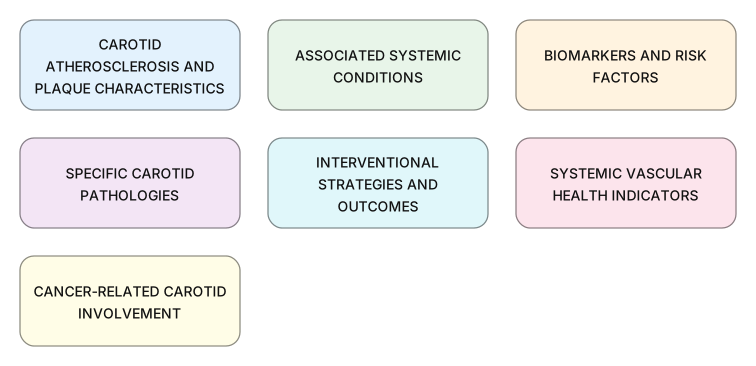
Figure 4. Main extracted research topics
Figure 4. Main extracted research topics (Results)

Figure 5. Limitations of current studies (topics)

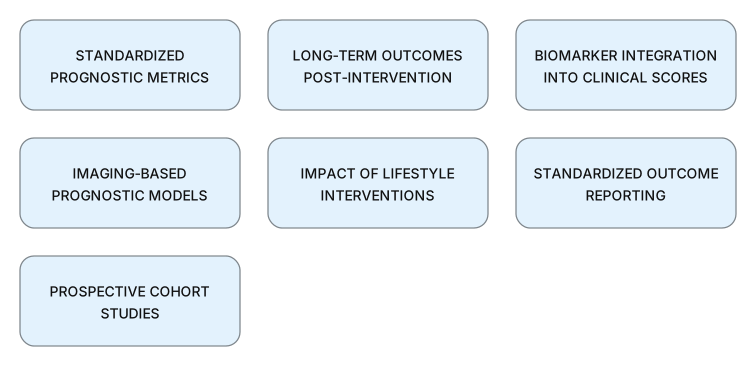
Figure 6. Future research directions (topics)