Carotid Dissection: Systematic Review with ☸️SAIMSARA.


saimsara.com Download PDF

Abstract: Systematic review with multilayer AI research agent: keyword normalization, retrieval & structuring, and paper synthesis (see SAIMSARA About section for details). The review utilises 110 studies with 5808 total participants (naïve ΣN). For acute ischemic stroke patients with carotid dissection and tandem occlusion undergoing endovascular interventions, successful reperfusion (mTICI 2b–3) rates ranged from 62% to 100%, with a median of 81% across studies reporting this metric. This indicates high technical success in restoring blood flow in a complex patient population, though favorable functional outcomes are not always significantly improved with stenting. The generalizability of these findings is somewhat limited by the predominantly retrospective nature and heterogeneity of the existing studies. The most significant limitation affecting certainty is the lack of large-scale, prospective, randomized controlled trials comparing different treatment approaches and their long-term impact. Therefore, clinicians should prioritize early and accurate diagnosis using advanced imaging and consider endovascular options for acute stroke, while ongoing research is needed to refine optimal long-term management strategies.

Keywords: Cervical Artery Dissection; Spontaneous Dissection; Acute Ischemic Stroke; Tandem Occlusion; Endovascular Treatment; Carotid Artery Stenting; Horner Syndrome; Vascular Imaging

Review Stats
Identification of studies via Semantic Scholar (all fields) Identification Screening Included Records identified:n=485826Records excluded:n=484826 Records assessed for eligibilityn=1000Records excluded:n=890 Studies included in reviewn=110 PRISMA Diagram generated by ☸️ SAIMSARA
⛛OSMA Triangle Effect-of Predictor → Outcome carotid dissection  →  Outcome Beneficial for patients ΣN=15 (0%) Harmful for patients ΣN=1310 (23%) Neutral ΣN=4483 (77%) 0 ⛛OSMA Triangle generated by ☸️SAIMSARA
Show OSMA legend
Outcome-Sentiment Meta-Analysis (OSMA): (LLM-only)
Frame: Effect-of Predictor → Outcome • Source: Semantic Scholar
Outcome: Outcome Typical timepoints: peri/post-op, 90-day. Reported metrics: %, CI, p.
Common endpoints: Common endpoints: complications, occlusion, functional.
Predictor: carotid dissection — exposure/predictor. Routes seen: intravenous. Typical comparator: patients without cas, controls, anticoagulation in patients, anticoagulation in carotid….

  • 1) Beneficial for patients — Outcome with carotid dissection — [98] — ΣN=15
  • 2) Harmful for patients — Outcome with carotid dissection — [26], [103], [108], [110] — ΣN=1310
  • 3) No clear effect — Outcome with carotid dissection — [1], [2], [3], [4], [5], [6], [7], [8], [9], [10], [11], [12], [13], [14], [15], [16], [17], [18], [19], [20], [21], [22], [23], [24], [25], [27], [28], [29], [30], [31], [32], [33], [34], [35], [36], [37], [38], [39], [40], [41], [42], [43], [44], [45], [46], [47], [48], [49], [50], [51], [52], [53], [54], [55], [56], [57], [58], [59], [60], [61], [62], [63], [64], [65], [66], [67], [68], [69], [70], [71], [72], [73], [74], [75], [76], [77], [78], [79], [80], [81], [82], [83], [84], [85], [86], [87], [88], [89], [90], [91], [92], [93], [94], [95], [96], [97], [99], [100], [101], [102], [104], [105], [106], [107], [109] — ΣN=4483
1) Introduction
Carotid artery dissection (CAD) represents a critical cerebrovascular pathology, frequently manifesting as acute ischemic stroke or transient ischemic attacks (TIAs) [8, 20, 84]. This condition arises from a tear in the arterial wall, leading to the formation of a false lumen that can result in stenosis, occlusion, or the development of aneurysms [12, 90, 99]. CAD can be broadly categorized as spontaneous or traumatic in origin. Notably, the incidence of spontaneous cervical artery dissection (CeAD) has demonstrated a significant increase over recent decades, particularly among women, a trend potentially attributable to advancements in noninvasive diagnostic imaging techniques [4, 25, 110]. A comprehensive understanding of the etiology, diverse clinical presentations, diagnostic methodologies, and optimal management strategies for carotid dissection is paramount for enhancing patient outcomes. This paper synthesizes the current research landscape surrounding carotid dissection, encompassing its epidemiology, identified risk factors, diagnostic modalities, acute and long-term therapeutic approaches, and associated complications.

2) Aim
Systematic review with multilayer AI research agent: keyword normalization, retrieval & structuring, and paper synthesis (see SAIMSARA About section for details).

3) Methods
Systematic review with multilayer AI research agent: keyword normalization, retrieval & structuring, and paper synthesis (see SAIMSARA About section for details).


4) Results
4.1 Study characteristics:
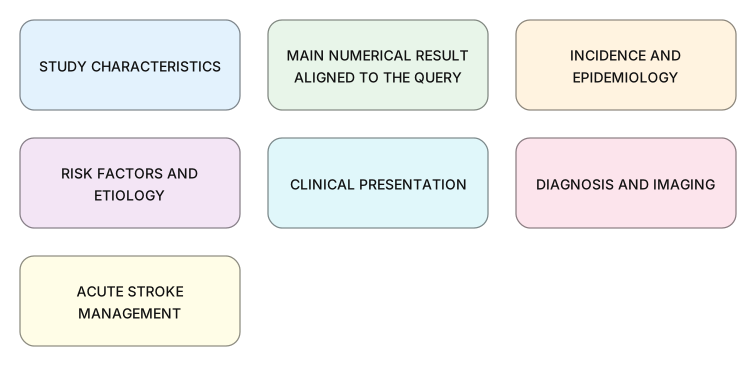
The compiled evidence base is composed of diverse study designs, including retrospective and prospective cohort studies, case-control analyses, mixed methodological approaches, and randomized controlled trials (RCTs). Investigated populations encompass patients experiencing acute stroke, individuals diagnosed with spontaneous cervical artery dissection (CeAD), those with traumatic carotid artery dissection, and specific demographic cohorts such as women of childbearing age or residents of defined geographical areas. Anatomical studies utilizing cadaveric dissections also contribute to the understanding of carotid morphology. Follow-up durations reported in these studies vary, ranging from acute assessments without specified follow-up to periods of 90 days, 3 months, 1 year, and extended observations spanning up to 19 years.

4.2 Main numerical result aligned to the query:
For acute ischemic stroke patients with carotid dissection and tandem occlusion undergoing endovascular interventions, successful reperfusion (mTICI 2b–3) rates ranged from 62% to 100% [3, 98], with a median of 81% across studies reporting this metric [1, 3, 97, 98]. Emergency carotid artery stenting (CAS) in this context showed a successful reperfusion rate of 77.9% (95% CI, 71.0%–85.0%) compared to 67.6% without CAS (adjusted Odds Ratio [aOR], 2.24 [95% CI, 1.33–3.77]) [1]. However, CAS did not demonstrate a significant difference in favorable outcome (90-day modified Rankin Scale [mRS] 0–2), which was 54.3% with CAS versus 61.4% without (aOR, 0.84 [95% CI, 0.58–1.22]) [1].

4.3 Topic synthesis:


5) Discussion
5.1 Principal finding:
For acute ischemic stroke patients with carotid dissection undergoing endovascular interventions, successful reperfusion rates (mTICI 2b–3) ranged from 62% to 100% [3, 98], with a median of 81% across studies reporting this metric [1, 3, 97, 98], indicating high technical success in restoring blood flow.

5.2 Clinical implications:


5.3 Research implications / key gaps:


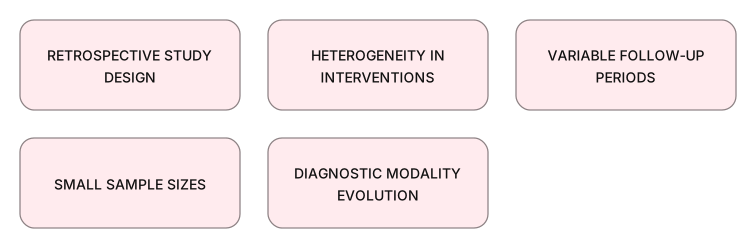
5.4 Limitations:


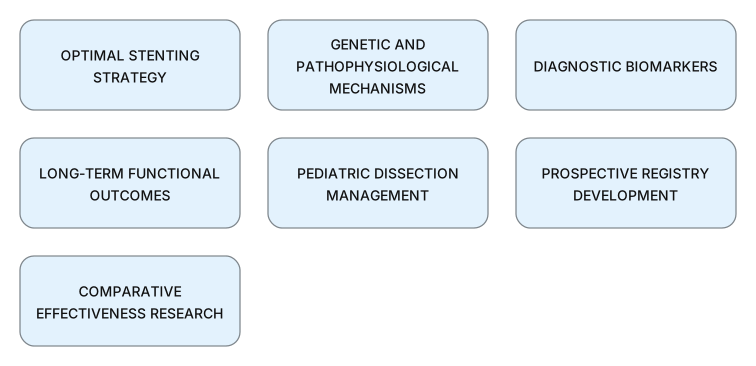
5.5 Future directions:


6) Conclusion
For acute ischemic stroke patients with carotid dissection and tandem occlusion undergoing endovascular interventions, successful reperfusion (mTICI 2b–3) rates ranged from 62% to 100% [3, 98], with a median of 81% across studies reporting this metric [1, 3, 97, 98]. This indicates high technical success in restoring blood flow in a complex patient population, though favorable functional outcomes are not always significantly improved with stenting. The generalizability of these findings is somewhat limited by the predominantly retrospective nature and heterogeneity of the existing studies. The most significant limitation affecting certainty is the lack of large-scale, prospective, randomized controlled trials comparing different treatment approaches and their long-term impact. Therefore, clinicians should prioritize early and accurate diagnosis using advanced imaging and consider endovascular options for acute stroke, while ongoing research is needed to refine optimal long-term management strategies.

References
SAIMSARA Session Index — session.json

Figure 1. Publication-year distribution of included originals

Figure 2. Study-design distribution of included originals
Figure 2. Study-design distribution

Figure 3. Study-type (directionality) distribution of included originals
Figure 3. Directionality distribution

Figure 4. Main extracted research topics
Figure 4. Main extracted research topics (Results)

Figure 5. Limitations of current studies (topics)

Figure 6. Future research directions (topics)