Carotid Stenosis and Inflammation: Systematic Review with ☸️SAIMSARA.


saimsara.com Download PDF

Abstract: This paper aims to synthesize the current evidence on the association between carotid stenosis and inflammation, encompassing diagnostic biomarkers, imaging modalities, prognostic indicators, and therapeutic interventions. The review utilises 302 studies with 80631 total participants (naïve ΣN). The SCAIL score, a composite metric incorporating carotid plaque inflammation and stenosis severity, is a significant predictor of recurrent stroke and other adverse cardiovascular events, with a median adjusted hazard ratio of 2.4 (range 1.96-4.52). These findings underscore the critical role of inflammation in the pathophysiology and clinical course of carotid stenosis across diverse patient populations. However, the heterogeneity of study designs and variability in inflammatory markers represent the most significant limitation affecting the certainty of these conclusions. A concrete next step for research involves conducting longitudinal intervention trials to evaluate the long-term impact of targeted anti-inflammatory therapies on clinical outcomes in patients with carotid stenosis.

Keywords: Carotid Stenosis; Inflammation; Atherosclerosis; Carotid Plaque; Plaque Instability; Inflammatory Biomarkers; Stroke Risk; Systemic Inflammation; Vulnerable Plaque; Atherothrombosis

Review Stats
Identification of studies via Semantic Scholar (all fields) Identification Screening Included Records identified:n=1120Records excluded:n=120 Records assessed for eligibilityn=1000Records excluded:n=698 Studies included in reviewn=302 PRISMA Diagram generated by ☸️ SAIMSARA
⛛OSMA Triangle Effect-of Predictor → Outcome carotid stenosis  →  inflammation Beneficial for patients ΣN=465 (1%) Harmful for patients ΣN=35480 (44%) Neutral ΣN=44686 (55%) 0 ⛛OSMA Triangle generated by ☸️SAIMSARA
Show OSMA legend
Outcome-Sentiment Meta-Analysis (OSMA): (LLM-only)
Frame: Effect-of Predictor → Outcome • Source: Semantic Scholar
Outcome: inflammation Typical timepoints: 90-day, 1-y. Reported metrics: %, CI, p.
Common endpoints: Common endpoints: complications, mortality, healing.
Predictor: carotid stenosis — exposure/predictor. Doses/units seen: 4g, 5g. Routes seen: intravenous. Typical comparator: controls and may be used as a, controls, asymptomatic patients, normoglycemics….

  • 1) Beneficial for patients — inflammation with carotid stenosis — [4], [22], [66], [102], [106], [130], [146], [148], [150], [153], [171], [172], [173], [175], [176], [179], [182], [185], [194], [244], [245], [249], [250], [252], [254], [277], [282], [291], [295], [297] — ΣN=465
  • 2) Harmful for patients — inflammation with carotid stenosis — [1], [2], [3], [5], [8], [10], [11], [12], [13], [15], [17], [19], [20], [24], [25], [51], [52], [54], [55], [56], [57], [58], [59], [60], [61], [62], [68], [69], [71], [75], [86], [100], [101], [104], [105], [108], [109], [111], [112], [113], [116], [117], [119], [120], [122], [123], [124], [125], [126], [127], [134], [139], [145], [147], [149], [151], [152], [154], [155], [156], [157], [158], [160], [161], [162], [164], [165], [166], [168], [169], [170], [178], [183], [186], [187], [188], [189], [190], [191], [192], [193], [195], [196], [198], [226], [227], [228], [229], [230], [231], [232], [233], [235], [236], [237], [239], [240], [242], [243], [246], [247], [248], [251], [253], [255], [260], [264], [265], [270], [271], [274] — ΣN=35480
  • 3) No clear effect — inflammation with carotid stenosis — [6], [7], [9], [14], [16], [18], [21], [23], [26], [27], [28], [29], [30], [31], [32], [33], [34], [35], [36], [37], [38], [39], [40], [41], [42], [43], [44], [45], [46], [47], [48], [49], [50], [53], [63], [64], [65], [67], [70], [72], [73], [74], [76], [77], [78], [79], [80], [81], [82], [83], [84], [85], [87], [88], [89], [90], [91], [92], [93], [94], [95], [96], [97], [98], [99], [103], [107], [110], [114], [115], [118], [121], [128], [129], [131], [132], [133], [135], [136], [137], [138], [140], [141], [142], [143], [144], [159], [163], [167], [174], [177], [180], [181], [184], [197], [199], [200], [201], [202], [203], [204], [205], [206], [207], [208], [209], [210], [211], [212], [213], [214], [215], [216], [217], [218], [219], [220], [221], [222], [223], [224], [225], [234], [238], [241], [256], [257], [258], [259], [261], [262], [263], [266], [267], [268], [269], [272], [273], [275], [276], [278], [279], [280], [281], [283], [284], [285], [286], [287], [288], [289], [290], [292], [293], [294], [296], [298], [299], [300], [301], [302] — ΣN=44686
1) Introduction
Carotid artery stenosis (CAS), a common manifestation of atherosclerosis, is a significant risk factor for ischemic stroke and other adverse cardiovascular events. The pathogenesis of atherosclerosis, and by extension CAS, is intrinsically linked to chronic inflammation and oxidative stress within the arterial wall and systemically. Inflammatory processes contribute to plaque formation, progression, and destabilization, leading to conditions such as intraplaque hemorrhage (IPH), fibrous cap rupture, and subsequent thromboembolic events. Understanding the intricate relationship between carotid stenosis and inflammation is crucial for improved risk stratification, early diagnosis, and the development of targeted therapeutic strategies to prevent devastating cerebrovascular outcomes.

2) Aim
This paper aims to synthesize the current evidence on the association between carotid stenosis and inflammation, encompassing diagnostic biomarkers, imaging modalities, prognostic indicators, and therapeutic interventions.

3) Methods
Systematic review with multilayer AI research agent: keyword normalization, retrieval & structuring, and paper synthesis (see SAIMSARA About section for details).


4) Results
4.1 Study characteristics
The studies reviewed primarily consisted of cohort (retrospective and prospective), cross-sectional, and mixed designs, with a notable number of experimental studies, particularly using mouse or porcine models. Populations frequently included elderly patients, individuals with diagnosed carotid artery stenosis (both symptomatic and asymptomatic), and those with recent ischemic stroke or transient ischemic attack (TIA). Other populations included patients undergoing carotid endarterectomy (CEA) or carotid artery stenting (CAS), those with comorbidities like diabetes, coronary artery disease, or rheumatoid arthritis, and healthy controls. Follow-up periods, when specified, ranged from 30 days to 5 years, with some studies having median follow-ups of 42 days, 90 days, or 69 months.

4.2 Main numerical result aligned to the query
The Symptomatic Carotid Atheroma Inflammation Lumen stenosis (SCAIL) score, which integrates carotid plaque inflammation and stenosis severity, consistently predicted recurrent stroke and other adverse events. The adjusted hazard ratio (HR) for recurrent stroke or major adverse cardiovascular events (MACE) associated with the SCAIL score ranged from 1.96 to 4.52 [3, 19, 54, 55]. The median adjusted HR for recurrent stroke per 1-point SCAIL increase was 2.4 [3, 19, 54, 55].

4.3 Topic synthesis


5) Discussion
5.1 Principal finding
The SCAIL score, a composite metric incorporating carotid plaque inflammation and stenosis severity, is a significant predictor of recurrent stroke and other adverse cardiovascular events, with a median adjusted hazard ratio of 2.4 (range 1.96-4.52) [3, 19, 54, 55].

5.2 Clinical implications


5.3 Research implications / key gaps


5.4 Limitations


5.5 Future directions


6) Conclusion
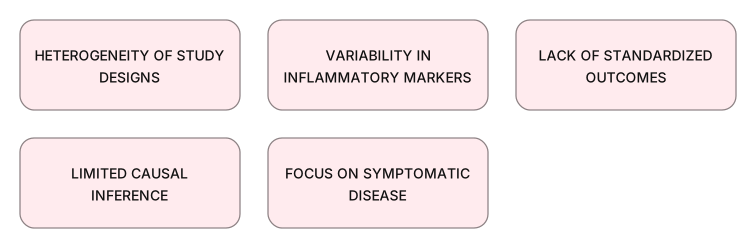
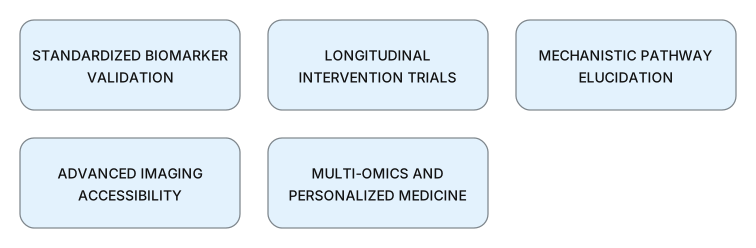
The SCAIL score, a composite metric incorporating carotid plaque inflammation and stenosis severity, is a significant predictor of recurrent stroke and other adverse cardiovascular events, with a median adjusted hazard ratio of 2.4 (range 1.96-4.52) [3, 19, 54, 55]. These findings underscore the critical role of inflammation in the pathophysiology and clinical course of carotid stenosis across diverse patient populations. However, the heterogeneity of study designs and variability in inflammatory markers represent the most significant limitation affecting the certainty of these conclusions. A concrete next step for research involves conducting longitudinal intervention trials to evaluate the long-term impact of targeted anti-inflammatory therapies on clinical outcomes in patients with carotid stenosis.

References
SAIMSARA Session Index — session.json

Figure 1. Publication-year distribution of included originals

Figure 2. Study-design distribution of included originals
Figure 2. Study-design distribution

Figure 3. Study-type (directionality) distribution of included originals
Figure 3. Directionality distribution

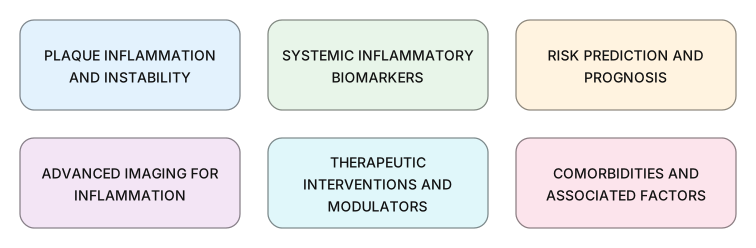
Figure 4. Main extracted research topics
Figure 4. Main extracted research topics (Results)

Figure 5. Limitations of current studies (topics)

Figure 6. Future research directions (topics)