Carotid Stenosis Prevalence: Systematic Review with ☸️SAIMSARA.


saimsara.com Download PDF

Abstract: The aim of this paper is to systematically review and synthesize the reported prevalence of carotid stenosis from diverse studies, identify associated risk factors and clinical contexts, and outline the resulting clinical and research implications. The review utilises 289 studies with 452705 total participants (naïve ΣN). The prevalence of carotid stenosis (defined as ≥50% narrowing or significant stenosis) exhibits considerable heterogeneity across different populations and clinical settings, with a median of 13.5% and a range from 0.8% to 62.4%. This wide variability underscores that carotid stenosis is not a uniform entity but rather a condition whose occurrence is highly dependent on the specific population studied and the presence of underlying risk factors and comorbidities. The heterogeneous study populations and varied diagnostic criteria represent the most significant limitations to synthesizing a universal prevalence figure. Clinicians should recognize that while general population prevalence is low, the likelihood of significant carotid stenosis rises sharply in patients with cardiovascular risk factors or existing atherosclerotic disease, necessitating targeted screening and aggressive risk factor management in these vulnerable groups.

Keywords: Carotid Stenosis; Prevalence; Carotid Artery Disease

Review Stats
Identification of studies via Semantic Scholar (all fields) Identification Screening Included Records identified:n=2007Records excluded:n=1007 Records assessed for eligibilityn=1000Records excluded:n=711 Studies included in reviewn=289 PRISMA Diagram generated by ☸️ SAIMSARA
⛛OSMA Triangle Effect-of Predictor → Outcome prevalence  →  carotid stenosis Beneficial for patients ΣN=8006 (2%) Harmful for patients ΣN=19742 (4%) Neutral ΣN=424957 (94%) 0 ⛛OSMA Triangle generated by ☸️SAIMSARA
Show OSMA legend
Outcome-Sentiment Meta-Analysis (OSMA): (LLM-only)
Frame: Effect-of Predictor → Outcome • Source: Semantic Scholar
Outcome: carotid stenosis Typical timepoints: 5-y, 55-y. Reported metrics: %, CI, p.
Common endpoints: Common endpoints: complications, occlusion, mortality.
Predictor: prevalence — exposure/predictor. Doses/units seen: 45 ml, 1.2 mg. Typical comparator: whites, asymptomatic ones, bilateral carotid stenosis or, control….

  • 1) Beneficial for patients — carotid stenosis with prevalence — [73] — ΣN=8006
  • 2) Harmful for patients — carotid stenosis with prevalence — [25], [77], [91], [127], [129], [130], [136], [137], [141], [148], [150], [177], [178], [181], [186], [188], [192], [194], [195] — ΣN=19742
  • 3) No clear effect — carotid stenosis with prevalence — [1], [2], [3], [4], [5], [6], [7], [8], [9], [10], [11], [12], [13], [14], [15], [16], [17], [18], [19], [20], [21], [22], [23], [24], [26], [27], [28], [29], [30], [31], [32], [33], [34], [35], [36], [37], [38], [39], [40], [41], [42], [43], [44], [45], [46], [47], [48], [49], [50], [51], [52], [53], [54], [55], [56], [57], [58], [59], [60], [61], [62], [63], [64], [65], [66], [67], [68], [69], [70], [71], [72], [74], [75], [76], [78], [79], [80], [81], [82], [83], [84], [85], [86], [87], [88], [89], [90], [92], [93], [94], [95], [96], [97], [98], [99], [100], [101], [102], [103], [104], [105], [106], [107], [108], [109], [110], [111], [112], [113], [114], [115], [116], [117], [118], [119], [120], [121], [122], [123], [124], [125], [126], [128], [131], [132], [133], [134], [135], [138], [139], [140], [142], [143], [144], [145], [146], [147], [149], [151], [152], [153], [154], [155], [156], [157], [158], [159], [160], [161], [162], [163], [164], [165], [166], [167], [168], [169], [170], [171], [172], [173], [174], [175], [176], [179], [180], [182], [183], [184], [185], [187], [189], [190], [191], [193], [196], [197], [198], [199], [200], [201], [202], [203], [204], [205], [206], [207], [208], [209], [210], [211], [212], [213], [214], [215], [216], [217], [218], [219], [220], [221], [222], [223], [224], [225], [226], [227], [228], [229], [230], [231], [232], [233], [234], [235], [236], [237], [238], [239], [240], [241], [242], [243], [244], [245], [246], [247], [248], [249], [250], [251], [252], [253], [254], [255], [256], [257], [258], [259], [260], [261], [262], [263], [264], [265], [266], [267], [268], [269], [270], [271], [272], [273], [274], [275], [276], [277], [278], [279], [280], [281], [282], [283], [284], [285], [286], [287], [288], [289] — ΣN=424957
Introduction
Carotid artery stenosis (CAS), a narrowing of the carotid arteries, is a significant manifestation of atherosclerosis and a leading cause of ischemic stroke. Its prevalence varies widely across different populations and clinical contexts, reflecting diverse risk factor profiles and diagnostic approaches. Understanding the epidemiology of CAS is crucial for identifying high-risk individuals, guiding screening strategies, and informing clinical management to prevent cerebrovascular events. This paper synthesizes findings on the prevalence of carotid stenosis across various patient cohorts and the general population, highlighting key associations and implications for clinical practice and future research.

Aim
The aim of this paper is to systematically review and synthesize the reported prevalence of carotid stenosis from diverse studies, identify associated risk factors and clinical contexts, and outline the resulting clinical and research implications.

Methods
Systematic review with multilayer AI research agent: keyword normalization, retrieval & structuring, and paper synthesis (see SAIMSARA About section for details).


Results
4.1 Study characteristics
The included studies comprise a diverse range of designs, predominantly cross-sectional and cohort studies, with some prospective and retrospective analyses. Populations studied span general community residents, patients undergoing various cardiac surgeries, individuals with chronic kidney disease (CKD), diabetes, peripheral arterial disease (PAD), and those presenting with acute ischemic stroke or transient ischemic attack (TIA). Follow-up periods, where reported, ranged from short-term (e.g., 30-day [25]) to several years (e.g., 5 years [16, 43, 44]).

4.2 Main numerical result aligned to the query
The prevalence of carotid stenosis (defined as ≥50% narrowing or significant stenosis) exhibits considerable heterogeneity across different populations and clinical settings. Across studies reporting this metric, the median prevalence was 13.5% [7, 13, 20, 21, 184], with a wide range observed from 0.8% [221] to 62.4% [55]. For instance, in general health screening populations, prevalence was as low as 0.9% in Korea [42] and 1.87% in commercial vascular screening clinics [37]. In contrast, among patients with acute ischemic stroke, prevalence frequently ranged from 4.0% [16] to 62.4% [55]. Patients undergoing cardiac surgery also showed high prevalence, such as 18.7% in those undergoing elective myocardial revascularization [50] and 21.68% in coronary artery bypass grafting (CABG) patients [138].

4.3 Topic synthesis


Discussion
5.1 Principal finding
The median prevalence of carotid stenosis (defined as ≥50% narrowing or significant stenosis) across diverse populations and clinical contexts is 13.5% [7, 13, 20, 21, 184], ranging from 0.8% [221] to 62.4% [55], underscoring its variable but often substantial presence in at-risk individuals.

5.2 Clinical implications


5.3 Research implications / key gaps


5.4 Limitations


5.5 Future directions


Conclusion
The prevalence of carotid stenosis (defined as ≥50% narrowing or significant stenosis) exhibits considerable heterogeneity across different populations and clinical settings, with a median of 13.5% [7, 13, 20, 21, 184] and a range from 0.8% [221] to 62.4% [55]. This wide variability underscores that carotid stenosis is not a uniform entity but rather a condition whose occurrence is highly dependent on the specific population studied and the presence of underlying risk factors and comorbidities. The heterogeneous study populations and varied diagnostic criteria represent the most significant limitations to synthesizing a universal prevalence figure. Clinicians should recognize that while general population prevalence is low, the likelihood of significant carotid stenosis rises sharply in patients with cardiovascular risk factors or existing atherosclerotic disease, necessitating targeted screening and aggressive risk factor management in these vulnerable groups.

References
SAIMSARA Session Index — session.json

Figure 1. Publication-year distribution of included originals

Figure 2. Study-design distribution of included originals
Figure 2. Study-design distribution

Figure 3. Study-type (directionality) distribution of included originals
Figure 3. Directionality distribution

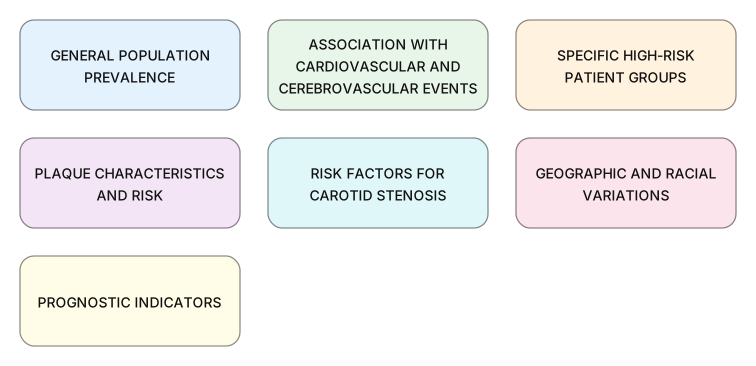
Figure 4. Main extracted research topics
Figure 4. Main extracted research topics (Results)

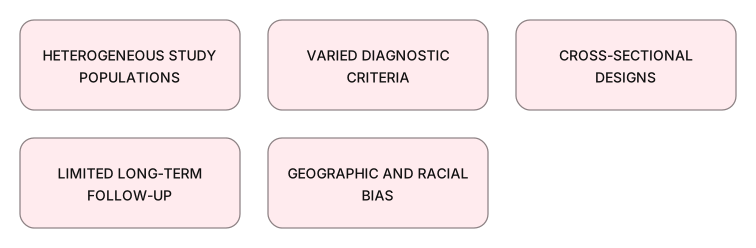
Figure 5. Limitations of current studies (topics)

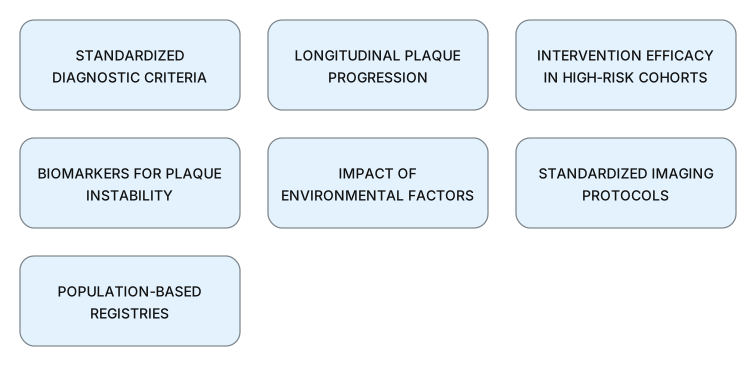
Figure 6. Future research directions (topics)