Carotid Stenosis PSV: Systematic Review with ☸️SAIMSARA.


saimsara.com Download PDF

Abstract: The aim of this paper is to systematically synthesize the current understanding of peak systolic velocity (PSV) in the context of carotid stenosis, evaluating its diagnostic utility, the factors that influence its measurement and interpretation, and its role in patient management and prognostication. The review utilises 230 studies with 79780 total participants (naïve ΣN). For severe carotid stenosis (defined as ≥70%), peak systolic velocity (PSV) thresholds commonly used or identified as effective range from 175 cm/s to >300 cm/s, with a median value of 230 cm/s. This indicates that PSV remains a critical, albeit varied, parameter in the diagnosis and management of carotid stenosis across diverse patient populations and clinical settings. The primary limitation affecting certainty is the significant heterogeneity in PSV thresholds and diagnostic criteria reported across studies. A crucial next step is to conduct a large-scale, prospective study to harmonize PSV thresholds and develop standardized protocols for its measurement and interpretation, thereby enhancing its clinical utility and reproducibility.

Keywords: Carotid stenosis; Peak systolic velocity; Duplex ultrasound; Internal carotid artery; Stenosis assessment; Hemodynamic significance; Diagnostic accuracy; Velocity thresholds; End-diastolic velocity; Carotid artery disease

Review Stats
Identification of studies via Semantic Scholar (all fields) Identification Screening Included Records identified:n=34438Records excluded:n=33438 Records assessed for eligibilityn=1000Records excluded:n=770 Studies included in reviewn=230 PRISMA Diagram generated by ☸️ SAIMSARA
⛛OSMA Triangle Effect-of Predictor → Outcome carotid stenosis PSV  →  Outcome Beneficial for patients ΣN=4704 (6%) Harmful for patients ΣN=4603 (6%) Neutral ΣN=70473 (88%) 0 ⛛OSMA Triangle generated by ☸️SAIMSARA
Show OSMA legend
Outcome-Sentiment Meta-Analysis (OSMA): (LLM-only)
Frame: Effect-of Predictor → Outcome • Source: Semantic Scholar
Outcome: Outcome Typical timepoints: peri/post-op, 30-day. Reported metrics: %, CI, p.
Common endpoints: Common endpoints: restenosis, complications, occlusion.
Predictor: carotid stenosis PSV — exposure/predictor. Routes seen: intravenous. Typical comparator: other duplex sonography, psv obtained with duplex, established values for native, normal eyes….

  • 1) Beneficial for patients — Outcome with carotid stenosis PSV — [15], [36], [48], [49], [79] — ΣN=4704
  • 2) Harmful for patients — Outcome with carotid stenosis PSV — [7], [25], [40], [77], [85], [92], [93], [99], [228], [230] — ΣN=4603
  • 3) No clear effect — Outcome with carotid stenosis PSV — [1], [2], [3], [4], [5], [6], [8], [9], [10], [11], [12], [13], [14], [16], [17], [18], [19], [20], [21], [22], [23], [24], [26], [27], [28], [29], [30], [31], [32], [33], [34], [35], [37], [38], [39], [41], [42], [43], [44], [45], [46], [47], [50], [51], [52], [53], [54], [55], [56], [57], [58], [59], [60], [61], [62], [63], [64], [65], [66], [67], [68], [69], [70], [71], [72], [73], [74], [75], [76], [78], [80], [81], [82], [83], [84], [86], [87], [88], [89], [90], [91], [94], [95], [96], [97], [98], [100], [101], [102], [103], [104], [105], [106], [107], [108], [109], [110], [111], [112], [113], [114], [115], [116], [117], [118], [119], [120], [121], [122], [123], [124], [125], [126], [127], [128], [129], [130], [131], [132], [133], [134], [135], [136], [137], [138], [139], [140], [141], [142], [143], [144], [145], [146], [147], [148], [149], [150], [151], [152], [153], [154], [155], [156], [157], [158], [159], [160], [161], [162], [163], [164], [165], [166], [167], [168], [169], [170], [171], [172], [173], [174], [175], [176], [177], [178], [179], [180], [181], [182], [183], [184], [185], [186], [187], [188], [189], [190], [191], [192], [193], [194], [195], [196], [197], [198], [199], [200], [201], [202], [203], [204], [205], [206], [207], [208], [209], [210], [211], [212], [213], [214], [215], [216], [217], [218], [219], [220], [221], [222], [223], [224], [225], [226], [227], [229] — ΣN=70473
1) Introduction
Carotid artery stenosis, a significant contributor to cerebrovascular events such as stroke, necessitates accurate and timely diagnosis for effective patient management. Duplex ultrasound, particularly the measurement of peak systolic velocity (PSV), has long been a cornerstone in the non-invasive assessment of carotid stenosis severity. PSV reflects the accelerated blood flow through narrowed arterial segments, providing a quantitative metric for stenosis grading. However, the utility and interpretation of PSV are influenced by various anatomical, physiological, and technical factors, leading to ongoing research into its diagnostic precision, optimal thresholds, and integration with other diagnostic modalities. This paper synthesizes recent findings concerning PSV in carotid stenosis, encompassing its diagnostic performance, influencing factors, and role in clinical decision-making and post-intervention surveillance.

2) Aim
The aim of this paper is to systematically synthesize the current understanding of peak systolic velocity (PSV) in the context of carotid stenosis, evaluating its diagnostic utility, the factors that influence its measurement and interpretation, and its role in patient management and prognostication.

3) Methods
Systematic review with multilayer AI research agent: keyword normalization, retrieval & structuring, and paper synthesis (see SAIMSARA About section for details).


4) Results
4.1 Study characteristics:
The literature reviewed comprises a diverse array of study designs, predominantly mixed-type studies, cohort studies, and prospective investigations. Populations frequently included patients with varying degrees of carotid stenosis, both symptomatic and asymptomatic, often undergoing diagnostic imaging or interventional procedures. Common follow-up periods, when specified, ranged from immediate post-procedure to several months or years, although many studies did not report follow-up durations.

4.2 Main numerical result aligned to the query:
For severe carotid stenosis (defined as ≥70%), peak systolic velocity (PSV) thresholds commonly used or identified as effective range from 175 cm/s to >300 cm/s, with a median value of 230 cm/s [5, 6, 98, 99]. Specifically, a PSV cut-off of 200 cm/s showed high sensitivity (90.32%) and specificity (93.75%) for ≥70% NASCET internal carotid artery (ICA) stenoses [6], while other studies reported PSV >230 cm/s as a common threshold [5, 98]. For in-stent restenosis (ISR), PSV thresholds varied, with values such as ≥120 cm/s [228], ≥130 cm/s [69], ≥140 cm/s [230], ≥240 cm/s [178], and >300 cm/s [47] being reported for different degrees of restenosis.

4.3 Topic synthesis:


5) Discussion
5.1 Principal finding:
For severe carotid stenosis (defined as ≥70%), peak systolic velocity (PSV) thresholds commonly used or identified as effective range from 175 cm/s to >300 cm/s, with a median value of 230 cm/s [5, 6, 98, 99], indicating a consistent, albeit varied, utility of PSV in grading high-grade stenosis.

5.2 Clinical implications:


5.3 Research implications / key gaps:


5.4 Limitations:


5.5 Future directions:


6) Conclusion
For severe carotid stenosis (defined as ≥70%), peak systolic velocity (PSV) thresholds commonly used or identified as effective range from 175 cm/s to >300 cm/s, with a median value of 230 cm/s [5, 6, 98, 99]. This indicates that PSV remains a critical, albeit varied, parameter in the diagnosis and management of carotid stenosis across diverse patient populations and clinical settings. The primary limitation affecting certainty is the significant heterogeneity in PSV thresholds and diagnostic criteria reported across studies. A crucial next step is to conduct a large-scale, prospective study to harmonize PSV thresholds and develop standardized protocols for its measurement and interpretation, thereby enhancing its clinical utility and reproducibility.

References
SAIMSARA Session Index — session.json

Figure 1. Publication-year distribution of included originals

Figure 2. Study-design distribution of included originals
Figure 2. Study-design distribution

Figure 3. Study-type (directionality) distribution of included originals
Figure 3. Directionality distribution

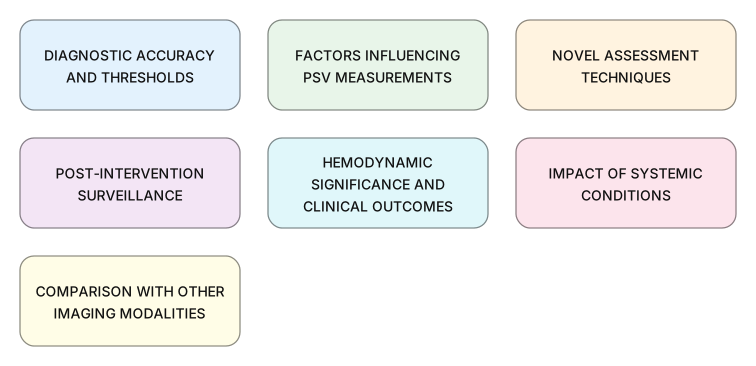
Figure 4. Main extracted research topics
Figure 4. Main extracted research topics (Results)

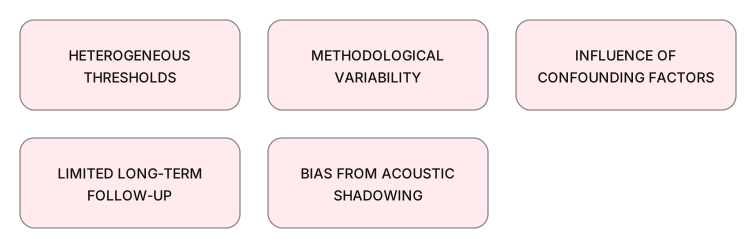
Figure 5. Limitations of current studies (topics)

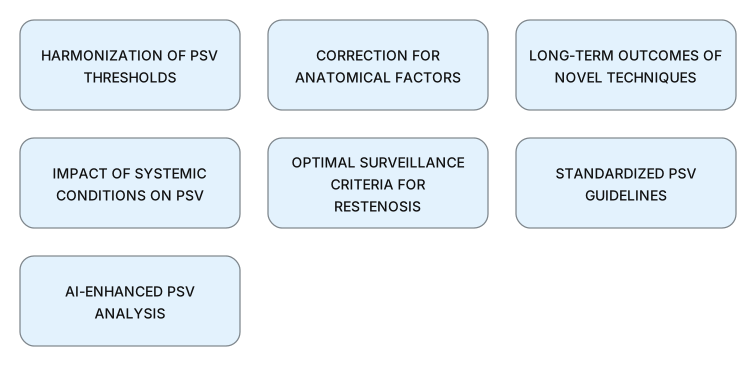
Figure 6. Future research directions (topics)