Carotid Stenosis Risk Factors: Systematic Review with ☸️SAIMSARA.


saimsara.com Download PDF

Abstract: To systematically review and synthesize the identified risk factors for carotid stenosis based on a structured extraction summary of academic literature. The review utilises 154 studies with 270434 total participants (naïve ΣN). The prevalence of carotid artery stenosis varies significantly depending on the study population and diagnostic criteria, ranging from 0.56% in a large cohort of Chinese adults to 53.2% in patients presenting with cerebral infarction. Key risk factors include advanced age, male sex, hypertension, diabetes mellitus, dyslipidemia, and smoking, along with various co-morbidities and specific plaque characteristics. The most significant limitation affecting certainty is the heterogeneity of study populations and designs, which complicates the synthesis of a unified risk profile. Clinicians should maintain a high index of suspicion for carotid stenosis in older male patients with multiple traditional cardiovascular risk factors and consider comprehensive risk factor management.

Keywords: Carotid Stenosis; Risk Factors; Atherosclerosis; Hypertension; Diabetes Mellitus; Dyslipidemia; Smoking; Age; Ischemic Stroke; Cardiovascular Disease

Review Stats
Identification of studies via Semantic Scholar (all fields) Identification Screening Included Records identified:n=50074Records excluded:n=49074 Records assessed for eligibilityn=1000Records excluded:n=846 Studies included in reviewn=154 PRISMA Diagram generated by ☸️ SAIMSARA
⛛OSMA Triangle Effect-of Predictor → Outcome risk factors  →  carotid stenosis Beneficial for patients ΣN=15980 (6%) Harmful for patients ΣN=201124 (74%) Neutral ΣN=53330 (20%) 0 ⛛OSMA Triangle generated by ☸️SAIMSARA
Show OSMA legend
Outcome-Sentiment Meta-Analysis (OSMA): (LLM-only)
Frame: Effect-of Predictor → Outcome • Source: Semantic Scholar
Outcome: carotid stenosis Typical timepoints: peri/post-op, 5-y. Reported metrics: %, CI, p.
Common endpoints: Common endpoints: complications, mortality, occlusion.
Predictor: risk factors — exposure/predictor. Routes seen: intravenous, oral. Typical comparator: carotid endarterectomy, conventional methods, patients without stenosis, patients without restenosis….

  • 1) Beneficial for patients — carotid stenosis with risk factors — [10], [16], [39], [45], [93], [94] — ΣN=15980
  • 2) Harmful for patients — carotid stenosis with risk factors — [2], [4], [5], [6], [7], [8], [9], [11], [12], [13], [14], [15], [17], [18], [19], [20], [21], [22], [24], [25], [26], [27], [28], [29], [30], [31], [32], [33], [34], [35], [36], [37], [40], [41], [42], [43], [44], [46], [47], [48], [50], [76], [77], [78], [79], [80], [84], [85], [86], [87], [88], [89], [90], [91], [95], [96], [97], [98], [99], [100], [101], [102], [103], [104], [105], [106], [107], [108], [109], [110], [111], [112], [113], [114], [117], [118], [119], [120], [121], [122], [123], [125], [127], [131], [132], [134], [136], [138], [139], [141], [144], [145], [146], [147], [148], [149], [150] — ΣN=201124
  • 3) No clear effect — carotid stenosis with risk factors — [1], [3], [23], [38], [49], [51], [52], [53], [54], [55], [56], [57], [58], [59], [60], [61], [62], [63], [64], [65], [66], [67], [68], [69], [70], [71], [72], [73], [74], [75], [81], [82], [83], [92], [115], [116], [124], [126], [128], [129], [130], [133], [135], [137], [140], [142], [143], [151], [152], [153], [154] — ΣN=53330
1) Introduction
Carotid artery stenosis, a significant manifestation of atherosclerosis, is a leading cause of ischemic stroke and a marker of systemic vascular disease. Its presence is associated with increased morbidity and mortality, necessitating a comprehensive understanding of its underlying risk factors for effective prevention, diagnosis, and management. This paper synthesizes current research on factors contributing to the development and progression of carotid stenosis, drawing from a wide array of clinical studies.

2) Aim
To systematically review and synthesize the identified risk factors for carotid stenosis based on a structured extraction summary of academic literature.

3) Methods
Systematic review with multilayer AI research agent: keyword normalization, retrieval & structuring, and paper synthesis (see SAIMSARA About section for details).


4) Results
4.1 Study characteristics:
The review included a diverse set of studies, primarily cohort (e.g., [1, 4, 10, 12, 13, 15, 16, 17, 20, 39, 48, 49, 54, 57, 62, 63, 64, 65, 66, 72, 74, 77, 78, 80, 84, 86, 90, 91, 100, 107, 109, 110, 111, 120, 121, 122, 124, 128, 130, 134, 137, 140, 141, 143, 144, 145, 147, 148, 149, 150, 151, 152, 153, 154]), cross-sectional (e.g., [2, 3, 11, 18, 75, 79, 81, 93, 95, 112, 114, 131, 136, 138, 151]), and mixed designs (e.g., [5, 6, 7, 8, 9, 21, 22, 23, 24, 27, 28, 29, 30, 31, 32, 33, 34, 35, 36, 37, 38, 41, 42, 43, 44, 45, 46, 47, 50, 51, 55, 56, 59, 61, 67, 68, 69, 70, 71, 73, 76, 82, 85, 87, 88, 89, 92, 94, 96, 97, 98, 99, 101, 102, 103, 104, 105, 106, 108, 113, 115, 116, 117, 118, 119, 125, 126, 127, 129, 132, 133, 135, 139, 142, 146]). Populations ranged from general adults in specific regions (e.g., Chinese, Korean) to highly specific patient cohorts, such as those with ischemic stroke, ischemic heart disease (IHD), amaurosis fugax, or undergoing carotid artery stenting (CAS) or coronary artery bypass graft (CABG) surgery. Follow-up periods varied widely, from immediate post-procedure to over 10 years, with many cross-sectional studies having no follow-up.

4.2 Main numerical result aligned to the query:
The reported prevalence of carotid artery stenosis varies significantly depending on the study population and diagnostic criteria, ranging from 0.56% in a large cohort of Chinese adults [3] to 53.2% in patients presenting with cerebral infarction [111]. For specific patient groups, prevalence includes 13.5% in IHD patients undergoing CABG surgery [2], 12.5% in patients with recent transient ischaemic attack (TIA) or ischaemic stroke [4], and 18.9% in patients diagnosed with amaurosis fugax [8]. This heterogeneity precludes a single central value, highlighting the context-dependent nature of carotid stenosis prevalence.

4.3 Topic synthesis:


5) Discussion
5.1 Principal finding: The prevalence of carotid artery stenosis is highly variable, ranging from 0.56% in general adult populations to over 50% in patients with cerebral infarction [3, 111], with age being the most consistently identified and dominant risk factor across diverse populations and study designs.

5.2 Clinical implications:


5.3 Research implications / key gaps:


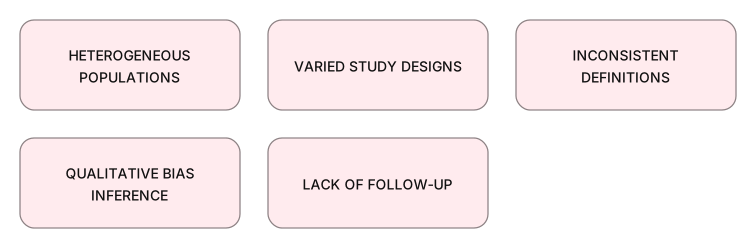
5.4 Limitations:


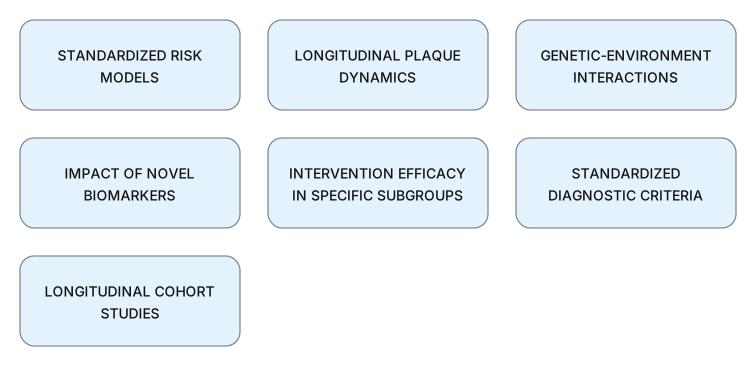
5.5 Future directions:


6) Conclusion
The prevalence of carotid artery stenosis varies significantly depending on the study population and diagnostic criteria, ranging from 0.56% in a large cohort of Chinese adults [3] to 53.2% in patients presenting with cerebral infarction [111]. Key risk factors include advanced age, male sex, hypertension, diabetes mellitus, dyslipidemia, and smoking, along with various co-morbidities and specific plaque characteristics. The most significant limitation affecting certainty is the heterogeneity of study populations and designs, which complicates the synthesis of a unified risk profile. Clinicians should maintain a high index of suspicion for carotid stenosis in older male patients with multiple traditional cardiovascular risk factors and consider comprehensive risk factor management.

References
SAIMSARA Session Index — session.json

Figure 1. Publication-year distribution of included originals

Figure 2. Study-design distribution of included originals
Figure 2. Study-design distribution

Figure 3. Study-type (directionality) distribution of included originals
Figure 3. Directionality distribution

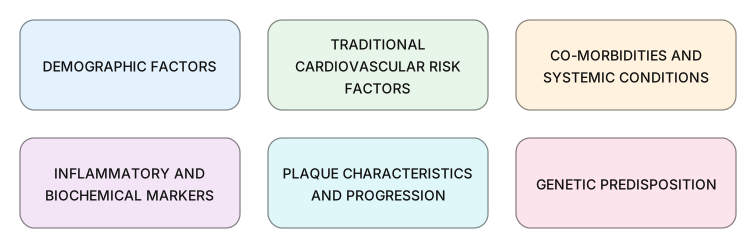
Figure 4. Main extracted research topics
Figure 4. Main extracted research topics (Results)

Figure 5. Limitations of current studies (topics)

Figure 6. Future research directions (topics)