Carotid Stent: Systematic Review with ☸️SAIMSARA.


saimsara.com Download PDF

Abstract: This paper aims to synthesize current evidence on carotid stenting, focusing on procedural characteristics, clinical outcomes, and associated challenges, to identify key themes and future research directions. The review utilises 265 studies with 120140 total participants (naïve ΣN). The median in-stent restenosis rate after carotid artery stenting was 17.5%, with a wide range from 2.0% to 46.0% depending on definition, stent type, and patient population. Carotid stenting is a versatile procedure for various carotid pathologies, but its generalizability is limited by the heterogeneity of study designs and outcome reporting. The most significant limitation affecting certainty is the Variability in Reporting of restenosis definitions and follow-up durations. Clinicians should be aware of the varying restenosis rates associated with different stent designs and patient risk factors, and consider individualized antiplatelet strategies.

Keywords: Carotid Artery Stenting; Carotid Stenosis; In-Stent Restenosis; Stent Design

Review Stats
Identification of studies via Semantic Scholar (all fields) Identification Screening Included Records identified:n=443352Records excluded:n=442352 Records assessed for eligibilityn=1000Records excluded:n=735 Studies included in reviewn=265 PRISMA Diagram generated by ☸️ SAIMSARA
⛛OSMA Triangle Effect-of Predictor → Outcome carotid stent  →  Outcome Beneficial for patients ΣN=4168 (3%) Harmful for patients ΣN=2906 (2%) Neutral ΣN=113066 (94%) 0 ⛛OSMA Triangle generated by ☸️SAIMSARA
Show OSMA legend
Outcome-Sentiment Meta-Analysis (OSMA): (LLM-only)
Frame: Effect-of Predictor → Outcome • Source: Semantic Scholar
Outcome: Outcome Typical timepoints: 30-day, 5-y. Reported metrics: %, CI, p.
Common endpoints: Common endpoints: complications, restenosis, mortality.
Predictor: carotid stent — exposure/predictor. Routes seen: intravenous. Typical comparator: open-cell stents, closed-cell stents. both stent, historic controls, transfemoral carotid artery….

  • 1) Beneficial for patients — Outcome with carotid stent — [3], [6], [16], [17], [25], [263] — ΣN=4168
  • 2) Harmful for patients — Outcome with carotid stent — [4], [5], [21] — ΣN=2906
  • 3) No clear effect — Outcome with carotid stent — [1], [2], [7], [8], [9], [10], [11], [12], [13], [14], [15], [18], [19], [20], [22], [23], [24], [26], [27], [28], [29], [30], [31], [32], [33], [34], [35], [36], [37], [38], [39], [40], [41], [42], [43], [44], [45], [46], [47], [48], [49], [50], [51], [52], [53], [54], [55], [56], [57], [58], [59], [60], [61], [62], [63], [64], [65], [66], [67], [68], [69], [70], [71], [72], [73], [74], [75], [76], [77], [78], [79], [80], [81], [82], [83], [84], [85], [86], [87], [88], [89], [90], [91], [92], [93], [94], [95], [96], [97], [98], [99], [100], [101], [102], [103], [104], [105], [106], [107], [108], [109], [110], [111], [112], [113], [114], [115], [116], [117], [118], [119], [120], [121], [122], [123], [124], [125], [126], [127], [128], [129], [130], [131], [132], [133], [134], [135], [136], [137], [138], [139], [140], [141], [142], [143], [144], [145], [146], [147], [148], [149], [150], [151], [152], [153], [154], [155], [156], [157], [158], [159], [160], [161], [162], [163], [164], [165], [166], [167], [168], [169], [170], [171], [172], [173], [174], [175], [176], [177], [178], [179], [180], [181], [182], [183], [184], [185], [186], [187], [188], [189], [190], [191], [192], [193], [194], [195], [196], [197], [198], [199], [200], [201], [202], [203], [204], [205], [206], [207], [208], [209], [210], [211], [212], [213], [214], [215], [216], [217], [218], [219], [220], [221], [222], [223], [224], [225], [226], [227], [228], [229], [230], [231], [232], [233], [234], [235], [236], [237], [238], [239], [240], [241], [242], [243], [244], [245], [246], [247], [248], [249], [250], [251], [252], [253], [254], [255], [256], [257], [258], [259], [260], [261], [262], [264], [265] — ΣN=113066
Introduction
Carotid artery stenting (CAS) is an established endovascular intervention aimed at preventing stroke by treating carotid artery stenosis and other vascular pathologies. Initially described in the mid-1990s as a neurovascular intervention [16, 38], CAS has evolved to address a range of complex conditions, including acute stroke, traumatic injuries, and aneurysms [5, 7, 36, 42, 44, 45, 56, 60, 84, 85, 87, 88, 89, 90, 91, 99, 106, 107, 118, 207]. The procedure involves the deployment of a stent to restore vessel patency and stabilize plaque, often complemented by cerebral protection devices to mitigate embolic risk [9, 46, 54, 93, 97, 98, 100, 102, 110, 121, 127, 131, 172, 191, 192, 199, 201, 209, 210, 216, 230, 234, 240, 241, 255]. Ongoing research continues to refine techniques, evaluate novel stent designs, and compare CAS outcomes against carotid endarterectomy (CEA) [23, 30, 35, 62, 78, 81, 103, 153, 154, 155, 157, 158, 160, 165, 177, 178, 181, 190, 195, 202, 204, 206, 228, 247, 251, 257, 264].

Aim
This paper aims to synthesize current evidence on carotid stenting, focusing on procedural characteristics, clinical outcomes, and associated challenges, to identify key themes and future research directions.

Methods
Systematic review with multilayer AI research agent: keyword normalization, retrieval & structuring, and paper synthesis (see SAIMSARA About section for details).


Results
4.1 Study characteristics
The included studies encompass a range of designs, predominantly mixed-design and cohort studies, with several prospective randomized controlled trials (RCTs) also represented. Populations frequently include patients with symptomatic or asymptomatic carotid stenosis, high-surgical-risk individuals, and those undergoing emergency procedures for acute stroke or traumatic injuries. Follow-up periods vary significantly, ranging from immediate post-procedural assessment (e.g., 30 days) to intermediate (e.g., 9 months, 23 months) and long-term evaluations (e.g., 4.0 years, 5 years, up to 13 years).

4.2 Main numerical result aligned to the query
In-stent restenosis (ISR) rates following carotid artery stenting show considerable variability depending on stent design, patient characteristics, and follow-up duration. The median reported rate for moderate or higher ISR was 17.5%, with a range from 2.0% (for ≥70% ISR) [4] to 46.0% (for closed-cell stents) [3]. Specific populations, such as those with radiation-induced carotid stenosis, demonstrated higher ISR rates (25.7%) compared to atherosclerotic stenosis (4.2%) [161], and younger patients showed higher post-Wingspan ISR rates (45.2%) compared to older patients (24.2%) [183].

4.3 Topic synthesis


Discussion
5.1 Principal finding
The median in-stent restenosis rate after carotid artery stenting was 17.5%, with a wide range from 2.0% to 46.0% depending on definition, stent type, and patient population [3, 4, 21, 26, 27, 154, 161, 183].

5.2 Clinical implications


5.3 Research implications / key gaps


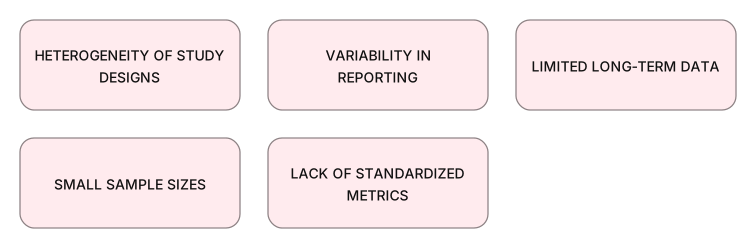
5.4 Limitations


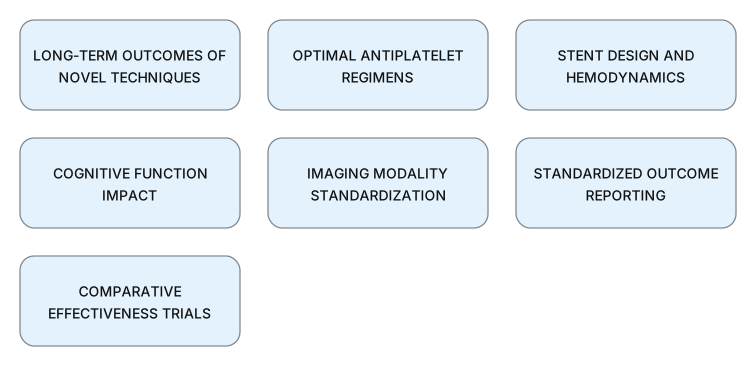
5.5 Future directions


Conclusion
The median in-stent restenosis rate after carotid artery stenting was 17.5%, with a wide range from 2.0% to 46.0% depending on definition, stent type, and patient population [3, 4, 21, 26, 27, 154, 161, 183]. Carotid stenting is a versatile procedure for various carotid pathologies, but its generalizability is limited by the heterogeneity of study designs and outcome reporting. The most significant limitation affecting certainty is the Variability in Reporting of restenosis definitions and follow-up durations. Clinicians should be aware of the varying restenosis rates associated with different stent designs and patient risk factors, and consider individualized antiplatelet strategies.

References
SAIMSARA Session Index — session.json

Figure 1. Publication-year distribution of included originals

Figure 2. Study-design distribution of included originals
Figure 2. Study-design distribution

Figure 3. Study-type (directionality) distribution of included originals
Figure 3. Directionality distribution

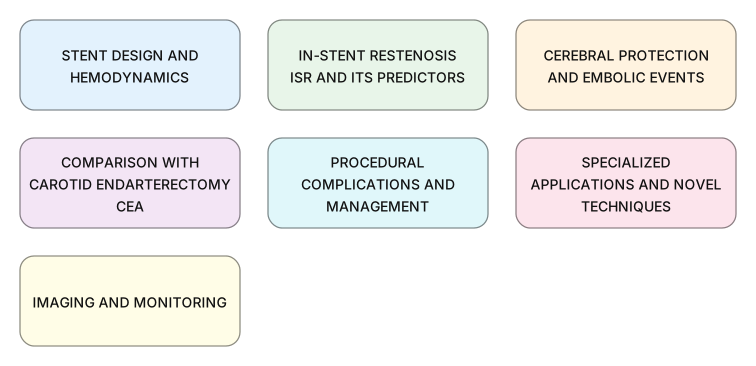
Figure 4. Main extracted research topics
Figure 4. Main extracted research topics (Results)

Figure 5. Limitations of current studies (topics)

Figure 6. Future research directions (topics)