Catheter Angiography in Carotid Disease: Systematic Review with ☸️SAIMSARA.


saimsara.com Download PDF

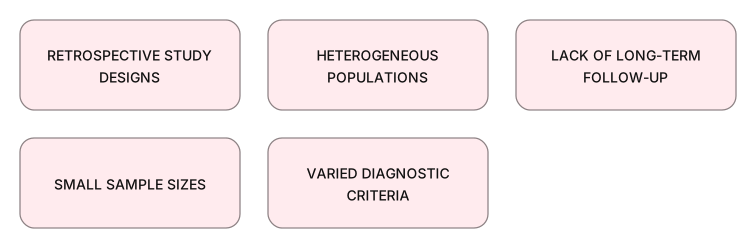
Abstract: Systematic review with multilayer AI research agent: keyword normalization, retrieval & structuring, and paper synthesis (see SAIMSARA About section for details). The review utilises 118 studies with 12124 total participants (naïve ΣN). Catheter-based angiography (DSA) frequently leads to a re-evaluation of non-invasive findings and changes in treatment plans for carotid disease, with discrepancies in stenosis severity or treatment plans ranging from 19% to 40%. This highlights its definitive role in refining diagnoses and guiding interventions, particularly for symptomatic patients. The generalizability of these findings is limited by the prevalence of retrospective designs and small sample sizes. The most significant limitation affecting certainty is the Heterogeneous Populations, which impedes direct comparisons and broad applicability. For clinicians, this underscores the continued importance of considering catheter angiography for definitive assessment in cases of symptomatic carotid disease or discordant non-invasive imaging results.

Keywords: Catheter Angiography; Carotid Artery Disease; Digital Subtraction Angiography

Review Stats
Identification of studies via Semantic Scholar (all fields) Identification Screening Included Records identified:n=496Records excluded:n=0 Records assessed for eligibilityn=496Records excluded:n=378 Studies included in reviewn=118 PRISMA Diagram generated by ☸️ SAIMSARA
⛛OSMA Triangle Effect-of Predictor → Outcome catheter angiography  →  carotid disease Beneficial for patients ΣN=0 (0%) Harmful for patients ΣN=395 (3%) Neutral ΣN=11729 (97%) 0 ⛛OSMA Triangle generated by ☸️SAIMSARA
Show OSMA legend
Outcome-Sentiment Meta-Analysis (OSMA): (LLM-only)
Frame: Effect-of Predictor → Outcome • Source: Semantic Scholar
Outcome: carotid disease Typical timepoints: peri/post-op, 3-day. Reported metrics: %, CI, p.
Common endpoints: Common endpoints: occlusion, complications, functional.
Predictor: catheter angiography — exposure/predictor. Doses/units seen: 20 mg, 10 mg. Typical comparator: conventional catheters in, control, controls, duplex sonography assessments….

  • 1) Beneficial for patients — carotid disease with catheter angiography — — — ΣN=0
  • 2) Harmful for patients — carotid disease with catheter angiography — [39] — ΣN=395
  • 3) No clear effect — carotid disease with catheter angiography — [1], [2], [3], [4], [5], [6], [7], [8], [9], [10], [11], [12], [13], [14], [15], [16], [17], [18], [19], [20], [21], [22], [23], [24], [25], [26], [27], [28], [29], [30], [31], [32], [33], [34], [35], [36], [37], [38], [40], [41], [42], [43], [44], [45], [46], [47], [48], [49], [50], [51], [52], [53], [54], [55], [56], [57], [58], [59], [60], [61], [62], [63], [64], [65], [66], [67], [68], [69], [70], [71], [72], [73], [74], [75], [76], [77], [78], [79], [80], [81], [82], [83], [84], [85], [86], [87], [88], [89], [90], [91], [92], [93], [94], [95], [96], [97], [98], [99], [100], [101], [102], [103], [104], [105], [106], [107], [108], [109], [110], [111], [112], [113], [114], [115], [116], [117], [118] — ΣN=11729
1) Introduction
Catheter angiography, particularly digital subtraction angiography (DSA), serves as a critical diagnostic and interventional tool in the evaluation and management of carotid artery disease. While non-invasive imaging modalities have gained widespread use, the precision and definitive nature of catheter-based angiography remain indispensable for confirming diagnoses, guiding therapeutic decisions, and assessing complex cerebrovascular conditions. This paper synthesizes current evidence on the application, utility, and implications of catheter angiography in the context of carotid pathology, drawing from a diverse range of studies.

2) Aim
Systematic review with multilayer AI research agent: keyword normalization, retrieval & structuring, and paper synthesis (see SAIMSARA About section for details).

3) Methods
Systematic review with multilayer AI research agent: keyword normalization, retrieval & structuring, and paper synthesis (see SAIMSARA About section for details).


4) Results
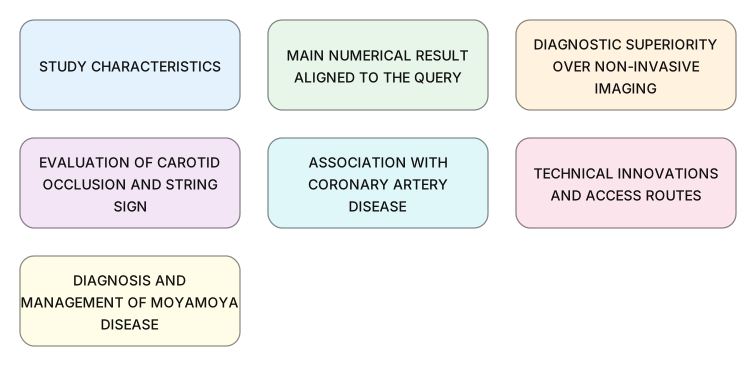
4.1 Study characteristics: The reviewed studies encompass retrospective analyses, cohort studies, cross-sectional investigations, and numerous case reports/series. Populations range from symptomatic patients referred for carotid disease evaluation [1, 2], patients with concomitant coronary artery disease (CAD) [3, 7, 35, 36, 39, 41, 42, 45, 87], individuals with Moyamoya disease [23, 24, 26, 27, 28, 55, 59, 62, 90], and healthy controls or disease-free arteries [4, 78]. Animal models (swine, rabbit, rat, canine) were also utilized for technical development and stroke modeling [17, 31, 61, 76, 80, 91, 93, 98]. Follow-up periods varied widely, from immediate post-procedure assessment to several months or years in specific case studies, but were frequently unspecified or absent for larger cohorts.

4.2 Main numerical result aligned to the query: Catheter-based angiography (DSA) frequently leads to a re-evaluation of non-invasive findings and changes in treatment plans for carotid disease. Discrepancies in stenosis severity or treatment plans between non-invasive imaging and conventional catheter angiography ranged from 19% to 40% [1, 2]. Specifically, 19% of patients referred based on non-invasive imaging for ipsilateral carotid stenosis >50% or occlusion were found to have non-significant stenosis (<50%) on DSA [1]. In another cohort, 40% of symptomatic patients referred for intervention based on non-invasive imaging had a change in their treatment plan following conventional catheter angiography, with 40% of those referred for moderate to severe stenosis ultimately not found to have significant stenosis [2].

4.3 Topic synthesis:


5) Discussion
5.1 Principal finding: The principal finding is that catheter-based angiography significantly impacts the diagnosis and treatment planning for carotid disease, with discrepancies in stenosis severity or treatment plans ranging from 19% to 40% compared to non-invasive imaging [1, 2]. This underscores its definitive role in patient management.

5.2 Clinical implications:


5.3 Research implications / key gaps:


5.4 Limitations:


5.5 Future directions:


6) Conclusion
Catheter-based angiography (DSA) frequently leads to a re-evaluation of non-invasive findings and changes in treatment plans for carotid disease, with discrepancies in stenosis severity or treatment plans ranging from 19% to 40% [1, 2]. This highlights its definitive role in refining diagnoses and guiding interventions, particularly for symptomatic patients. The generalizability of these findings is limited by the prevalence of retrospective designs and small sample sizes. The most significant limitation affecting certainty is the Heterogeneous Populations, which impedes direct comparisons and broad applicability. For clinicians, this underscores the continued importance of considering catheter angiography for definitive assessment in cases of symptomatic carotid disease or discordant non-invasive imaging results.

References
SAIMSARA Session Index — session.json

Figure 1. Publication-year distribution of included originals

Figure 2. Study-design distribution of included originals
Figure 2. Study-design distribution

Figure 3. Study-type (directionality) distribution of included originals
Figure 3. Directionality distribution

Figure 4. Main extracted research topics
Figure 4. Main extracted research topics (Results)

Figure 5. Limitations of current studies (topics)

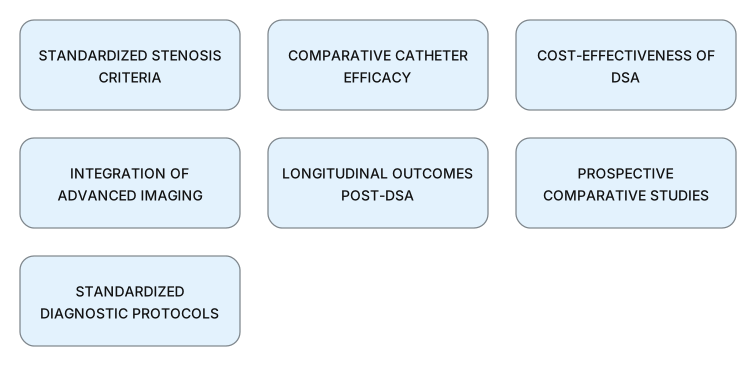
Figure 6. Future research directions (topics)