Chronic Limb Threatening Ischemia: Systematic Review with ☸️SAIMSARA.


saimsara.com Download PDF

Abstract: This paper aims to systematically review and synthesize current evidence on the diagnosis, treatment strategies, prognostic factors, and novel interventions for chronic limb-threatening ischemia. The review utilises 507 studies with 558889 total participants (naïve ΣN). The 1-year amputation-free survival (AFS) rate in patients with chronic limb-threatening ischemia (CLTI) ranged from 37% to 91.5%, underscoring the severe and varied prognosis of this condition. While surgical and endovascular revascularization remain cornerstones of therapy, novel interventions for "no-option" CLTI and improved prognostic tools are continually emerging, offering hope for improved limb salvage and patient outcomes across diverse populations. The heterogeneity in study designs and outcome reporting represents a significant limitation, affecting the certainty of current evidence. Clinicians should integrate prognostic tools like WIfI and GLASS classifications to guide personalized treatment strategies, while future research should prioritize large-scale randomized controlled trials to establish the comparative effectiveness of novel therapies.

Keywords: Chronic Limb-Threatening Ischemia; Peripheral Artery Disease; Revascularization; Limb Salvage; Amputation; Endovascular Therapy; Surgical Bypass; Wound Healing; Major Adverse Limb Events; Inflammation

Review Stats
Identification of studies via Semantic Scholar (all fields) Identification Screening Included Records identified:n=7920Records excluded:n=6920 Records assessed for eligibilityn=1000Records excluded:n=493 Studies included in reviewn=507 PRISMA Diagram generated by ☸️ SAIMSARA
⛛OSMA Triangle Effect-of Predictor → Outcome chronic limb threatening ischemia  →  Outcome Beneficial for patients ΣN=61782 (11%) Harmful for patients ΣN=211438 (38%) Neutral ΣN=285669 (51%) 0 ⛛OSMA Triangle generated by ☸️SAIMSARA
Show OSMA legend
Outcome-Sentiment Meta-Analysis (OSMA): (LLM-only)
Frame: Effect-of Predictor → Outcome • Source: Semantic Scholar
Outcome: Outcome Typical timepoints: 1-y, 12-mo. Reported metrics: %, CI, p.
Common endpoints: Common endpoints: survival, mortality, healing.
Predictor: chronic limb threatening ischemia — exposure/predictor. Routes seen: intramuscular, im, iv. Typical comparator: endovascular therapy. outcomes, non-angioplasty, endovascular intervention in, claudication patients….

  • 1) Beneficial for patients — Outcome with chronic limb threatening ischemia — [1], [2], [4], [6], [7], [20], [24], [25], [53], [57], [58], [60], [63], [66], [70], [72], [73], [75], [77], [78], [80], [81], [83], [84], [85], [86], [100], [112], [114], [117], [155], [160], [162], [174], [211], [214], [216], [219], [221], [222], [225], [377], [384], [386], [387], [389], [390], [391], [395], [397], [398], [399], [400], [401], [403], [405], [406], [407], [410], [411], [413], [419], [420], [425], [426], [431], [434], [436], [438], [440], [441], [443], [451], [456], [458], [460], [461], [462], [463], [469], [475] — ΣN=61782
  • 2) Harmful for patients — Outcome with chronic limb threatening ischemia — [3], [5], [8], [9], [12], [13], [16], [23], [51], [59], [61], [62], [65], [69], [71], [76], [79], [82], [87], [88], [97], [98], [124], [125], [151], [152], [153], [154], [156], [157], [159], [165], [204], [207], [212], [218], [220], [224], [376], [378], [379], [385], [388], [392], [402], [404], [409], [417], [421], [423], [424], [432], [433], [435], [437], [439], [442], [445], [448], [449], [452], [453], [454], [457], [459], [465], [467], [474] — ΣN=211438
  • 3) No clear effect — Outcome with chronic limb threatening ischemia — [10], [11], [14], [15], [17], [18], [19], [21], [22], [26], [27], [28], [29], [30], [31], [32], [33], [34], [35], [36], [37], [38], [39], [40], [41], [42], [43], [44], [45], [46], [47], [48], [49], [50], [52], [54], [55], [56], [64], [67], [68], [74], [89], [90], [91], [92], [93], [94], [95], [96], [99], [101], [102], [103], [104], [105], [106], [107], [108], [109], [110], [111], [113], [115], [116], [118], [119], [120], [121], [122], [123], [126], [127], [128], [129], [130], [131], [132], [133], [134], [135], [136], [137], [138], [139], [140], [141], [142], [143], [144], [145], [146], [147], [148], [149], [150], [158], [161], [163], [164], [166], [167], [168], [169], [170], [171], [172], [173], [175], [176], [177], [178], [179], [180], [181], [182], [183], [184], [185], [186], [187], [188], [189], [190], [191], [192], [193], [194], [195], [196], [197], [198], [199], [200], [201], [202], [203], [205], [206], [208], [209], [210], [213], [215], [217], [223], [226], [227], [228], [229], [230], [231], [232], [233], [234], [235], [236], [237], [238], [239], [240], [241], [242], [243], [244], [245], [246], [247], [248], [249], [250], [251], [252], [253], [254], [255], [256], [257], [258], [259], [260], [261], [262], [263], [264], [265], [266], [267], [268], [269], [270], [271], [272], [273], [274], [275], [276], [277], [278], [279], [280], [281], [282], [283], [284], [285], [286], [287], [288], [289], [290], [291], [292], [293], [294], [295], [296], [297], [298], [299], [300], [301], [302], [303], [304], [305], [306], [307], [308], [309], [310], [311], [312], [313], [314], [315], [316], [317], [318], [319], [320], [321], [322], [323], [324], [325], [326], [327], [328], [329], [330], [331], [332], [333], [334], [335], [336], [337], [338], [339], [340], [341], [342], [343], [344], [345], [346], [347], [348], [349], [350], [351], [352], [353], [354], [355], [356], [357], [358], [359], [360], [361], [362], [363], [364], [365], [366], [367], [368], [369], [370], [371], [372], [373], [374], [375], [380], [381], [382], [383], [393], [394], [396], [408], [412], [414], [415], [416], [418], [422], [427], [428], [429], [430], [444], [446], [447], [450], [455], [464], [466], [468], [470], [471], [472], [473], [476], [477], [478], [479], [480], [481], [482], [483], [484], [485], [486], [487], [488], [489], [490], [491], [492], [493], [494], [495], [496], [497], [498], [499], [500], [501], [502], [503], [504], [505], [506], [507] — ΣN=285669
1) Introduction
Chronic limb-threatening ischemia (CLTI) represents the most severe manifestation of peripheral artery disease (PAD), characterized by chronic ischemic rest pain, non-healing wounds, or gangrene, and is a significant cause of morbidity, limb loss, and mortality [55, 122]. Patients with CLTI often face complex clinical challenges, including advanced age, multiple comorbidities such as diabetes mellitus (DM) and end-stage renal disease (ESRD), and a high risk of major adverse limb events (MALE) and major adverse cardiovascular events (MACE) [35, 190, 424]. The management of CLTI is multifaceted, involving revascularization strategies (surgical or endovascular), wound care, and novel therapeutic approaches, with a primary goal of limb salvage and improved quality of life [47, 56]. Despite advancements, a substantial proportion of patients, particularly those with "no-option" CLTI where conventional revascularization is not feasible, continue to experience poor outcomes, highlighting an urgent need for effective interventions and refined prognostic tools [3, 56, 116].

2) Aim
This paper aims to systematically review and synthesize current evidence on the diagnosis, treatment strategies, prognostic factors, and novel interventions for chronic limb-threatening ischemia.

3) Methods
Systematic review with multilayer AI research agent: keyword normalization, retrieval & structuring, and paper synthesis (see SAIMSARA About section for details).


4) Results
4.1 Study characteristics
The evidence base for chronic limb-threatening ischemia (CLTI) is diverse, comprising numerous cohort studies (retrospective and prospective), randomized controlled trials (RCTs), and mixed-design studies. Populations frequently include patients with infrainguinal peripheral artery disease, no-option CLTI, diabetic patients, and those with specific lesion types (e.g., infrapopliteal, femoropopliteal, inframalleolar). Follow-up periods typically range from 6 months to 2 years, with some studies extending to 5 years or more.

4.2 Main numerical result aligned to the query
The 1-year amputation-free survival (AFS) rate in patients with chronic limb-threatening ischemia (CLTI) undergoing various interventions or management strategies exhibited a wide range, from 37% [3] to 91.5% [73]. The median 1-year AFS rate across comparable studies was 75% (e.g., 71% [86], 79% [431]). This considerable heterogeneity reflects differences in patient populations, disease severity, intervention types, and outcome definitions.

4.3 Topic synthesis


5) Discussion
5.1 Principal finding
The median 1-year amputation-free survival (AFS) rate for patients with chronic limb-threatening ischemia (CLTI) was 75%, ranging from 37% to 91.5% [3, 73], indicating a high degree of variability in outcomes depending on patient characteristics, disease severity, and treatment modalities.

5.2 Clinical implications


5.3 Research implications / key gaps


5.4 Limitations


5.5 Future directions


6) Conclusion
The 1-year amputation-free survival (AFS) rate in patients with chronic limb-threatening ischemia (CLTI) ranged from 37% [3] to 91.5% [73], underscoring the severe and varied prognosis of this condition. While surgical and endovascular revascularization remain cornerstones of therapy, novel interventions for "no-option" CLTI and improved prognostic tools are continually emerging, offering hope for improved limb salvage and patient outcomes across diverse populations. The heterogeneity in study designs and outcome reporting represents a significant limitation, affecting the certainty of current evidence. Clinicians should integrate prognostic tools like WIfI and GLASS classifications to guide personalized treatment strategies, while future research should prioritize large-scale randomized controlled trials to establish the comparative effectiveness of novel therapies.

References
SAIMSARA Session Index — session.json

Figure 1. Publication-year distribution of included originals

Figure 2. Study-design distribution of included originals
Figure 2. Study-design distribution

Figure 3. Study-type (directionality) distribution of included originals
Figure 3. Directionality distribution

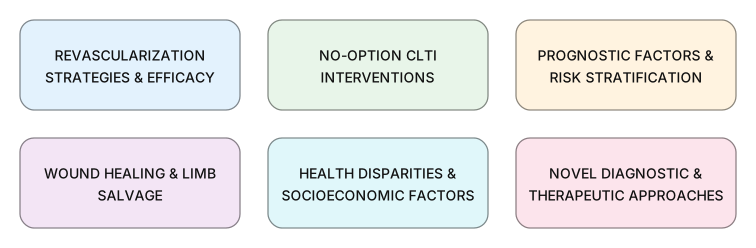
Figure 4. Main extracted research topics
Figure 4. Main extracted research topics (Results)

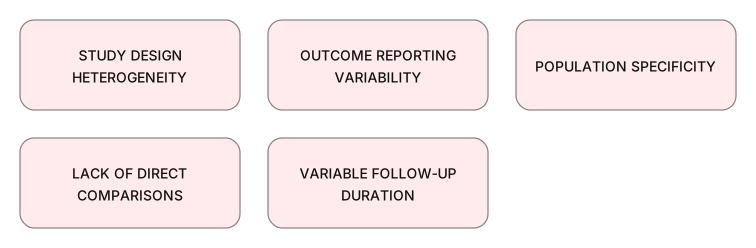
Figure 5. Limitations of current studies (topics)

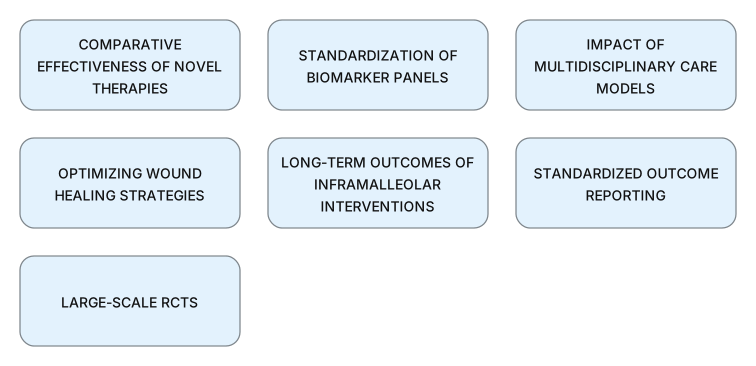
Figure 6. Future research directions (topics)