DAPT vs Monotherapy: Systematic Review with ☸️SAIMSARA.


saimsara.com Download PDF

Abstract: This paper aims to systematically review and synthesize the available evidence comparing dual antiplatelet therapy (DAPT) with antiplatelet monotherapy across various cardiovascular and cerebrovascular clinical settings, focusing on efficacy and safety outcomes. The review utilises 346 studies with 2215201 total participants (naïve ΣN). The extensive body of evidence reviewed highlights a significant shift towards antiplatelet monotherapy, particularly with P2Y12 inhibitors, after a short duration of dual antiplatelet therapy (DAPT). This strategy consistently demonstrates a substantial reduction in major bleeding events, with the median major bleeding rate in monotherapy groups being 1.0% (range: 0.4%–3.6%) compared to 3.2% (range: 1.2%–5.4%) in prolonged DAPT groups. Crucially, this safety benefit is generally achieved without an increase in ischemic events, and in some contexts, P2Y12 inhibitor monotherapy, especially ticagrelor or clopidogrel, has shown superiority over aspirin monotherapy in preventing ischemic events. While the evidence strongly supports tailored antiplatelet strategies based on individual patient risk profiles, the heterogeneity in study designs remains a limitation. Future research should prioritize large-scale, long-term comparative effectiveness trials to further refine optimal antiplatelet regimens for diverse patient populations.

Keywords: Dual antiplatelet therapy; Monotherapy; Percutaneous coronary intervention; Acute coronary syndromes; Drug-eluting stents; Bleeding events; Ischemic events; P2Y12 inhibitor; Major adverse cardiac and cerebrovascular events; High bleeding risk

Review Stats
Identification of studies via Semantic Scholar (all fields) Identification Screening Included Records identified:n=950Records excluded:n=0 Records assessed for eligibilityn=950Records excluded:n=604 Studies included in reviewn=346 PRISMA Diagram generated by ☸️ SAIMSARA
⛛OSMA Triangle Head-to-Head (A vs B) DAPT vs monotherapy — Outcome Legend: “Favours DAPT” = left edge, “Favours monotherapy” = right edge; “Neutral” = vertical. Favours DAPT ΣN=97564 (4%) Favours monotherapy ΣN=706851 (32%) Neutral ΣN=1410786 (64%) 0 ⛛OSMA Triangle generated by ☸️SAIMSARA
Show OSMA legend
Outcome-Sentiment Meta-Analysis (OSMA): (LLM-only)
Frame: Head-to-Head (A vs B) • Source: Semantic Scholar
Comparators: A = DAPT; B = monotherapy
Outcome: Outcome Typical timepoints: 12-mo, 3-mo. Reported metrics: %, CI, p.
Common endpoints: Common endpoints: complications, mortality, recurrence.
Predictor: DAPT vs monotherapy — exposure/predictor. Doses/units seen: 5 mg, 27 kg, 100mg, 75mg, 3.75 mg, 100 mg…. Routes seen: oral, intravenous.

  • 1) A favored (DAPT) — Outcome with DAPT vs monotherapy — [54], [74], [101], [108], [164], [169], [182], [212], [213], [220], [223], [226], [230], [235], [238], [283], [317], [325], [326], [330] — ΣN=97564
  • 2) B favored (monotherapy) — Outcome with DAPT vs monotherapy — [2], [6], [8], [9], [12], [14], [16], [21], [23], [24], [29], [31], [34], [38], [40], [41], [42], [45], [48], [49], [51], [52], [57], [61], [63], [66], [68], [69], [72], [73], [78], [79], [80], [83], [84], [91], [100], [105], [110], [111], [113], [118], [121], [127], [131], [132], [134], [135], [138], [139], [142], [144], [146], [149], [150], [151], [155], [158], [174], [186], [236], [239], [242], [243], [244], [247], [250], [260], [266], [269], [270], [276], [278], [280], [282], [290], [296], [300], [302], [309], [311], [319], [321], [328] — ΣN=706851
  • 3) Neutral (no difference) — Outcome with DAPT vs monotherapy — [1], [3], [4], [5], [7], [10], [11], [13], [15], [17], [18], [19], [20], [22], [25], [26], [27], [28], [30], [32], [33], [35], [36], [37], [39], [43], [44], [46], [47], [50], [53], [55], [56], [58], [59], [60], [62], [64], [65], [67], [70], [71], [75], [76], [77], [81], [82], [85], [86], [87], [88], [89], [90], [92], [93], [94], [95], [96], [97], [98], [99], [102], [103], [104], [106], [107], [109], [112], [114], [115], [116], [117], [119], [120], [122], [123], [124], [125], [126], [128], [129], [130], [133], [136], [137], [140], [141], [143], [145], [147], [148], [152], [153], [154], [156], [157], [159], [160], [161], [162], [163], [165], [166], [167], [168], [170], [171], [172], [173], [175], [176], [177], [178], [179], [180], [181], [183], [184], [185], [187], [188], [189], [190], [191], [192], [193], [194], [195], [196], [197], [198], [199], [200], [201], [202], [203], [204], [205], [206], [207], [208], [209], [210], [211], [214], [215], [216], [217], [218], [219], [221], [222], [224], [225], [227], [228], [229], [231], [232], [233], [234], [237], [240], [241], [245], [246], [248], [249], [251], [252], [253], [254], [255], [256], [257], [258], [259], [261], [262], [263], [264], [265], [267], [268], [271], [272], [273], [274], [275], [277], [279], [281], [284], [285], [286], [287], [288], [289], [291], [292], [293], [294], [295], [297], [298], [299], [301], [303], [304], [305], [306], [307], [308], [310], [312], [313], [314], [315], [316], [318], [320], [322], [323], [324], [327], [329], [331], [332], [333], [334], [335], [336], [337], [338], [339], [340], [341], [342], [343], [344], [345], [346] — ΣN=1410786
1) Introduction
Dual antiplatelet therapy (DAPT), typically comprising aspirin and a P2Y12 inhibitor, has been a cornerstone in preventing thrombotic events following percutaneous coronary intervention (PCI) and in acute coronary syndromes (ACS) or cerebrovascular events. However, the optimal duration and composition of antiplatelet regimens remain a subject of ongoing debate, particularly concerning the balance between ischemic protection and bleeding risk. Recent research has increasingly explored strategies involving shorter durations of DAPT followed by antiplatelet monotherapy, often with a P2Y12 inhibitor, or comparisons of different monotherapy agents. This evolving landscape necessitates a comprehensive synthesis of current evidence to inform clinical practice and future research.

2) Aim
This paper aims to systematically review and synthesize the available evidence comparing dual antiplatelet therapy (DAPT) with antiplatelet monotherapy across various cardiovascular and cerebrovascular clinical settings, focusing on efficacy and safety outcomes.

3) Methods
Systematic review with multilayer AI research agent: keyword normalization, retrieval & structuring, and paper synthesis (see SAIMSARA About section for details).


4) Results
4.1 Study characteristics
The review encompassed a broad range of study designs, predominantly prospective randomized controlled trials (RCTs), alongside cohort, cross-sectional, and mixed-design studies. Populations included adult hospitalizations with symptomatic large vessel occlusion (LVO), patients with acute coronary syndromes (ACS) or stable coronary artery disease (CAD) undergoing percutaneous coronary intervention (PCI) with various drug-eluting stents (DES), patients after coronary artery bypass grafting (CABG), and individuals with acute ischemic stroke (AIS) or transient ischemic attack (TIA). Follow-up durations varied widely, ranging from 30 days to 9 years, with many studies reporting 1-year outcomes.

4.2 Main numerical result aligned to the query
Across studies directly comparing monotherapy (typically a P2Y12 inhibitor after short-term DAPT) versus prolonged DAPT, the median rate of major bleeding (including BARC type 3 or 5 bleeding) in the monotherapy group was 1.0% (range: 0.4%–3.6%) [12, 16, 21, 22, 23, 38, 83, 153, 154, 195, 270, 300]. In contrast, the median rate of major bleeding in the prolonged DAPT group was 3.2% (range: 1.2%–5.4%) [12, 16, 21, 22, 23, 38, 83, 153, 154, 195, 270, 300]. This indicates a consistent trend towards lower major bleeding rates with monotherapy after an initial short course of DAPT compared to prolonged DAPT.

4.3 Topic synthesis


5) Discussion
5.1 Principal finding
The central finding of this review indicates that antiplatelet monotherapy, particularly with a P2Y12 inhibitor following a short course of DAPT, is associated with a significantly lower rate of major bleeding (median 1.0%, range 0.4%-3.6%) compared to prolonged DAPT (median 3.2%, range 1.2%-5.4%) [12, 16, 21, 22, 23, 38, 83, 153, 154, 195, 270, 300]. This reduction in bleeding risk generally occurs without a significant increase in ischemic events.

5.2 Clinical implications


5.3 Research implications / key gaps


5.4 Limitations


5.5 Future directions


6) Conclusion
The extensive body of evidence reviewed highlights a significant shift towards antiplatelet monotherapy, particularly with P2Y12 inhibitors, after a short duration of dual antiplatelet therapy (DAPT). This strategy consistently demonstrates a substantial reduction in major bleeding events, with the median major bleeding rate in monotherapy groups being 1.0% (range: 0.4%–3.6%) compared to 3.2% (range: 1.2%–5.4%) in prolonged DAPT groups. Crucially, this safety benefit is generally achieved without an increase in ischemic events, and in some contexts, P2Y12 inhibitor monotherapy, especially ticagrelor or clopidogrel, has shown superiority over aspirin monotherapy in preventing ischemic events. While the evidence strongly supports tailored antiplatelet strategies based on individual patient risk profiles, the heterogeneity in study designs remains a limitation. Future research should prioritize large-scale, long-term comparative effectiveness trials to further refine optimal antiplatelet regimens for diverse patient populations.

References
SAIMSARA Session Index — session.json

Figure 1. Publication-year distribution of included originals

Figure 2. Study-design distribution of included originals
Figure 2. Study-design distribution

Figure 3. Study-type (directionality) distribution of included originals
Figure 3. Directionality distribution

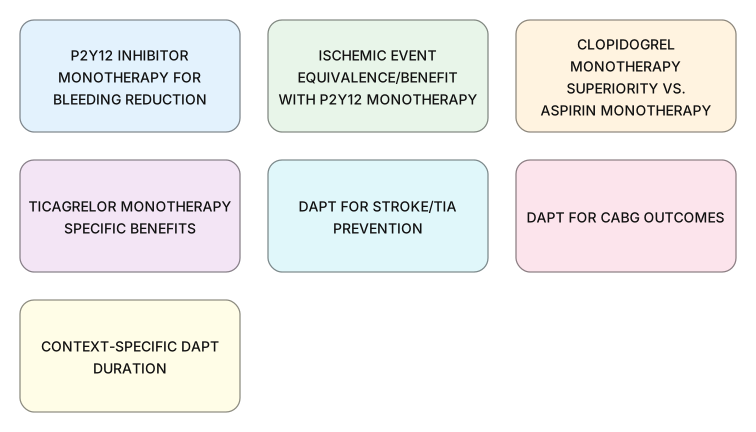
Figure 4. Main extracted research topics
Figure 4. Main extracted research topics (Results)

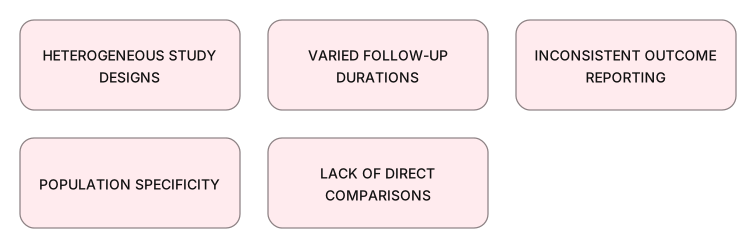
Figure 5. Limitations of current studies (topics)

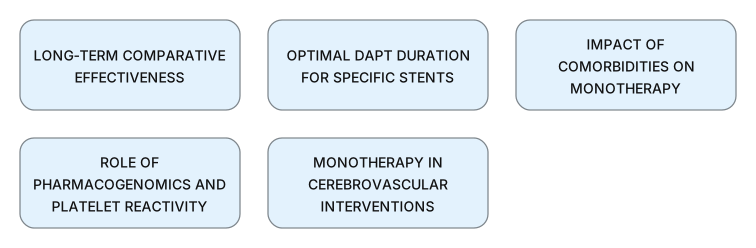
Figure 6. Future research directions (topics)