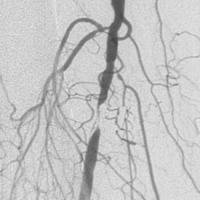
The paper tackles one of endovascular medicine’s most controversial questions: whether DCBs truly carry a late mortality risk. Mapping 170 original studies, it shows why the feared signal largely fades in broader evidence, where comorbidity and indication matter more than the device itself — and reveals the few settings where uncertainty still remains.
Abstract: The aim of this paper is to evaluate the long-term safety profile of DCBs by synthesizing mortality outcomes across diverse clinical settings, including femoropopliteal disease, coronary interventions, and arteriovenous fistula (AVF) maintenance. The review utilises 170 original studies with 515578 total participants (topic deduplicated ΣN). The mapped evidence suggests that DCB use is generally not associated with increased long-term mortality across peripheral, coronary, and dialysis-access practice, with representative randomized findings showing 15.6% versus 15.2% mortality at 4 years and 80.1% versus 80.2% at 5 years for DCB versus comparator strategies in key peripheral datasets. This neutral safety signal is reinforced by large real-world analyses, including a 5-year HR of 1.01 for mortality in femoropopliteal disease and an 11-year national analysis that did not identify excess late death with paclitaxel-based devices. Within the evidence map, the most consistent modifiers of mortality were patient-level factors such as CLTI, CKD, diabetes, and hemodialysis rather than DCB exposure itself, while coronary ISR and some high-risk coronary cohorts showed signals of comparable or occasionally lower mortality with DCB-based approaches. Clinically, these findings support continued use of DCB where restenosis reduction or stent avoidance is desirable, provided mortality interpretation remains anchored to baseline comorbidity and indication-specific context. Future research should focus on long-term, indication-stratified comparative studies that better resolve residual uncertainty around paclitaxel dose exposure, high-risk CLTI populations, and heterogeneous real-world case mix.
[2] Drug-coated balloon angioplasty (DCB) versus percutaneous transluminal angioplasty (PTA) for below-the-knee (BTK) interventions in chronic limb-threatening ischemia (CLTI) patients - systematic review and meta-analysis. — https://doi.org/10.1016/j.avsg.2025.09.022
[4] Multicenter randomized controlled trial to assess the effectiveness of PASSEO-LUX DCB® drug coated balloon compared to plain balloon angioplasty of arteriovenous fistulae for hemodialysis: Two-years results — https://doi.org/10.1177/11297298241272259
[7] Mortality Not Correlated With Paclitaxel Exposure: An Independent Patient-Level Meta-Analysis of a Drug-Coated Balloon. — https://doi.org/10.1016/j.jacc.2019.01.013
[8] Five-Year Independent Patient-Level Mortality Analysis of the Pooled ILLUMENATE Pivotal and EU Randomized Controlled Trials — https://doi.org/10.1016/j.jscai.2023.100634
[11] Evaluation of Mortality Following Paclitaxel Drug-Coated Balloon Angioplasty of Femoropopliteal Lesions in the Real World. — https://doi.org/10.1016/j.jcin.2020.04.050
[12] Four-Year Patient-Level Pooled Mortality Analysis of the ILLUMENATE US Pivotal and EU Randomized Controlled Trials. — https://doi.org/10.1016/j.jvs.2021.07.244
[14] A single-centre, retrospective analysis of mortality over 80 months comparing paclitaxel-coated balloon versus standard balloon angioplasty in the treatment of dysfunctional arteriovenous access — https://doi.org/10.1177/11297298211066749
[16] A patient-level, pooled analysis of mortality rates with the Passeo-18 Lux paclitaxel drug-coated balloon in peripheral arterial disease. — https://doi.org/10.1016/j.carrev.2021.04.010
[19] Mortality after Use of Paclitaxel-Coated Balloons Correlates with Total Cumulative Dosage of Paclitaxel in Real-World Analysis — https://doi.org/10.3390/jcm10163747
[27] Efficacy of Drug-Coated Balloon versus Drug-Eluting Stent for Patients with De Novo Coronary Artery Disease: A Systematic Review and Meta-Analysis — https://doi.org/10.1159/000547099
[28] Successful or Uncomplicated Use of Drug‐Coated Balloon Versus Drug‐Eluting Stent Strategies for De Novo Culprit Lesions in Acute Coronary Syndromes: Insights from a Nationwide Registry in Japan — https://doi.org/10.1161/jaha.124.038071
[31] Chronic Kidney Disease Requiring Hemodialysis as a Significant Predictor of Target Lesion Revascularization After Endovascular Treatment of Femoropopliteal Occlusive Lesions with a Drug-Coated Balloon — https://doi.org/10.3390/jcm14051474
[38] Comparison of Ultrathin-Strut Sirolimus-Eluting Stents versus Drug-Coated Balloons in Small Coronary Vessels: Real-World Data. — https://doi.org/10.5543/tkda.2025.29797
[40] Assessment of Paclitaxel Drug-Coated Balloon-Only Angioplasty for Multivessel Coronary Artery Disease — https://doi.org/10.3390/jcm15010204
[41] Drug-Coated Balloon-Based Versus Drug-Eluting Stent-Only Treatment for Patients With High-Bleeding Risk. — https://doi.org/10.1002/ccd.70528
[42] Association Between Preoperative Below-The-Knee Runoff and Clinical Outcomes in Patients with Femoropopliteal Occlusive Disease Treated With Drug-Coated Balloons. — https://doi.org/10.1177/15266028261419631
[43] Comparison of the efficacy and safety of endovascular treatment for isolated popliteal lesions in peripheral artery disease: a network meta-analysis. — https://doi.org/10.1016/j.avsg.2025.12.028
[47] Network Meta-analysis of Randomised Controlled Trials Comparing the Outcomes of Different Endovascular Revascularisation Treatments for Infra-inguinal Peripheral Arterial Disease Causing Chronic Limb Threatening Ischaemia. — https://doi.org/10.1016/j.ejvs.2024.05.014
[52] Comparative Efficacy and Safety of Different Balloon Angioplasty Procedures for Infrapopliteal Artery Lesions in Chronic Limb-Threatening Ischemia Patients: A Systematic Review and Network Meta-Analysis. — https://doi.org/10.1177/15266028241292954
[53] Comparative effectiveness of endovascular treatment modalities for de novo femoropopliteal lesions at long-term follow-up: A network meta-analysis of randomized controlled trials. — https://doi.org/10.1016/j.ijcard.2024.131977
[57] Drug-Coated Balloon vs. Drug-Eluting Stents for De Novo Unprotected Left Main Stem Disease: The SPARTAN-LMS Study — https://doi.org/10.3390/jcdd10020084
[71] Comparison of drug‐coated balloon angioplasty versus common balloon angioplasty for arteriovenous fistula stenosis: A systematic review and meta‐analysis — https://doi.org/10.1002/clc.24078
[76] Combined treatment of dysfunctional dialysis access with cutting balloon and paclitaxel-coated balloon in real world. — https://doi.org/10.1024/0301-1526/a001063
[81] Robustness of longitudinal safety and efficacy after paclitaxel-based endovascular therapy for treatment of femoro-popliteal artery occlusive disease. An updated systematic review and meta-analysis of randomized controlled trials. — https://doi.org/10.1016/j.avsg.2023.11.024
[83] Drug‐Coated Balloon and Drug‐Eluting Stent Safety in Patients With Femoropopliteal and Severe Chronic Kidney Disease — https://doi.org/10.1161/jaha.122.028622
[85] Drug-Coated Balloon Angioplasty Compared With Uncoated Balloons in the Treatment of Infrapopliteal Artery Lesions (AcoArt II–BTK) — https://doi.org/10.1177/1526602820969681
[86] Drug-coated Balloon Angioplasty of Femoropopliteal Lesions Maintained Superior Efficacy over Conventional Balloon: 2-year Results of the Randomized EffPac Trial. — https://doi.org/10.1148/radiol.2020191619
[89] Computational Pressure-Fluid Dynamics Applied to Index of Microcirculatory Resistance, Predicting the Prognosis of Drug-Coated Balloons Compared With Drug-Eluting Stents in STEMI Patients — https://doi.org/10.3389/fphys.2022.898659
[90] Safety and Efficacy of Paclitaxel-Eluting Balloon Angioplasty for Dysfunctional Hemodialysis Access: A randomized trial Comparing with Angioplasty Alone. — https://doi.org/10.1016/j.jvir.2020.10.030
[92] Paclitaxel-coated balloons versus percutaneous transluminal angioplasty for infrapopliteal chronic total occlusions: the IN.PACT BTK randomised trial. — https://doi.org/10.4244/eij-d-21-00444
[95] Clinical Outcomes of Drug-Coated Balloon Angioplasty in Peripheral Artery Disease Patients With End-Stage Renal Disease — https://doi.org/10.1177/15266028231197602
[97] Single-Center Study Evaluating Long-Term Major Adverse Outcomes with the Use of Paclitaxel-Coated Balloons in Treating Infrainguinal Arterial Disease — https://doi.org/10.1055/s-0042-1759818
[100] Efficacy and safety of drug-coated balloons according to coronary vessel size. A report from the BASKET-SMALL 2 trial — https://doi.org/10.5114/aic.2022.118528
[101] Outcomes After Drug-Coated Balloon Treatment of Femoropopliteal Lesions in Patients With Critical Limb Ischemia: A Post Hoc Analysis From the IN.PACT Global Study — https://doi.org/10.1177/1526602819839044
[102] Drug‐Coated Balloon Versus Plain Balloon Angioplasty for Hemodialysis Dysfunction: A Meta‐Analysis of Randomized Controlled Trials — https://doi.org/10.1161/jaha.121.022060
[109] Paclitaxel Coated Balloon Angioplasty vs. Plain Balloon Angioplasty for Haemodialysis Arteriovenous Access Stenosis: A Systematic Review and a Time to Event Meta-Analysis of Randomised Controlled Trials. — https://doi.org/10.1016/j.ejvs.2021.05.043
[111] Safety and Efficacy of Drug-Coated Balloon Angioplasty for the Treatment of Chronic Limb-Threatening Ischemia: A Systematic Review and Meta-Analysis — https://doi.org/10.1177/1526602820931559
[112] Paclitaxel-Coated Balloon for the Treatment of Infrainguinal Disease: 12-Month Outcomes in the All-Comers Cohort of BIOLUX P-III Global Registry — https://doi.org/10.1177/1526602819898804
[114] Drug-coated Balloons for the Treatment of Coronary In-stent Restenosis: A Multicentre, Randomised Controlled Clinical Study. — https://doi.org/10.4244/eij-d-19-00051
[119] Comparative 12-month outcomes of drug-coated balloon versus non-drug-coated balloon revascularization strategy in chronic limb threatening ischemia: Results from the XLPAD registry. — https://doi.org/10.1016/j.carrev.2020.03.030
[120] Prognostic Factors in Patients Treated with Drug-Coated Balloon Angioplasty for Symptomatic Peripheral Artery Disease — https://doi.org/10.5758/vsi.2018.34.4.94
[129] The Real-World CONSEQUENT ALL COMERS Study: Predictors for Target Lesion Revascularization and Mortality in an Unselected Patient Population — https://doi.org/10.1177/0003319721997314
[132] Use of Paclitaxel-Eluting Technologies in the Femoropopliteal Segment Under Scrutiny Over Possible Link to Late All-Cause Mortality: Time to Panic or an Opportunity to Resurge? — https://doi.org/10.1177/1526602818824682
[137] Comparison of Two Paclitaxel-Coated Balloons with Different Excipients for the Treatment of Femoropopliteal Artery Disease. — https://doi.org/10.1016/j.jvir.2025.01.033
[138] Comparison of High-Dose versus Low-Dose Paclitaxel Drug-Coated Balloons for Native Femoropopliteal Artery Disease: An Analysis of the K-VIS ELLA Registry — https://doi.org/10.3349/ymj.2024.0166
[140] Culprit-Lesion Drug-Coated-Balloon Percutaneous Coronary Intervention in Patients Presenting with ST-Elevation Myocardial Infarction (STEMI) — https://doi.org/10.3390/jcm14030869
[146] Safety and Efficacy of a Paclitaxel-Coated Balloon for the Treatment of Symptomatic Patients with Long Superficial Femoral Artery Disease — https://doi.org/10.2147/vhrm.s510121
[151] Clinical benefits of paclitaxel-coated balloons in the treatment of infrapopliteal limb-threatening peripheral artery disease. — https://doi.org/10.1024/0301-1526/a001217
[153] Drug-coated vs non-drug-coated devices for femoropopliteal artery interventions: long-term outcomes of the SAFE-PAD study. — https://doi.org/10.1093/eurheartj/ehaf721
[154] Safety and effectiveness of drug-coated devices in chronic limb-threatening ischaemia: a nationwide analysis. — https://doi.org/10.4244/eij-d-25-00769
[155] Network Meta-Analysis of Endovascular Treatments for Lower Extremity Arterial Disease Stratified by Lesion Location and Severity. — https://doi.org/10.1016/j.jvs.2025.09.063
[159] Stellarex Drug-Coated Balloon for the Treatment of Peripheral Artery Disease: Five-Year Results from the ILLUMENATE Pivotal Randomized Controlled Trial. — https://doi.org/10.1016/j.amjcard.2024.06.027
[171] One-Month Duration Compared with Twelve-Month Duration of Dual Antiplatelet Therapy in Elective Angioplasty for Coronary Artery Disease: Bleeding and Ischaemic Outcomes — https://doi.org/10.3390/jcm13154521
[173] IN.PACT AV Access Randomized Trial of Drug-Coated Balloons for Dysfunctional Arteriovenous Fistulae: Clinical Outcomes through 36 Months — https://doi.org/10.1016/j.jvir.2023.07.007
[176] Performance of drug-coated balloons in coronary and below-the-knee arteries: Anatomical, physiological and pathological considerations. — https://doi.org/10.1016/j.vph.2024.107366
[178] Durability of Treatment Effect Using a Drug-Coated Balloon for Femoropopliteal Lesions: 24-Month Results of IN.PACT SFA. — https://doi.org/10.1016/j.jacc.2015.09.063
[179] Five-Year Outcomes after Paclitaxel Drug-Coated Balloon Treatment of Femoropopliteal Lesions in Diabetic and Chronic Limb-Threatening Ischemia Cohorts: IN.PACT Global Study Post Hoc Analysis — https://doi.org/10.1007/s00270-023-03478-y
[181] Paclitaxel-coated balloons for femoropopliteal peripheral arterial disease: final five-year results of the IN.PACT Global Study. — https://doi.org/10.4244/eij-d-21-01098
[183] The Lutonix AV Randomized Trial of Paclitaxel-Coated Balloons in Arteriovenous Fistula Stenosis: 2-Year Results and Subgroup Analysis. — https://doi.org/10.1016/j.jvir.2019.08.035
[188] Long-Term Effectiveness and Safety of Femoropopliteal Drug-Coated Balloon Angioplasty : 5-Year Results of the Randomized Controlled EffPac Trial — https://doi.org/10.1007/s00270-022-03265-1
[189] Three-Year Sustained Clinical Efficacy of Drug-Coated Balloon Angioplasty in a Real-World Femoropopliteal Cohort — https://doi.org/10.1177/1526602820931477
[194] Drug-coated balloon in the treatment of coronary left main true bifurcation lesion: A patient-level propensity-matched analysis — https://doi.org/10.3389/fcvm.2022.1028007
[197] Long Term Survival after Femoropopliteal Artery Revascularisation with Paclitaxel Coated Devices: A Propensity Score Matched Cohort Analysis. — https://doi.org/10.1016/j.ejvs.2019.12.034
[210] Comparing the efficacy and safety of two different drug-coated balloons in in-stent restenosis: Two-year clinical outcomes of the RESTORE ISR China randomized trial. — https://doi.org/10.1016/j.jjcc.2022.08.014
[217] Drug-coated balloon angioplasty for failing haemodialysis access: meta-analysis of randomized clinical trials — https://doi.org/10.1093/bjs/znab301
[220] Twenty-four-month outcomes of drug-coated balloon in diabetic patients in the BIOLUX P-III registry: a subgroup analysis. — https://doi.org/10.1016/j.avsg.2021.02.050
[228] 24-Month Registry Results on Drug-Coated Balloon Angioplasty Below the Knee: Strong Enough Evidence to Convince the Sceptics? — https://doi.org/10.1007/s00270-020-02620-4
[242] Drug‐Coated Balloons Versus Drug‐Eluting Stents in Small Vessel De Novo Coronary Artery Disease: A Systematic Review and Meta‐Analysis — https://doi.org/10.1002/ccd.70441
[254] Sex-Related Outcomes Following Drug Balloon Angioplasty in Patients from the BIOLUX P-III Registry: A Subgroup Analysis — https://doi.org/10.1007/s00270-022-03135-w