Diagnostics of Abdominal Aortic Aneurysm: Systematic Review with ☸️SAIMSARA.


saimsara.com Download PDF

Abstract: The aim of this systematic review is to comprehensively analyze and synthesize the current diagnostic methodologies for abdominal aortic aneurysm, drawing exclusively from a structured extraction of recent scientific literature. The review utilises 216 studies with 51365 total participants (naïve ΣN). For opportunistic AAA detection in CT using AI, a review found a mean sensitivity of 95% (95% CI 100–87%), a mean specificity of 96.6% (95% CI 100–75.7%), and a mean accuracy of 95.2% (95% CI 100–54.5%). The diagnostic landscape for abdominal aortic aneurysm is characterized by a blend of established imaging modalities, rapidly advancing AI applications, and a burgeoning field of molecular biomarkers. While traditional ultrasound and CT remain foundational, newer technologies and biomarkers offer enhanced precision and less invasiveness. However, the significant heterogeneity across studies, particularly in methodologies and populations, remains the most impactful limitation affecting the certainty and generalizability of findings. Future research should prioritize large-scale validation of AI algorithms and standardized assessment of novel biomarkers to translate these promising advances into improved clinical practice.

Keywords: Abdominal aortic aneurysm; Diagnostic imaging; Artificial intelligence; Biomarkers; Ultrasound; Computed tomography; Aneurysm progression; Non-alcoholic fatty liver disease; Theranostic nanozyme; Inflammatory aneurysm

Review Stats
Identification of studies via Semantic Scholar (all fields) Identification Screening Included Records identified:n=1700Records excluded:n=700 Records assessed for eligibilityn=1000Records excluded:n=784 Studies included in reviewn=216 PRISMA Diagram generated by ☸️ SAIMSARA
⛛OSMA Triangle Effect-of Predictor → Outcome diagnostics  →  abdominal aortic aneurysm Beneficial for patients ΣN=117 (0%) Harmful for patients ΣN=0 (0%) Neutral ΣN=51248 (100%) 0 ⛛OSMA Triangle generated by ☸️SAIMSARA
Show OSMA legend
Outcome-Sentiment Meta-Analysis (OSMA): (LLM-only)
Frame: Effect-of Predictor → Outcome • Source: Semantic Scholar
Outcome: abdominal aortic aneurysm Typical timepoints: 50-y, 12-mo. Reported metrics: %, CI, p.
Common endpoints: Common endpoints: complications, mortality, functional.
Predictor: diagnostics — exposure/predictor. Doses/units seen: 0.675 mg, 1.5 l, 110 mg. Routes seen: oral. Typical comparator: clinical imaging techniques, ct for abdominal aortic, controls and correlated with, pad patients after adjusting….

  • 1) Beneficial for patients — abdominal aortic aneurysm with diagnostics — [113] — ΣN=117
  • 2) Harmful for patients — abdominal aortic aneurysm with diagnostics — — — ΣN=0
  • 3) No clear effect — abdominal aortic aneurysm with diagnostics — [1], [2], [3], [4], [5], [6], [7], [8], [9], [10], [11], [12], [13], [14], [15], [16], [17], [18], [19], [20], [21], [22], [23], [24], [25], [26], [27], [28], [29], [30], [31], [32], [33], [34], [35], [36], [37], [38], [39], [40], [41], [42], [43], [44], [45], [46], [47], [48], [49], [50], [51], [52], [53], [54], [55], [56], [57], [58], [59], [60], [61], [62], [63], [64], [65], [66], [67], [68], [69], [70], [71], [72], [73], [74], [75], [76], [77], [78], [79], [80], [81], [82], [83], [84], [85], [86], [87], [88], [89], [90], [91], [92], [93], [94], [95], [96], [97], [98], [99], [100], [101], [102], [103], [104], [105], [106], [107], [108], [109], [110], [111], [112], [114], [115], [116], [117], [118], [119], [120], [121], [122], [123], [124], [125], [126], [127], [128], [129], [130], [131], [132], [133], [134], [135], [136], [137], [138], [139], [140], [141], [142], [143], [144], [145], [146], [147], [148], [149], [150], [151], [152], [153], [154], [155], [156], [157], [158], [159], [160], [161], [162], [163], [164], [165], [166], [167], [168], [169], [170], [171], [172], [173], [174], [175], [176], [177], [178], [179], [180], [181], [182], [183], [184], [185], [186], [187], [188], [189], [190], [191], [192], [193], [194], [195], [196], [197], [198], [199], [200], [201], [202], [203], [204], [205], [206], [207], [208], [209], [210], [211], [212], [213], [214], [215], [216] — ΣN=51248
1) Introduction
Abdominal aortic aneurysm (AAA) represents a critical cardiovascular condition characterized by localized dilatation of the abdominal aorta, posing a significant risk of rupture if left undiagnosed and untreated. Early and accurate diagnosis is paramount for effective management, risk stratification, and improved patient outcomes. The landscape of AAA diagnostics is rapidly evolving, encompassing traditional imaging modalities, advanced computational analyses, and emerging molecular biomarkers. This paper synthesizes current research on the diverse diagnostic approaches for AAA, highlighting advancements and identifying key areas for future investigation.

2) Aim
The aim of this systematic review is to comprehensively analyze and synthesize the current diagnostic methodologies for abdominal aortic aneurysm, drawing exclusively from a structured extraction of recent scientific literature.

3) Methods
Systematic review with multilayer AI research agent: keyword normalization, retrieval & structuring, and paper synthesis (see SAIMSARA About section for details).


4) Results
4.1 Study characteristics: The reviewed literature comprises a diverse array of study designs, including mixed-methods, retrospective and prospective cohorts, case series, and synthetic/simulation studies. Populations range from rat models and 3D-printed aneurysm models to healthy adult subjects, specific patient cohorts (e.g., those with peripheral artery disease, Behçet's disease, or undergoing EVAR), and general populations undergoing screening. Follow-up periods, when specified, typically range from a few months to several years, with some studies having no follow-up.

4.2 Main numerical result aligned to the query:
For opportunistic AAA detection in CT using AI, a review found a mean sensitivity of 95% (95% CI 100–87%), a mean specificity of 96.6% (95% CI 100–75.7%), and a mean accuracy of 95.2% (95% CI 100–54.5%) [1]. Separately, a deep learning-based segmentation pipeline for computed tomography angiography (CTA) demonstrated 97% accuracy, 98% sensitivity, and 96% specificity for AAA screening [44]. In the context of initial AAA detection, point-of-care ultrasound (POCUS) by nonradiologist physicians showed high diagnostic performance with 98% sensitivity and 99% specificity [194], and emergency ultrasound by emergency physicians achieved 100% sensitivity (95% CI: 87-100) and 91% specificity (95% CI: 90.8-99.8) [121].

4.3 Topic synthesis:


5) Discussion
5.1 Principal finding: The integration of artificial intelligence (AI) into computed tomography (CT) imaging demonstrates a high diagnostic capability for abdominal aortic aneurysm (AAA), with a reported mean sensitivity of 95% and mean specificity of 96.6% for opportunistic detection [1]. This highlights the significant potential of advanced computational methods in identifying AAA.

5.2 Clinical implications:


5.3 Research implications / key gaps:


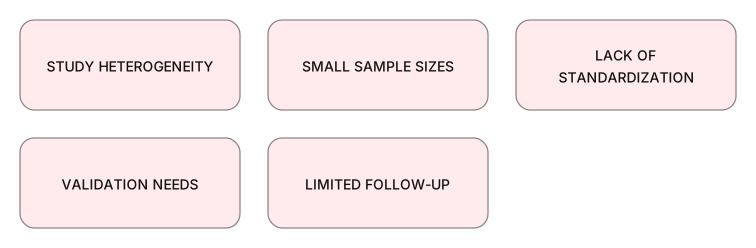
5.4 Limitations:


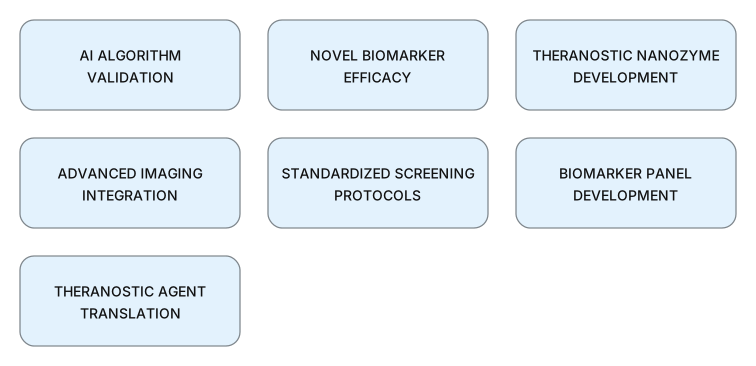
5.5 Future directions:


6) Conclusion
For opportunistic AAA detection in CT using AI, a review found a mean sensitivity of 95% (95% CI 100–87%), a mean specificity of 96.6% (95% CI 100–75.7%), and a mean accuracy of 95.2% (95% CI 100–54.5%) [1]. The diagnostic landscape for abdominal aortic aneurysm is characterized by a blend of established imaging modalities, rapidly advancing AI applications, and a burgeoning field of molecular biomarkers. While traditional ultrasound and CT remain foundational, newer technologies and biomarkers offer enhanced precision and less invasiveness. However, the significant heterogeneity across studies, particularly in methodologies and populations, remains the most impactful limitation affecting the certainty and generalizability of findings. Future research should prioritize large-scale validation of AI algorithms and standardized assessment of novel biomarkers to translate these promising advances into improved clinical practice.

References
SAIMSARA Session Index — session.json

Figure 1. Publication-year distribution of included originals

Figure 2. Study-design distribution of included originals
Figure 2. Study-design distribution

Figure 3. Study-type (directionality) distribution of included originals
Figure 3. Directionality distribution

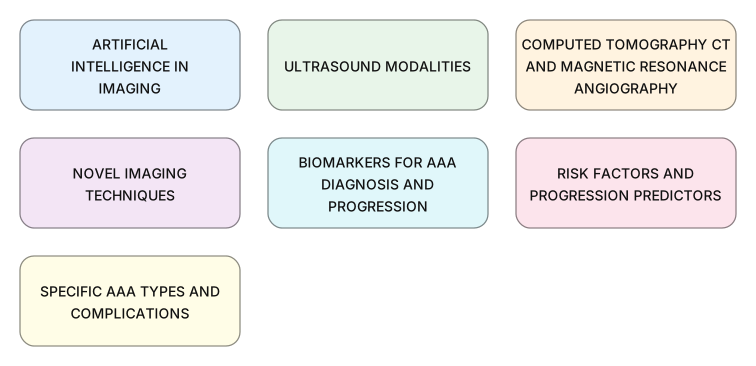
Figure 4. Main extracted research topics
Figure 4. Main extracted research topics (Results)

Figure 5. Limitations of current studies (topics)

Figure 6. Future research directions (topics)