Drug Coated Balloon: Systematic Review with ☸️SAIMSARA.


saimsara.com Download PDF

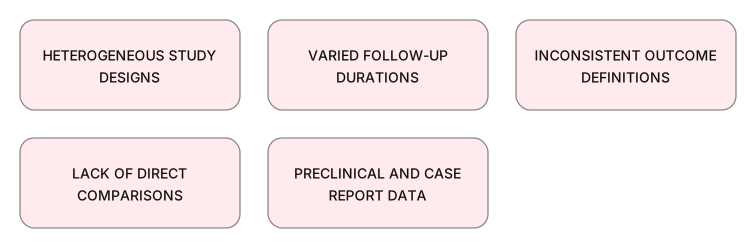
Abstract: The aim of this paper is to systematically review and synthesize the current evidence regarding the clinical performance, applications, and emerging trends of drug-coated balloons across diverse patient populations and anatomical sites. The review utilises 361 studies with 108502 total participants (naïve ΣN). The median target lesion failure (TLF) or target lesion revascularization (TLR) rate for drug-coated balloon (DCB) treatment was 6.2%, with a range from 1.1% to 16.4%. This indicates generally favorable outcomes for DCBs in a wide array of vascular and non-vascular applications, from coronary and peripheral artery disease to urethral strictures. However, the heterogeneity in study designs and outcome definitions across the literature is the single limitation that most affects certainty. Future research should prioritize head-to-head randomized controlled trials comparing different DCB drug types and optimizing adjunctive therapies to further refine clinical guidelines.

Keywords: Drug-coated balloon; Coronary artery disease; Urethral stricture disease; Femoropopliteal artery disease; In-stent restenosis; Percutaneous coronary intervention; Paclitaxel-coated balloon; Dual antiplatelet therapy; Chronic total occlusions; Intravascular ultrasound

Review Stats
Identification of studies via Semantic Scholar (all fields) Identification Screening Included Records identified:n=43483Records excluded:n=42483 Records assessed for eligibilityn=1000Records excluded:n=639 Studies included in reviewn=361 PRISMA Diagram generated by ☸️ SAIMSARA
⛛OSMA Triangle Effect-of Predictor → Outcome drug coated balloon  →  Outcome Beneficial for patients ΣN=31820 (29%) Harmful for patients ΣN=3434 (3%) Neutral ΣN=73248 (68%) 0 ⛛OSMA Triangle generated by ☸️SAIMSARA
Show OSMA legend
Outcome-Sentiment Meta-Analysis (OSMA): (LLM-only)
Frame: Effect-of Predictor → Outcome • Source: Semantic Scholar
Outcome: Outcome Typical timepoints: 12-mo, 1-y. Reported metrics: %, CI, p.
Common endpoints: Common endpoints: restenosis, patency, mortality.
Predictor: drug coated balloon — exposure/predictor. Typical comparator: those without a history of, angiography-guided angioplasty, plain balloon, des-only pci….

  • 1) Beneficial for patients — Outcome with drug coated balloon — [1], [3], [4], [5], [7], [8], [10], [11], [13], [15], [16], [17], [18], [19], [21], [22], [23], [25], [29], [31], [32], [34], [35], [36], [37], [38], [41], [42], [43], [44], [45], [46], [47], [52], [54], [56], [59], [60], [61], [67], [68], [69], [71], [72], [73], [74], [75], [76], [77], [80], [83], [84], [85], [86], [90], [93], [94], [97], [99], [100], [174], [181], [183], [184], [185], [187], [188], [189], [190], [196], [197], [199], [211], [212], [215], [216], [217], [221], [232], [233], [234], [236], [239], [241], [245], [282], [284], [288], [291], [296], [298], [299], [300], [303], [306], [309], [310], [312], [315], [316], [318], [319], [320], [321], [322], [326], [341], [345], [346], [348], [350] — ΣN=31820
  • 2) Harmful for patients — Outcome with drug coated balloon — [9], [48], [50], [51], [78], [81], [88], [154], [180], [182], [206], [248], [301] — ΣN=3434
  • 3) No clear effect — Outcome with drug coated balloon — [2], [6], [12], [14], [20], [24], [26], [27], [28], [30], [33], [39], [40], [49], [53], [55], [57], [58], [62], [63], [64], [65], [66], [70], [79], [82], [87], [89], [91], [92], [95], [96], [98], [101], [102], [103], [104], [105], [106], [107], [108], [109], [110], [111], [112], [113], [114], [115], [116], [117], [118], [119], [120], [121], [122], [123], [124], [125], [126], [127], [128], [129], [130], [131], [132], [133], [134], [135], [136], [137], [138], [139], [140], [141], [142], [143], [144], [145], [146], [147], [148], [149], [150], [151], [152], [153], [155], [156], [157], [158], [159], [160], [161], [162], [163], [164], [165], [166], [167], [168], [169], [170], [171], [172], [173], [175], [176], [177], [178], [179], [186], [191], [192], [193], [194], [195], [198], [200], [201], [202], [203], [204], [205], [207], [208], [209], [210], [213], [214], [218], [219], [220], [222], [223], [224], [225], [226], [227], [228], [229], [230], [231], [235], [237], [238], [240], [242], [243], [244], [246], [247], [249], [250], [251], [252], [253], [254], [255], [256], [257], [258], [259], [260], [261], [262], [263], [264], [265], [266], [267], [268], [269], [270], [271], [272], [273], [274], [275], [276], [277], [278], [279], [280], [281], [283], [285], [286], [287], [289], [290], [292], [293], [294], [295], [297], [302], [304], [305], [307], [308], [311], [313], [314], [317], [323], [324], [325], [327], [328], [329], [330], [331], [332], [333], [334], [335], [336], [337], [338], [339], [340], [342], [343], [344], [347], [349], [351], [352], [353], [354], [355], [356], [357], [358], [359], [360], [361] — ΣN=73248
1) Introduction
Drug-coated balloons (DCBs) represent a significant advancement in interventional medicine, offering a stent-free approach to deliver antiproliferative agents directly to the vessel wall, thereby mitigating restenosis. This technology has expanded its application across various vascular beds and anatomical locations, including coronary, peripheral, and even non-vascular strictures. The primary objective of DCB therapy is to improve long-term patency and reduce the need for repeat revascularization procedures by locally inhibiting neointimal hyperplasia, a common cause of treatment failure. This paper synthesizes recent findings on the efficacy, safety, and optimal application strategies of DCBs, drawing from a comprehensive body of clinical trials and real-world studies.

2) Aim
The aim of this paper is to systematically review and synthesize the current evidence regarding the clinical performance, applications, and emerging trends of drug-coated balloons across diverse patient populations and anatomical sites.

3) Methods
Systematic review with multilayer AI research agent: keyword normalization, retrieval & structuring, and paper synthesis (see SAIMSARA About section for details).


4) Results
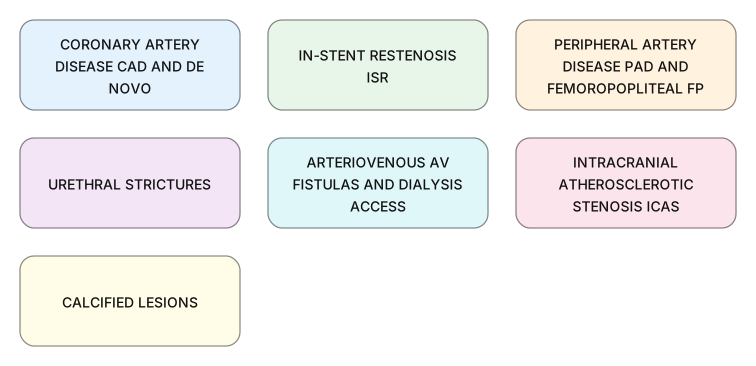
4.1 Study characteristics: The included studies predominantly comprise prospective randomized controlled trials (RCTs), prospective and retrospective cohort studies, and mixed-design analyses. Populations spanned adults (18-80 years) with acute coronary syndrome (ACS) [1], de novo coronary artery disease (CAD) [3, 6, 9], in-stent restenosis (ISR) in coronary [7, 23, 154] and peripheral arteries [61, 72], femoropopliteal (FP) artery disease [4, 17, 31], infrapopliteal lesions [53, 67], various bifurcation lesions [12, 14, 32], urethral strictures [2, 5, 10], and arteriovenous (AV) fistulas for hemodialysis [69, 99]. Follow-up periods ranged from a few months (e.g., 3.5 months for urethral strictures [2]) to 10 years for coronary ISR [7], with many studies reporting 12-month, 2-year, or 5-year outcomes.

4.2 Main numerical result aligned to the query: The median target lesion failure (TLF) or target lesion revascularization (TLR) rate for drug-coated balloon (DCB) treatment was 6.2% across various vascular beds and indications. The rates ranged from 1.1% [76] to 16.4% [89]. This metric, while broadly reported, exhibits heterogeneity in specific definitions and follow-up durations across studies.

4.3 Topic synthesis:


5) Discussion
5.1 Principal finding: The median target lesion failure (TLF) or target lesion revascularization (TLR) rate for drug-coated balloon (DCB) treatment was 6.2%, with a range from 1.1% [76] to 16.4% [89], indicating generally favorable outcomes across various applications.

5.2 Clinical implications:


5.3 Research implications / key gaps:


5.4 Limitations:


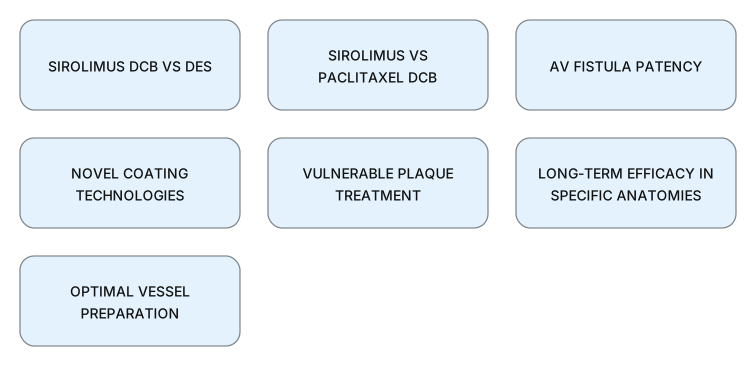
5.5 Future directions:


6) Conclusion
The median target lesion failure (TLF) or target lesion revascularization (TLR) rate for drug-coated balloon (DCB) treatment was 6.2%, with a range from 1.1% [76] to 16.4% [89]. This indicates generally favorable outcomes for DCBs in a wide array of vascular and non-vascular applications, from coronary and peripheral artery disease to urethral strictures. However, the heterogeneity in study designs and outcome definitions across the literature is the single limitation that most affects certainty. Future research should prioritize head-to-head randomized controlled trials comparing different DCB drug types and optimizing adjunctive therapies to further refine clinical guidelines.

References
SAIMSARA Session Index — session.json

Figure 1. Publication-year distribution of included originals

Figure 2. Study-design distribution of included originals
Figure 2. Study-design distribution

Figure 3. Study-type (directionality) distribution of included originals
Figure 3. Directionality distribution

Figure 4. Main extracted research topics
Figure 4. Main extracted research topics (Results)

Figure 5. Limitations of current studies (topics)

Figure 6. Future research directions (topics)