EVAR Endoleak: Systematic Review with ☸️SAIMSARA.


saimsara.com Download PDF

Abstract: This paper aims to systematically review and synthesize findings from the provided structured extraction summary to characterize the landscape of endoleaks after EVAR, including their incidence, associated factors, detection methods, and management approaches. The review utilises 273 studies with 112315 total participants (naïve ΣN). The overall incidence of endoleaks after EVAR, when reported as a percentage of patients, ranged from 10% to 54%, with a median incidence of 21.27%. This highlights endoleaks as a significant and common complication requiring ongoing attention. The heterogeneous study designs, particularly the prevalence of retrospective cohorts and case reports, most affects the certainty of findings and their generalizability. Clinicians should consider prophylactic embolization for high-risk patients and utilize advanced imaging modalities for precise detection. Future research should prioritize large-scale, prospective studies with standardized reporting to enhance the evidence base for optimal endoleak management.

Keywords: Endovascular Aortic Repair; Endoleak; Type II Endoleak; CT Angiography; Aneurysm Sac; Reintervention; Sac Embolization; Abdominal Aortic Aneurysm; Diagnostic Imaging; Endograft

Review Stats
Identification of studies via Semantic Scholar (all fields) Identification Screening Included Records identified:n=12926Records excluded:n=11926 Records assessed for eligibilityn=1000Records excluded:n=727 Studies included in reviewn=273 PRISMA Diagram generated by ☸️ SAIMSARA
⛛OSMA Triangle Effect-of Predictor → Outcome evar  →  endoleak Beneficial for patients ΣN=1650 (1%) Harmful for patients ΣN=83064 (74%) Neutral ΣN=27601 (25%) 0 ⛛OSMA Triangle generated by ☸️SAIMSARA
Show OSMA legend
Outcome-Sentiment Meta-Analysis (OSMA): (LLM-only)
Frame: Effect-of Predictor → Outcome • Source: Semantic Scholar
Outcome: endoleak Typical timepoints: 1-y, 30-day. Reported metrics: %, CI, p.
Common endpoints: Common endpoints: complications, recurrence, mortality.
Predictor: evar — exposure/predictor. Routes seen: oral. Typical comparator: dsa, the endurant ii endograft, twist-vibe, evar without embolization….

  • 1) Beneficial for patients — endoleak with evar — [66], [74], [81], [85], [86], [242], [248], [258], [266] — ΣN=1650
  • 2) Harmful for patients — endoleak with evar — [1], [10], [11], [15], [27], [67], [83], [91], [92], [96], [100], [102], [103], [109], [110], [111], [112], [113], [114], [120], [121], [126], [128], [129], [132], [134], [135], [136], [138], [140], [141], [142], [144], [145], [152], [154], [156], [157], [159], [160], [161], [162], [163], [164], [165], [166], [168], [172], [177], [181], [200], [206], [207], [210], [212], [216], [218], [220], [223], [224], [231], [232], [233], [234], [236], [240], [245], [247], [251], [252], [254], [255], [256], [259], [260], [262], [263], [264], [265], [267], [268], [269] — ΣN=83064
  • 3) No clear effect — endoleak with evar — [2], [3], [4], [5], [6], [7], [8], [9], [12], [13], [14], [16], [17], [18], [19], [20], [21], [22], [23], [24], [25], [26], [28], [29], [30], [31], [32], [33], [34], [35], [36], [37], [38], [39], [40], [41], [42], [43], [44], [45], [46], [47], [48], [49], [50], [51], [52], [53], [54], [55], [56], [57], [58], [59], [60], [61], [62], [63], [64], [65], [68], [69], [70], [71], [72], [73], [75], [76], [77], [78], [79], [80], [82], [84], [87], [88], [89], [90], [93], [94], [95], [97], [98], [99], [101], [104], [105], [106], [107], [108], [115], [116], [117], [118], [119], [122], [123], [124], [125], [127], [130], [131], [133], [137], [139], [143], [146], [147], [148], [149], [150], [151], [153], [155], [158], [167], [169], [170], [171], [173], [174], [175], [176], [178], [179], [180], [182], [183], [184], [185], [186], [187], [188], [189], [190], [191], [192], [193], [194], [195], [196], [197], [198], [199], [201], [202], [203], [204], [205], [208], [209], [211], [213], [214], [215], [217], [219], [221], [222], [225], [226], [227], [228], [229], [230], [235], [237], [238], [239], [241], [243], [244], [246], [249], [250], [253], [257], [261], [270], [271], [272], [273] — ΣN=27601
Introduction
Endovascular aneurysm repair (EVAR) has become a cornerstone in the management of abdominal aortic aneurysms (AAAs), offering a less invasive alternative to open surgical repair. Despite its advantages, EVAR is associated with specific complications, most notably endoleaks. An endoleak refers to persistent blood flow into the aneurysm sac outside the endograft, which can compromise the repair and lead to aneurysm growth or rupture. The detection, classification, and management of endoleaks are critical for ensuring the long-term success of EVAR and necessitate diligent post-procedural surveillance. This paper synthesizes current evidence on the incidence, risk factors, diagnostic modalities, and treatment strategies for endoleaks following EVAR.

Aim
This paper aims to systematically review and synthesize findings from the provided structured extraction summary to characterize the landscape of endoleaks after EVAR, including their incidence, associated factors, detection methods, and management approaches.

Methods
Systematic review with multilayer AI research agent: keyword normalization, retrieval & structuring, and paper synthesis (see SAIMSARA About section for details).


Results
4.1 Study characteristics
The included studies comprise a mixed array of designs, predominantly retrospective cohort studies and case series, with some prospective cohorts and randomized controlled trials (RCTs). Populations generally consist of patients undergoing EVAR for abdominal aortic aneurysms, with some studies focusing on specific anatomical challenges or endograft types. Follow-up periods vary significantly, ranging from immediate post-operative assessment to up to 15.8 years, with many studies reporting mid-term outcomes.

4.2 Main numerical result aligned to the query
The overall incidence of endoleaks after EVAR, when reported as a percentage of patients, ranged from 10% [162] to 54% [4], with a median incidence of 21.27% [80]. This wide range reflects heterogeneity in study populations, follow-up durations, and diagnostic methodologies.

4.3 Topic synthesis


Discussion
5.1 Principal finding
The overall incidence of endoleaks after EVAR, when reported as a percentage of patients, ranged from 10% [162] to 54% [4], with a median incidence of 21.27% [80], highlighting their common occurrence and the need for ongoing management.

5.2 Clinical implications


5.3 Research implications / key gaps


5.4 Limitations


5.5 Future directions


Conclusion
The overall incidence of endoleaks after EVAR, when reported as a percentage of patients, ranged from 10% [162] to 54% [4], with a median incidence of 21.27% [80]. This highlights endoleaks as a significant and common complication requiring ongoing attention. The heterogeneous study designs, particularly the prevalence of retrospective cohorts and case reports, most affects the certainty of findings and their generalizability. Clinicians should consider prophylactic embolization for high-risk patients and utilize advanced imaging modalities for precise detection. Future research should prioritize large-scale, prospective studies with standardized reporting to enhance the evidence base for optimal endoleak management.

References
SAIMSARA Session Index — session.json

Figure 1. Publication-year distribution of included originals

Figure 2. Study-design distribution of included originals
Figure 2. Study-design distribution

Figure 3. Study-type (directionality) distribution of included originals
Figure 3. Directionality distribution

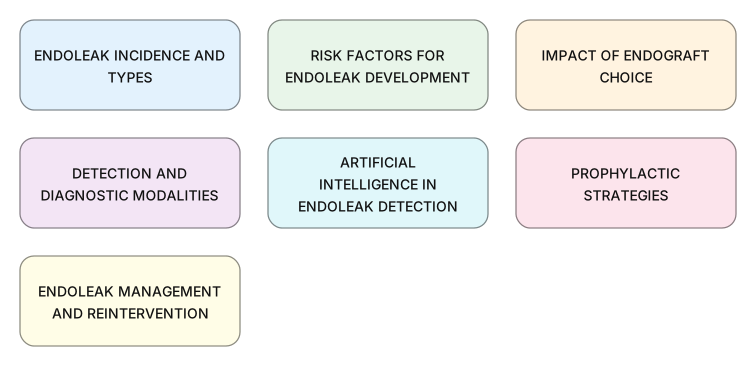
Figure 4. Main extracted research topics
Figure 4. Main extracted research topics (Results)

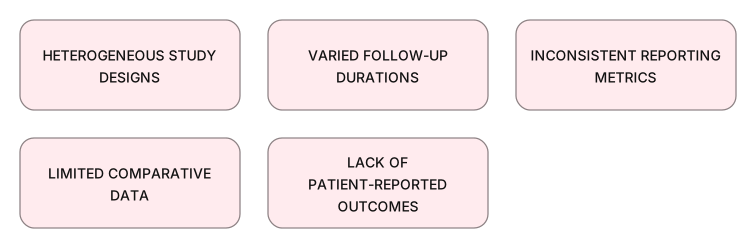
Figure 5. Limitations of current studies (topics)

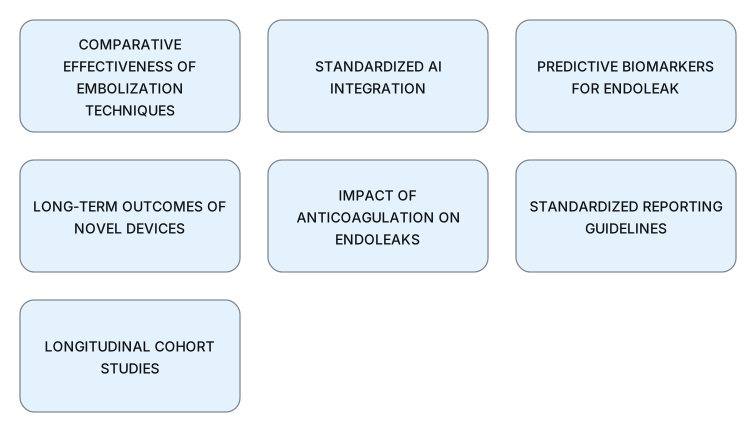
Figure 6. Future research directions (topics)