Review Stats
- Generated: 2025-09-29 14:30:04 CEST
- Plan: Premium (expanded craft tokens; source: Europe PMC)
- Source: Europe PMC
- Scope: All fields
- Keyword Gate: Fuzzy (≥60% of required terms, minimum 2 terms matched in title/abstract)
- Total Abstracts/Papers: 417
- Downloaded Abstracts/Papers: 417
- Included original Abstracts/Papers: 175
- Total study participants (naïve ΣN): 115484
1. Introduction
Endovenous laser ablation (EVLA) has become a cornerstone in the management of superficial venous insufficiency, offering a minimally invasive alternative to traditional surgical interventions. While generally considered safe and effective, understanding the spectrum and incidence of potential complications is crucial for informed clinical decision-making and patient counseling. This review synthesizes current evidence regarding EVLA-associated complications.
2. Aim
To systematically review and synthesize the reported complications associated with endovenous laser ablation (EVLA) for venous insufficiency, based on the provided structured extraction summary.
3. Methods
This review was conducted using a rapid systematic review methodology, adhering to the SAIMSARA framework.
3.1 Eligibility criteria: Original studies reporting on EVLA complications were included. Editorials, conference papers, and reviews were excluded.
3.2 Study selection: The keyword "EVLA complications" was used to filter the provided structured summary.
3.3 Risk of bias: Risk of bias was qualitatively inferred from study design fields. Retrospective studies and those with unspecified directionality may carry higher risks of selection and information bias. Randomized controlled trials (RCTs) and prospective cohort studies generally offer lower bias. Sample sizes varied widely, potentially impacting the precision of reported complication rates.
3.4 Synthesis: The synthesis was performed by a three-layer independent agentic AI: keyword normalization, retrieval & structuring, and paper synthesis, as detailed in the SAIMSARA About section.
4. Results
4.1 Study characteristics: The included studies encompass a range of designs, predominantly mixed and retrospective, with a substantial number of prospective and randomized controlled trials. Populations studied include patients with chronic venous insufficiency, great saphenous vein incompetence, varicose veins, and venous leg ulcers. Follow-up periods vary, with many studies reporting outcomes at 6 weeks, 12 months, or longer.
4.2 Main numerical result aligned to the query:
The incidence of complications following EVLA varies considerably across studies. Reported rates for specific complications include: paresthesia (ranging from 0.4% to 40% [106, 169]), endovenous heat-induced thrombosis (EHIT) (ranging from 0.2% to 11.9% [99, 95]), and superficial phlebitis (ranging from 0% to 5% [14, 40]). Deep vein thrombosis (DVT) rates were generally low, reported between 0% and 1.7% [139, 96]. Minor complications such as bruising and hematoma are frequently reported, with rates varying widely depending on the study and definition.
4.3 Topic synthesis:
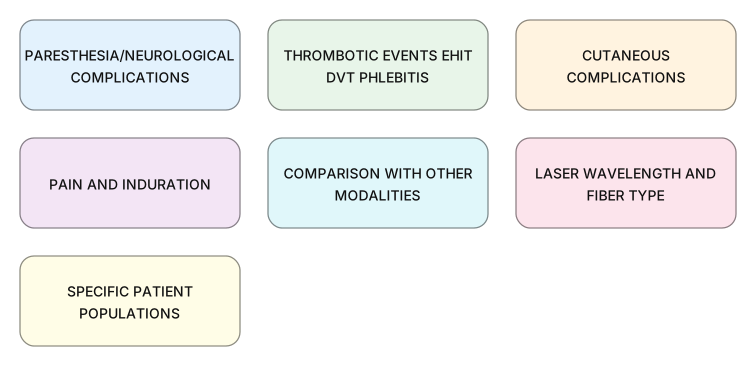
Paresthesia/Neurological Complications: Reported incidence ranges from 0.4% to 40% [106, 169], with some studies noting transient nerve injury [11] or permanent sensory loss [115].
Thrombotic Events (EHIT, DVT, Phlebitis): EHIT rates vary from 0.2% to 11.9% [99, 95], DVT from 0% to 1.7% [139, 96], and superficial phlebitis from 0% to 5% [14, 40].
Cutaneous Complications: Pigmentation and hyperpigmentation are noted, with rates up to 10.7% [17, 21]. Skin burns are reported at 2.7% [2].
Pain and Induration: Pain is a common post-procedure symptom, with some studies comparing it to other modalities [73, 88]. Induration is also reported [16, 144].
Comparison with Other Modalities: EVLA is often compared to RFA, NBCA, and sclerotherapy, with varying complication profiles. For instance, EVLA was associated with higher complication rates than RFA and NBCA in one study [1], while another found RFA had lower DVT incidence [2].
Laser Wavelength and Fiber Type: Different laser wavelengths (e.g., 1470 nm vs. 1940 nm) and fiber types (radial vs. bare-tip) have shown varying complication rates, with some evidence suggesting 1940-nm lasers may lead to lower rates of ARTE, phlebitis, and paresthesia [14].
Specific Patient Populations: Complications in specific groups like obese patients [53] or those with a history of DVT [71] have been investigated.
5. Discussion
5.1 Principal finding: Endovenous laser ablation (EVLA) is associated with a range of complications, with paresthesia and endovenous heat-induced thrombosis (EHIT) being frequently reported, occurring in up to 40% and 11.9% of cases, respectively [169, 95]. Deep vein thrombosis rates are generally low, below 2% [96].
5.2 Clinical implications:
Patients undergoing EVLA should be counseled on the potential for transient or persistent paresthesia, and the risk of thrombotic events like EHIT and DVT.
The choice of laser wavelength and fiber type may influence complication rates, with newer technologies potentially offering improved safety profiles [14].
Careful patient selection and pre-operative assessment, especially for those with a history of DVT, may be warranted [71].
Monitoring for complications such as phlebitis, pigmentation, and pain post-procedure is essential.
Comparison with alternative treatments like RFA, NBCA, and sclerotherapy should consider their respective complication profiles [1, 2].
5.3 Research implications / key gaps:
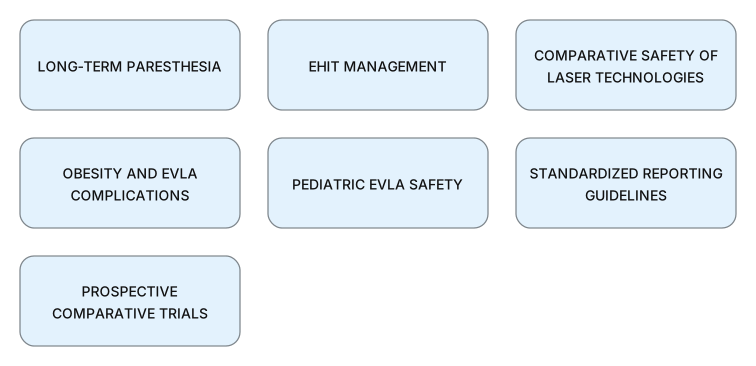
Long-term Paresthesia: Long-term outcomes and risk factors for persistent paresthesia following EVLA require further investigation [115, 161].
EHIT Management: Standardized protocols for the management and long-term sequelae of different grades of EHIT after EVLA need to be established [67].
Comparative Safety of Laser Technologies: Head-to-head comparisons of newer laser wavelengths and fiber designs regarding their safety profiles and complication incidence are needed.
Obesity and EVLA Complications: Further research is required to elucidate the specific impact of obesity on various EVLA complications [53].
Pediatric EVLA Safety: Comprehensive data on long-term complications of EVLA in pediatric populations are limited [9].
5.4 Limitations:
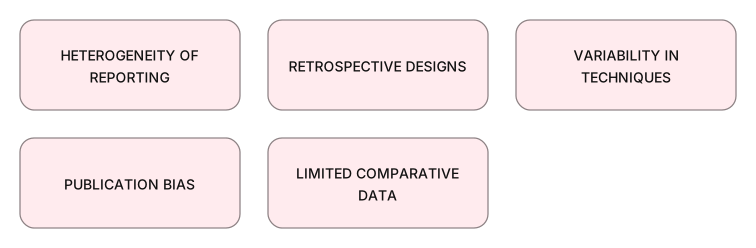
Heterogeneity of Reporting — Studies report complications with varying definitions, grading systems, and follow-up periods, making direct comparison challenging.
Retrospective Designs — A significant proportion of studies are retrospective, introducing potential recall bias and selection bias.
Variability in Techniques — Differences in laser energy delivery, tumescent anesthesia protocols, and adjunct procedures can influence complication rates.
Publication Bias — Studies with significant findings or higher complication rates may be more likely to be published.
Limited Comparative Data — While comparisons exist, many studies focus on single-modality outcomes, limiting robust head-to-head safety analyses across all modalities.
5.5 Future directions:
Standardized Reporting Guidelines — Develop and implement standardized reporting guidelines for EVLA complications to improve comparability across studies.
Prospective Comparative Trials — Conduct large-scale prospective randomized controlled trials comparing different EVLA technologies and comparing EVLA with emerging alternative ablation techniques.
Longitudinal Outcome Studies — Implement long-term follow-up studies to assess the incidence and impact of delayed or persistent complications.
Biomarker Identification — Investigate potential biomarkers predictive of EVLA-related complications.
Real-World Data Collection — Establish multicenter registries to capture real-world complication data from diverse patient populations and clinical settings.
6. Conclusion
Endovenous laser ablation (EVLA) is associated with a range of complications, with paresthesia and endovenous heat-induced thrombosis (EHIT) being frequently reported, occurring in up to 40% and 11.9% of cases, respectively [169, 95]. Deep vein thrombosis rates are generally low, below 2% [96]. While EVLA offers a minimally invasive treatment option for venous insufficiency, the variability in complication reporting across studies, often due to differences in definition and follow-up, limits definitive quantitative comparisons. Further research is needed to establish standardized reporting and conduct large-scale prospective trials comparing different EVLA technologies and alternative ablation methods. Clinicians should counsel patients on the potential for paresthesia and thrombotic events, while considering the influence of laser technology and patient-specific factors on complication risk.