Review Stats
- Generated: 2025-09-29 11:32:38 CEST
- Plan: Premium (expanded craft tokens; source: Europe PMC)
- Source: Europe PMC
- Scope: All fields
- Keyword Gate: Fuzzy (≥60% of required terms, minimum 2 terms matched in title/abstract)
- Total Abstracts/Papers: 1953
- Downloaded Abstracts/Papers: 1953
- Included original Abstracts/Papers: 132
- Total study participants (naïve ΣN): 79184
1. Introduction
Hepatocellular carcinoma (HCC) management, particularly concerning liver transplantation (LT), has historically relied on stringent selection criteria to optimize outcomes and resource allocation. The Milan criteria have served as a cornerstone for identifying suitable candidates for LT. However, advancements in understanding HCC biology, coupled with evolving therapeutic strategies, have prompted a re-evaluation of these criteria and the exploration of expanded indications. This review synthesizes current evidence on liver transplantation for HCC, with a specific focus on outcomes and considerations for patients who fall outside traditional selection criteria.
2. Aim
This systematic review aims to synthesize the existing scientific literature to provide a comprehensive overview of liver transplantation for hepatocellular carcinoma (HCC) in patients who are outside the traditional Milan criteria. The review will focus on identifying outcomes, prognostic factors, and emerging strategies relevant to this patient population.
3. Methods
3.1 Eligibility criteria:
Original studies were included if they reported on liver transplantation for HCC and provided data relevant to patient selection, outcomes, or prognostic factors. Editorials, conference papers, and reviews were excluded.
3.2 Study selection:
The session keyword gate was applied, focusing on studies related to HCC transplantation, particularly those addressing criteria beyond the Milan criteria.
3.3 Risk of bias:
The majority of included studies were retrospective cohort or mixed designs. This inherently introduces potential biases related to selection, confounding, and measurement. The absence of prospective randomized controlled trials in many areas limits the ability to establish definitive causality. Follow-up periods varied significantly across studies, impacting the completeness of outcome data.
3.4 Synthesis:
This review was generated using a three-layer independent agentic AI approach: keyword normalization, retrieval & structuring, and paper synthesis, as detailed in the SAIMSARA About section.
4. Results
4.1 Study characteristics:
The included studies comprise retrospective cohort and mixed designs, predominantly evaluating patients undergoing liver transplantation for HCC. Populations varied in size, from small case series (N=9 [8]) to large cohorts (N=9324 [66]). Follow-up durations ranged from a few months to over ten years, with many studies not specifying detailed follow-up [1, 3, 4, 7, 9, 10, 11, 12, 13, 14, 15, 16, 17, 18, 19, 20, 21, 22, 23, 24, 25, 26, 27, 28, 29, 30, 31, 32, 33, 34, 35, 36, 37, 38, 39, 40, 41, 42, 43, 44, 45, 46, 47, 48, 49, 50, 51, 52, 53, 54, 55, 56, 57, 58, 59, 60, 61, 62, 63, 64, 65, 66, 67, 68, 69, 70, 71, 72, 73, 74, 75, 76, 77, 78, 79, 80, 81, 82, 83, 84, 85, 86, 87, 88, 89, 90, 91, 92, 93, 94, 95, 96, 97, 98, 99, 100, 101, 102, 103, 104, 105, 106, 107, 108, 109, 110, 111, 112, 113, 114, 115, 116, 117, 118, 119, 120, 121, 122, 123, 124, 125, 126, 127, 128, 129, 130, 131, 132].
4.2 Main numerical result aligned to the query:
Post-transplant HCC recurrence rates for patients outside Milan criteria varied significantly, with reported figures ranging from 5% [128] to 66.7% [76]. Overall survival rates for patients outside Milan criteria also showed considerable variability, with 5-year survival reported as low as 29% [78] and as high as 87% [128]. Several studies indicate that while outcomes may be poorer compared to patients within Milan criteria, acceptable survival can be achieved with expanded criteria and appropriate management [2, 15, 29, 42, 51, 96, 121].
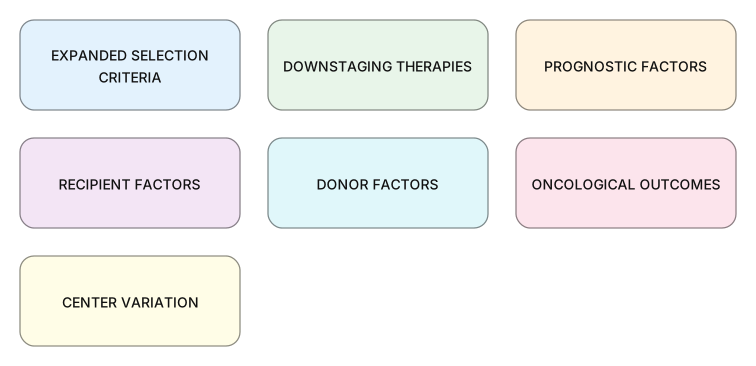
Downstaging Therapies: Locoregional therapies (LRT) such as TARE [6], TACE [27, 80, 84, 87, 95, 100, 101, 125, 129], and checkpoint inhibitor therapy [8] are effective in downstaging patients outside Milan criteria to within transplantable limits, with success rates varying by modality and patient selection [6, 8, 27, 80, 87, 96].
Prognostic Factors: Tumor burden score (TBS) [23], RETREAT score [19, 24, 73], alpha-fetoprotein (AFP) levels [12, 26, 38, 68, 84, 90, 97, 102, 104, 120], microvascular invasion (MVI) [18, 47, 66, 73, 82, 103, 105, 132], and explant pathology [14, 103] are critical predictors of recurrence and survival, often outperforming Milan criteria alone [24, 50, 73, 106, 120].
Recipient Factors: ABO blood group [21], sarcopenia [74], and hepatitis C virus (HCV) status [98, 124] influence post-transplant outcomes, with certain groups showing increased recurrence risk or poorer survival.
Donor Factors: Donor age has been implicated in predicting recurrence and survival after deceased donor liver transplantation (DDLT) [102].
Oncological Outcomes: Post-transplant recurrence rates range widely, with some studies reporting rates as low as 5% [128] and others as high as 66.7% [76] for patients outside Milan criteria. Overall survival also shows considerable variation [2, 15, 29, 42, 51, 96, 121].
Center Variation: Differences in transplantation rates and outcomes for patients outside Milan criteria are observed across regions and transplant centers [1, 4, 37].
5. Discussion
5.1 Principal finding:
Liver transplantation for HCC outside the Milan criteria can achieve acceptable outcomes, with survival rates comparable to those within Milan criteria in carefully selected patients or those successfully downstaged [2, 15, 29, 42, 51, 96, 121]. However, recurrence rates remain a significant concern, with reported figures varying widely from 5% to over 66% [128, 76].
5.2 Clinical implications:
Expanded Eligibility: Carefully selected patients outside Milan criteria, particularly those who can be downstaged with LRT, may benefit from LT [6, 8, 27, 80, 87, 96].
Risk Stratification: Utilizing advanced prognostic scores (e.g., RETREAT, TBS, MoRAL) and tumor biology markers (e.g., MVI, AFP) is crucial for accurate risk assessment and patient selection [19, 23, 24, 38, 47, 50, 73, 105, 120].
Therapeutic Strategies: Downstaging therapies are vital for converting patients outside Milan criteria into transplantable candidates [6, 8, 27, 80, 87, 96].
Monitoring: Patients with HCC outside Milan criteria require rigorous post-transplant surveillance due to potentially higher recurrence risks [76, 86].
5.3 Research implications / key gaps:
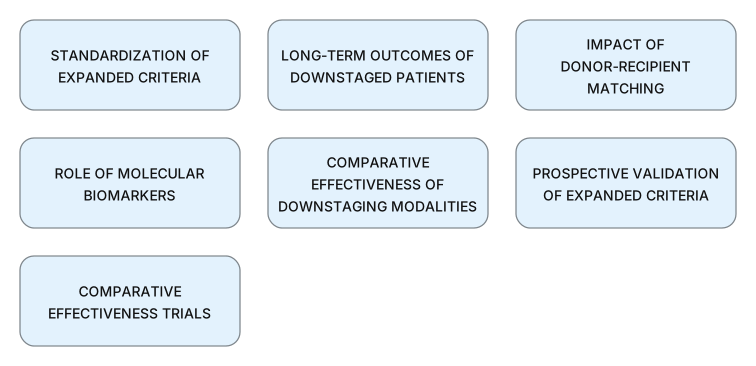
Standardization of Expanded Criteria: Development and validation of universally accepted expanded selection criteria beyond Milan are needed.
Long-term Outcomes of Downstaged Patients: Long-term survival and recurrence data for patients successfully downstaged from outside Milan criteria require further investigation.
Impact of Donor-Recipient Matching: The influence of donor-recipient factors on outcomes for patients outside Milan criteria needs more detailed analysis.
Role of Molecular Biomarkers: Further research into molecular biomarkers for predicting recurrence and survival in this cohort is warranted.
Comparative Effectiveness of Downstaging Modalities: Direct comparative studies on the effectiveness of different LRT modalities for downstaging are needed.
5.4 Limitations:
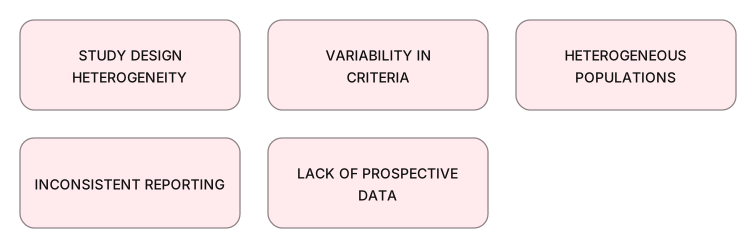
Study Design Heterogeneity — Most studies are retrospective, limiting causal inference and introducing selection bias.
Variability in Criteria — The definition and application of "outside Milan criteria" and various expanded criteria differ across studies.
Heterogeneous Populations — Patient populations vary in terms of disease stage, etiology, and prior treatments, impacting generalizability.
Inconsistent Reporting — Follow-up durations, specific outcome metrics, and statistical methods are inconsistently reported.
Lack of Prospective Data — A scarcity of prospective randomized controlled trials hinders definitive conclusions.
5.5 Future directions:
Prospective Validation of Expanded Criteria — Conduct prospective studies to validate novel expanded criteria.
Comparative Effectiveness Trials — Perform RCTs comparing different downstaging therapies for patients outside Milan criteria.
Biomarker Discovery and Validation — Investigate and validate molecular biomarkers for predicting outcomes in this population.
Development of Risk Prediction Models — Create and validate comprehensive risk prediction models incorporating clinical, radiological, and molecular factors.
Real-World Data Analysis — Analyze large, multi-center registries to assess long-term outcomes and practice patterns.
6. Conclusion
Liver transplantation for HCC outside the Milan criteria can achieve acceptable outcomes, with survival rates for selected patients comparable to those within Milan criteria [2, 15, 29, 42, 51, 96, 121]. However, recurrence rates remain a significant concern, with reported figures varying widely from 5% to over 66% [128, 76]. The heterogeneity of study designs and patient populations limits the generalizability of findings. The most significant limitation is the retrospective nature of most studies, introducing potential biases. Therefore, carefully selected patients outside Milan criteria, particularly those amenable to successful downstaging, may benefit from liver transplantation.