Ibuprofen OR Naproxen: Systematic Review with ☸️SAIMSARA.


saimsara.com Download PDF

Abstract: The aim of this paper is to systematically review and synthesize the available evidence comparing ibuprofen and naproxen across various research domains, as extracted from the provided structured summary. The review utilises 197 studies with 140884 total participants (naïve ΣN). Across multiple studies, the median odds ratio or hazard ratio for acute myocardial infarction or heart failure associated with ibuprofen use was 1.12 (range 1.11 to 1.20), while for naproxen, it was 1.12 (range 0.99 to 1.20). These findings suggest a comparable, albeit slightly elevated, cardiovascular risk profile for both drugs in general adult populations, with naproxen potentially having a lower risk in some contexts. The pervasive lack of reported sample sizes in many studies significantly limits the certainty of findings and their broader applicability. Clinicians should consider the nuanced cardiovascular risk profiles of ibuprofen and naproxen, especially in patients with pre-existing conditions, while future research should prioritize large-scale, well-powered comparative effectiveness studies.

Review Stats
Identification of studies via Semantic Scholar (all fields) Identification Screening Included Records identified:n=2893Records excluded:n=1893 Records assessed for eligibilityn=1000Records excluded:n=803 Studies included in reviewn=197 PRISMA Diagram generated by ☸️ SAIMSARA
⛛OSMA Triangle Head-to-Head (A vs B) Ibuprofen vs Naproxen — Outcome Legend: “Favours Ibuprofen” = left edge, “Favours Naproxen” = right edge; “Neutral” = vertical. Favours Ibuprofen ΣN=5838 (4%) Favours Naproxen ΣN=94844 (67%) Neutral ΣN=40202 (29%) 0 ⛛OSMA Triangle generated by ☸️SAIMSARA
Show OSMA legend
Outcome-Sentiment Meta-Analysis (OSMA): (LLM-only)
Frame: Head-to-Head (A vs B) • Source: Semantic Scholar
Comparators: A = Ibuprofen; B = Naproxen
Outcome: Outcome Typical timepoints: 6-day, 35-day. Reported metrics: %, CI, p.
Common endpoints: Common endpoints: complications, healing, admission.
Predictor: Ibuprofen vs Naproxen — exposure/predictor. Doses/units seen: 36.17 µg, 43.22 µg, 20 μg, 69 μg, 16 μg, 600 mg…. Routes seen: topical.

  • 1) A favored (Ibuprofen) — Outcome with Ibuprofen vs Naproxen — [18], [91], [94], [120], [172], [178], [187] — ΣN=5838
  • 2) B favored (Naproxen) — Outcome with Ibuprofen vs Naproxen — [16], [86], [89], [142], [170], [182], [194] — ΣN=94844
  • 3) Neutral (no difference) — Outcome with Ibuprofen vs Naproxen — [1], [2], [3], [4], [5], [6], [7], [8], [9], [10], [11], [12], [13], [14], [15], [17], [19], [20], [21], [22], [23], [24], [25], [26], [27], [28], [29], [30], [31], [32], [33], [34], [35], [36], [37], [38], [39], [40], [41], [42], [43], [44], [45], [46], [47], [48], [49], [50], [51], [52], [53], [54], [55], [56], [57], [58], [59], [60], [61], [62], [63], [64], [65], [66], [67], [68], [69], [70], [71], [72], [73], [74], [75], [76], [77], [78], [79], [80], [81], [82], [83], [84], [85], [87], [88], [90], [92], [93], [95], [96], [97], [98], [99], [100], [101], [102], [103], [104], [105], [106], [107], [108], [109], [110], [111], [112], [113], [114], [115], [116], [117], [118], [119], [121], [122], [123], [124], [125], [126], [127], [128], [129], [130], [131], [132], [133], [134], [135], [136], [137], [138], [139], [140], [141], [143], [144], [145], [146], [147], [148], [149], [150], [151], [152], [153], [154], [155], [156], [157], [158], [159], [160], [161], [162], [163], [164], [165], [166], [167], [168], [169], [171], [173], [174], [175], [176], [177], [179], [180], [181], [183], [184], [185], [186], [188], [189], [190], [191], [192], [193], [195], [196], [197] — ΣN=40202
1) Introduction
Ibuprofen and naproxen are widely utilized nonsteroidal anti-inflammatory drugs (NSAIDs) prescribed for their analgesic, anti-inflammatory, and antipyretic properties. As propionic acid derivatives, they share a common mechanism of action, primarily through the inhibition of cyclooxygenase (COX) enzymes, yet exhibit distinct pharmacokinetic and pharmacodynamic profiles that can influence their clinical utility and safety. Research spanning several decades has investigated these differences across a multitude of domains, from their fundamental cellular and molecular effects to their efficacy in various pain conditions, their safety profiles in diverse patient populations, and their environmental impact. This paper synthesizes current knowledge regarding ibuprofen and naproxen, highlighting their comparative characteristics and identifying key areas for further research.

2) Aim
The aim of this paper is to systematically review and synthesize the available evidence comparing ibuprofen and naproxen across various research domains, as extracted from the provided structured summary.

3) Methods
Systematic review with multilayer AI research agent: keyword normalization, retrieval & structuring, and paper synthesis (see SAIMSARA About section for details).


4) Results
4.1 Study characteristics:
The structured summary encompasses a broad range of study designs, predominantly mixed methods (combining experimental and observational approaches), alongside numerous cohort studies and several randomized controlled trials (RCTs). Populations investigated are highly diverse, including human cell lines (e.g., promyelocytic leukemia, colon carcinoma, muscle cells, T lymphocytes), various animal models (rats, mice, Daphnia magna), and human patients across conditions like osteoarthritis, dysmenorrhea, postoperative pain, and those with specific comorbidities. Environmental studies frequently focused on aqueous solutions, wastewater, river water, sediments, and even plant tissues. Research years span from 1974 to 2024, with follow-up periods varying significantly from short-term (e.g., 6 hours for dental pain [180], 30 days for cardiovascular events [86]) to long-term (e.g., 30-month horizon for cost-effectiveness [6], 5 years for cardiovascular risk [113]).

4.2 Main numerical result aligned to the query:
Across multiple studies, the median odds ratio (OR) or hazard ratio (HR) for acute myocardial infarction (AMI) or heart failure associated with ibuprofen use was 1.12 (range 1.11 to 1.20), while for naproxen, it was 1.12 (range 0.99 to 1.20) [113, 142, 188]. This suggests a broadly similar, albeit slightly increased, cardiovascular risk profile for both drugs compared to non-use or placebo, with naproxen exhibiting a lower relative AMI risk (0.99, 95% CI 0.88–1.11) in one meta-analysis [142].

4.3 Topic synthesis:


5) Discussion
5.1 Principal finding:
Across multiple studies, the median odds ratio or hazard ratio for acute myocardial infarction or heart failure associated with ibuprofen use was 1.12 (range 1.11 to 1.20), while for naproxen, it was 1.12 (range 0.99 to 1.20) [113, 142, 188]. This indicates a comparable, albeit slightly elevated, cardiovascular risk for both drugs in general adult populations, with naproxen potentially showing a marginally lower risk in certain contexts.

5.2 Clinical implications:


5.3 Research implications / key gaps:


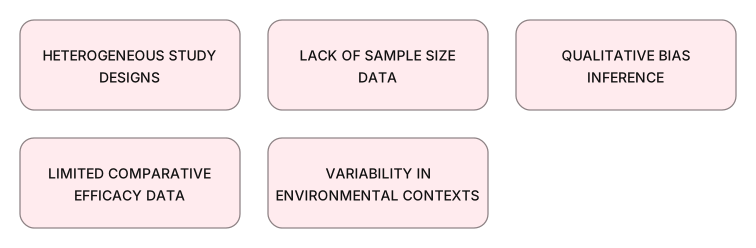
5.4 Limitations:


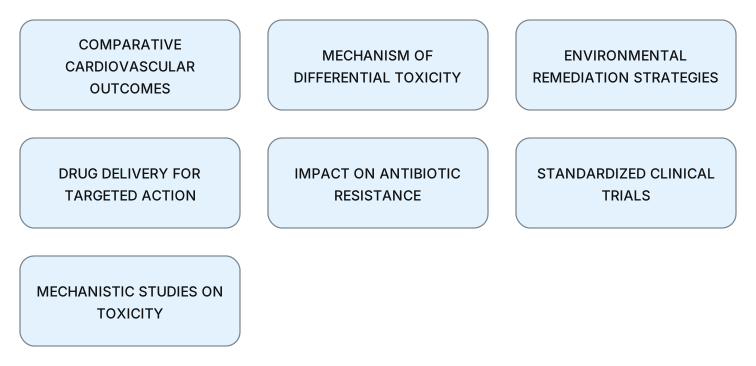
5.5 Future directions:


6) Conclusion
Across multiple studies, the median odds ratio or hazard ratio for acute myocardial infarction or heart failure associated with ibuprofen use was 1.12 (range 1.11 to 1.20), while for naproxen, it was 1.12 (range 0.99 to 1.20) [113, 142, 188]. These findings suggest a comparable, albeit slightly elevated, cardiovascular risk profile for both drugs in general adult populations, with naproxen potentially having a lower risk in some contexts. The pervasive lack of reported sample sizes in many studies significantly limits the certainty of findings and their broader applicability. Clinicians should consider the nuanced cardiovascular risk profiles of ibuprofen and naproxen, especially in patients with pre-existing conditions, while future research should prioritize large-scale, well-powered comparative effectiveness studies.

References
SAIMSARA Session Index — session.json

Figure 1. Publication-year distribution of included originals

Figure 2. Study-design distribution of included originals
Figure 2. Study-design distribution

Figure 3. Study-type (directionality) distribution of included originals
Figure 3. Directionality distribution

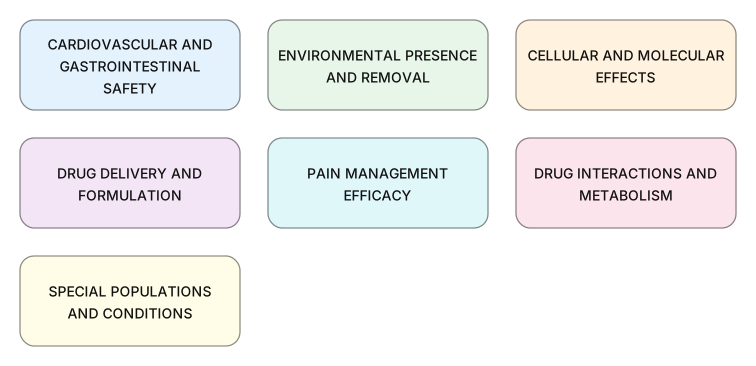
Figure 4. Main extracted research topics
Figure 4. Main extracted research topics (Results)

Figure 5. Limitations of current studies (topics)

Figure 6. Future research directions (topics)