Low Dose Radiation and Cancer: Systematic Review with ☸️SAIMSARA.


saimsara.com Download PDF

Review Stats
Identification of studies via PubMed (titles/abstracts) Identification Screening Included Records identified:n=668Records excluded:n=0 Records assessed for eligibilityn=668Records excluded:n=386 Studies included in reviewn=282 PRISMA Diagram generated by ☸️ SAIMSARA
⛛OSMA Triangle Effect-of Predictor → Outcome low dose radiation  →  cancer Beneficial for patients ΣN=5013 (2%) Harmful for patients ΣN=22408 (9%) Neutral ΣN=224126 (89%) 0 ⛛OSMA Triangle generated by ☸️SAIMSARA
Outcome-Sentiment Meta-Analysis (OSMA): (LLM-only)
Frame: Effect-of Predictor → Outcome • Source: PubMed
Outcome: cancer Typical timepoints: 3-mo, 3-day. Reported metrics: %, CI, p.
Common endpoints: Common endpoints: mortality, survival, recurrence.
Predictor: low dose radiation — exposure/predictor. Routes seen: subcutaneous. Typical comparator: the general population, observation, pca alone for acetabular, control….


1) Introduction
The relationship between low-dose radiation (LDR) exposure and cancer risk remains a complex and highly debated topic in radiobiology and public health. Historically, the linear no-threshold (LNT) model has guided radiation protection policies, positing that any radiation dose, however small, carries a proportional risk of cancer. However, recent research, particularly on LDR, has challenged this paradigm, with studies suggesting both potential beneficial (hormetic) effects, adaptive responses, and enhanced therapeutic applications, alongside continued concerns about carcinogenesis from diagnostic and occupational exposures. This paper synthesizes current findings to provide a comprehensive overview of LDR's multifaceted role in cancer, encompassing epidemiological observations, mechanistic insights, and emerging therapeutic strategies.

2) Aim
To systematically review the current scientific literature on low-dose radiation and its association with cancer risk and therapeutic outcomes.

3) Methods
Systematic review with multilayer AI research agent: keyword normalization, retrieval & structuring, and paper synthesis (see SAIMSARA About section for details).


4) Results
4.1 Study characteristics
The structured extraction summary includes 282 studies, predominantly mixed designs (combining experimental, preclinical, and/or clinical components), alongside numerous cohort studies and randomized controlled trials (RCTs). Populations range widely, from human cancer patients (e.g., recurrent high-grade gliomas, metastatic cancer, breast cancer, prostate cancer, esophageal cancer) to radiation workers, general populations exposed environmentally or diagnostically, and various animal and cell models (e.g., triple-negative breast cancer mouse models, human white blood cells, lung cancer cells). Follow-up periods, when specified, varied from short-term (e.g., 24 hours) to long-term (e.g., 108 months, decades, or lifetime).

4.2 Main numerical result aligned to the query
The evidence regarding low-dose radiation (LDR) and cancer risk is highly heterogeneous and often contradictory across studies, precluding a single comparable numeric outcome for risk assessment. While some large cohort studies, such as the Korean Radiation Workers Study (KRWS) and analyses of Life Span Study data, reported a decrease or no apparent increase in overall cancer incidence or mortality among exposed populations compared to general populations or non-exposed groups [1, 11, 79, 101, 250, 262], other epidemiological studies found increased risks for specific cancers, particularly in children exposed to diagnostic LDR [121, 138, 139]. For instance, a meta-analysis reported an excess relative risk (ERR) at 100 mGy of 0.029 (95% CI = 0.011 to 0.047) for solid cancers and 0.16 (95% CI = 0.07 to 0.25) for leukemia, with a higher ERR for childhood leukemia [110]. Similarly, a cohort of South Korean youths exposed to diagnostic LDR showed an increased incidence rate ratio (IRR) of 1.64 (95% CI, 1.56-1.73) for all cancers [121]. In contrast, therapeutic applications of LDR for various cancers often demonstrate promising efficacy, such as improved tumor response or survival, often in combination with other treatments [e.g., 2, 5, 6, 14, 16, 36, 67, 96, 114, 176].

4.3 Topic synthesis


5) Discussion
5.1 Principal finding
The evidence regarding low-dose radiation (LDR) and cancer risk is highly heterogeneous and often contradictory across studies, precluding a single comparable numeric outcome for risk assessment, with some studies showing decreased overall cancer incidence [1, 11] while others report increased risks, particularly from diagnostic exposures [110, 121].

5.2 Clinical implications


5.3 Research implications / key gaps


5.4 Limitations


5.5 Future directions


6) Conclusion
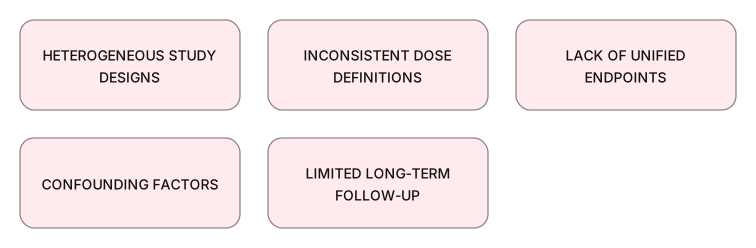
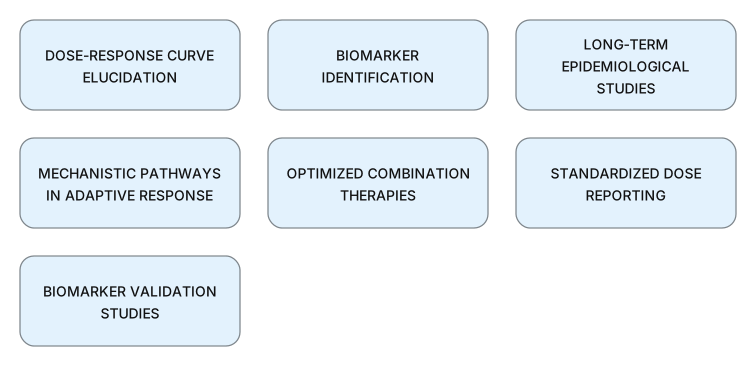
The evidence regarding low-dose radiation (LDR) and cancer risk is highly heterogeneous and often contradictory across studies, precluding a single comparable numeric outcome for risk assessment, with some studies showing decreased overall cancer incidence [1, 11] while others report increased risks, particularly from diagnostic exposures [110, 121]. This complexity underscores the dual nature of LDR, which can be both a potential carcinogen, especially in vulnerable populations, and a promising therapeutic tool for various cancers. The lack of unified endpoints and consistent dose definitions across studies remains the most significant limitation affecting certainty. A crucial next step is to conduct large-scale, long-term epidemiological studies with standardized dose reporting and comprehensive health outcomes to resolve the conflicting findings on LDR cancer risks.

References
SAIMSARA Session Index — session.json

Figure 1. Publication-year distribution of included originals

Figure 2. Study-design distribution of included originals
Figure 2. Study-design distribution

Figure 3. Study-type (directionality) distribution of included originals
Figure 3. Directionality distribution

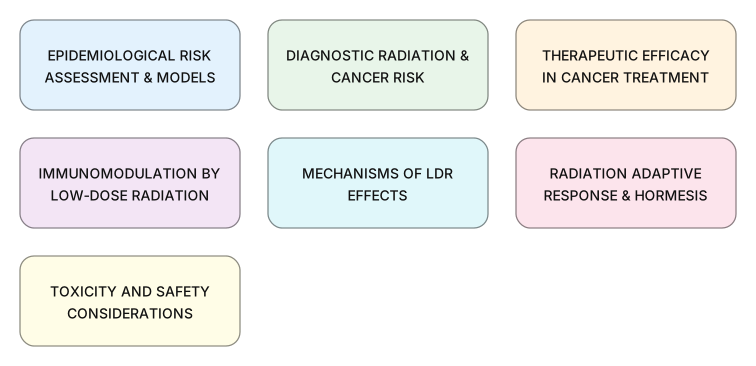
Figure 4. Main extracted research topics
Figure 4. Main extracted research topics (Results)

Figure 5. Limitations of current studies (topics)

Figure 6. Future research directions (topics)