PAD Prevalence: Systematic Review with ☸️SAIMSARA.


saimsara.com Download PDF

Abstract: To systematically review and synthesize the prevalence of "PAD" as reported in the scientific literature, identifying key trends, associated conditions, and demographic variations. The review utilises 250 studies with 2865984 total participants (naïve ΣN). The median prevalence of Peripheral Artery Disease (PAD) in human populations was 8.6%, but varied substantially across different cohorts, ranging from 1.18% to 71%. This review highlights PAD as a widespread condition with significant heterogeneity influenced by demographics, comorbidities, and geographic location. The most significant limitation affecting certainty is the Heterogeneous Diagnostic Criteria, which complicates direct comparisons across studies. Clinicians should maintain a high index of suspicion for PAD, especially in high-risk groups such as diabetics and those with renal disease, and consider comprehensive screening beyond symptomatic presentation.

Review Stats
Identification of studies via Semantic Scholar (all fields) Identification Screening Included Records identified:n=7719Records excluded:n=6719 Records assessed for eligibilityn=1000Records excluded:n=750 Studies included in reviewn=250 PRISMA Diagram generated by ☸️ SAIMSARA
⛛OSMA Triangle Effect-of Predictor → Outcome pad  →  prevalence Beneficial for patients ΣN=1346 (0%) Harmful for patients ΣN=492658 (17%) Neutral ΣN=2371980 (83%) 0 ⛛OSMA Triangle generated by ☸️SAIMSARA
Show OSMA legend
Outcome-Sentiment Meta-Analysis (OSMA): (LLM-only)
Frame: Effect-of Predictor → Outcome • Source: Semantic Scholar
Outcome: prevalence Typical timepoints: 10-y, peri/post-op. Reported metrics: %, CI, p.
Common endpoints: Common endpoints: complications, mortality, healing.
Predictor: pad — exposure/predictor. Doses/units seen: 0.856 mg, 25 g, 25 kg, 30 mg. Routes seen: iv. Typical comparator: healthy children, the control group, control, those without diabetic….

  • 1) Beneficial for patients — prevalence with pad — [15], [245] — ΣN=1346
  • 2) Harmful for patients — prevalence with pad — [1], [3], [4], [5], [6], [7], [8], [9], [10], [11], [12], [13], [14], [16], [18], [19], [20], [22], [23], [24], [25], [26], [27], [28], [29], [30], [31], [32], [33], [34], [35], [36], [37], [38], [39], [40], [42], [43], [44], [45], [46], [47], [48], [49], [50], [51], [54], [55], [56], [57], [58], [59], [60], [61], [62], [63], [64], [65], [66], [67], [68], [69], [70], [71], [72], [73], [74], [75], [98], [101], [102], [103], [104], [105], [106], [108], [109], [110], [111], [112], [113], [114], [115], [116], [117], [118], [119], [120], [121], [122], [123], [124], [125], [204], [209], [210], [211], [212], [218], [219], [220], [221], [222], [223], [224], [231], [232], [233], [234], [235], [237], [241], [244], [248], [250] — ΣN=492658
  • 3) No clear effect — prevalence with pad — [2], [17], [21], [41], [52], [53], [76], [77], [78], [79], [80], [81], [82], [83], [84], [85], [86], [87], [88], [89], [90], [91], [92], [93], [94], [95], [96], [97], [99], [100], [107], [126], [127], [128], [129], [130], [131], [132], [133], [134], [135], [136], [137], [138], [139], [140], [141], [142], [143], [144], [145], [146], [147], [148], [149], [150], [151], [152], [153], [154], [155], [156], [157], [158], [159], [160], [161], [162], [163], [164], [165], [166], [167], [168], [169], [170], [171], [172], [173], [174], [175], [176], [177], [178], [179], [180], [181], [182], [183], [184], [185], [186], [187], [188], [189], [190], [191], [192], [193], [194], [195], [196], [197], [198], [199], [200], [201], [202], [203], [205], [206], [207], [208], [213], [214], [215], [216], [217], [225], [226], [227], [228], [229], [230], [236], [238], [239], [240], [242], [243], [246], [247], [249] — ΣN=2371980

1) Introduction
Peripheral artery disease (PAD) represents a significant global health burden, characterized by the narrowing of peripheral arteries, most commonly in the legs. Its prevalence is a critical indicator of cardiovascular health within populations, reflecting the cumulative impact of various risk factors and comorbidities. Understanding the varied prevalence across different demographics, clinical conditions, and geographical regions is essential for effective public health strategies, early diagnosis, and targeted interventions. This paper synthesizes current research on PAD prevalence, highlighting its diverse manifestations and associated factors.

2) Aim
To systematically review and synthesize the prevalence of "PAD" as reported in the scientific literature, identifying key trends, associated conditions, and demographic variations.

3) Methods
Systematic review with multilayer AI research agent: keyword normalization, retrieval & structuring, and paper synthesis (see SAIMSARA About section for details).


4) Results
4.1 Study characteristics:
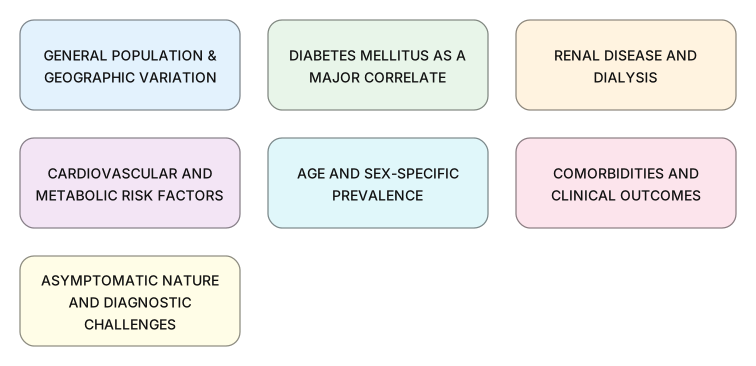
The included studies predominantly employed cross-sectional (n=60) and cohort (n=47) designs, with some mixed (n=20), randomized controlled trials (RCTs) (n=5), case-control (n=2), and unspecified designs (n=66). Populations ranged from general community samples (e.g., 45 to 74 years old [1], older adults [113]) to highly specific clinical groups such as diabetic patients (e.g., Type 2 Diabetes Mellitus (T2DM) [8, 13, 19]), chronic hemodialysis patients [2, 26], HIV-infected individuals [22, 30], and patients with specific cardiovascular conditions [55, 145]. Follow-up periods varied from short-term (e.g., 6 months [34]) to long-term (e.g., 10 years [148, 55]), or were not applicable for cross-sectional designs.

4.2 Main numerical result aligned to the query:
The median prevalence of Peripheral Artery Disease (PAD) in human populations was 8.6% [114], with a wide range observed from 1.18% [241] in a managed care population to 71% [165] among patients undergoing lower extremity amputation. This significant heterogeneity reflects diverse study populations, diagnostic criteria, and geographic settings. Other forms of "PAD" included foot pad dermatitis (FPD) in poultry, with prevalence as high as 97.7% in fattening turkeys [3], periampullary diverticula (PAD) at 57.92% in bile duct stone patients [158], and posterior arch deficiency (PAD) at 5.03% in a Turkish orthodontic population [242].

4.3 Topic synthesis:


5) Discussion
5.1 Principal finding:
The median prevalence of Peripheral Artery Disease (PAD) in human populations was 8.6% [114], but varied substantially across different cohorts, ranging from 1.18% [241] to 71% [165], indicating a widespread yet heterogeneously distributed health concern.

5.2 Clinical implications:


5.3 Research implications / key gaps:


5.4 Limitations:


5.5 Future directions:


6) Conclusion
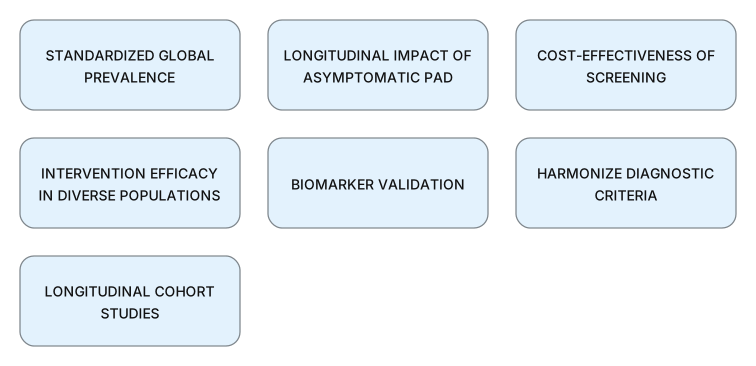
The median prevalence of Peripheral Artery Disease (PAD) in human populations was 8.6% [114], but varied substantially across different cohorts, ranging from 1.18% [241] to 71% [165]. This review highlights PAD as a widespread condition with significant heterogeneity influenced by demographics, comorbidities, and geographic location. The most significant limitation affecting certainty is the Heterogeneous Diagnostic Criteria, which complicates direct comparisons across studies. Clinicians should maintain a high index of suspicion for PAD, especially in high-risk groups such as diabetics and those with renal disease, and consider comprehensive screening beyond symptomatic presentation.

References
SAIMSARA Session Index — session.json

Figure 1. Publication-year distribution of included originals

Figure 2. Study-design distribution of included originals
Figure 2. Study-design distribution

Figure 3. Study-type (directionality) distribution of included originals
Figure 3. Directionality distribution

Figure 4. Main extracted research topics
Figure 4. Main extracted research topics (Results)

Figure 5. Limitations of current studies (topics)

Figure 6. Future research directions (topics)