Peripheral Artery Disease Amputation: Systematic Review with ☸️SAIMSARA.


saimsara.com Download PDF

Abstract: The aim of this paper is to systematically review the current scientific literature concerning peripheral artery disease and its association with amputation, identifying key risk factors, outcomes, and therapeutic approaches. The review utilises 317 studies with 3596028 total participants (naïve ΣN). Peripheral artery disease (PAD) is consistently associated with a substantially increased risk of lower limb amputation, with a risk that is often several-fold higher in affected individuals compared to those without PAD. This risk is significantly compounded by comorbidities, particularly diabetes mellitus and microvascular disease, which exhibit synergistic effects on amputation incidence. The heterogeneity of populations and amputation definitions across studies represents a significant limitation, affecting the certainty and generalizability of pooled quantitative estimates. Clinicians should prioritize early diagnosis and aggressive, multidisciplinary management of PAD and its comorbidities to improve limb salvage rates and reduce the burden of amputation.

Keywords: Peripheral Artery Disease; Amputation; Diabetes Mellitus; Lower Extremity Amputation; Revascularization; Risk Factors; Microvascular Disease; Critical Limb Ischemia; Comorbidities; Racial Disparities

Review Stats
Identification of studies via Semantic Scholar (all fields) Identification Screening Included Records identified:n=2983Records excluded:n=1983 Records assessed for eligibilityn=1000Records excluded:n=683 Studies included in reviewn=317 PRISMA Diagram generated by ☸️ SAIMSARA
⛛OSMA Triangle Effect-of Predictor → Outcome peripheral artery disease  →  amputation Beneficial for patients ΣN=540270 (15%) Harmful for patients ΣN=2407049 (67%) Neutral ΣN=648709 (18%) 0 ⛛OSMA Triangle generated by ☸️SAIMSARA
Show OSMA legend
Outcome-Sentiment Meta-Analysis (OSMA): (LLM-only)
Frame: Effect-of Predictor → Outcome • Source: Semantic Scholar
Outcome: amputation Typical timepoints: 1-y, 30-day. Reported metrics: %, CI, p.
Common endpoints: Common endpoints: mortality, complications, healing.
Predictor: peripheral artery disease — exposure/predictor. Doses/units seen: 40 mg. Routes seen: iv. Typical comparator: those without microvascular, white patients, diabetic subjects, patients with neither diabetes….

  • 1) Beneficial for patients — amputation with peripheral artery disease — [6], [20], [36], [37], [48], [53], [54], [56], [69], [70], [71], [72], [77], [84], [89], [97], [132], [136], [151], [159], [161], [166], [167], [168], [170], [191], [194], [197], [210], [212], [214], [215], [219], [230], [231], [235], [240], [241], [254], [256], [257], [263], [265], [267], [268], [273], [298], [303], [306], [309] — ΣN=540270
  • 2) Harmful for patients — amputation with peripheral artery disease — [1], [2], [3], [5], [7], [8], [9], [10], [11], [12], [13], [14], [16], [18], [19], [22], [23], [24], [25], [28], [32], [33], [34], [35], [43], [52], [55], [57], [58], [59], [60], [64], [66], [68], [73], [74], [75], [76], [78], [79], [80], [81], [82], [83], [86], [87], [88], [90], [91], [92], [93], [94], [96], [100], [128], [129], [133], [137], [139], [142], [143], [144], [145], [146], [148], [149], [150], [152], [153], [154], [157], [158], [160], [163], [164], [165], [175], [176], [177], [178], [181], [184], [185], [186], [187], [188], [189], [190], [195], [196], [198], [199], [200], [202], [204], [205], [207], [208], [209], [216], [218], [220], [223], [224], [225], [226], [227], [228], [229], [232], [233], [234], [238], [239], [242], [243], [248], [249], [250], [251], [255], [261], [262], [266], [270], [272], [274], [275], [276], [284], [289], [292], [293], [295], [301], [304], [308], [311], [314], [317] — ΣN=2407049
  • 3) No clear effect — amputation with peripheral artery disease — [4], [15], [17], [21], [26], [27], [29], [30], [31], [38], [39], [40], [41], [42], [44], [45], [46], [47], [49], [50], [51], [61], [62], [63], [65], [67], [85], [95], [98], [99], [101], [102], [103], [104], [105], [106], [107], [108], [109], [110], [111], [112], [113], [114], [115], [116], [117], [118], [119], [120], [121], [122], [123], [124], [125], [126], [127], [130], [131], [134], [135], [138], [140], [141], [147], [155], [156], [162], [169], [171], [172], [173], [174], [179], [180], [182], [183], [192], [193], [201], [203], [206], [211], [213], [217], [221], [222], [236], [237], [244], [245], [246], [247], [252], [253], [258], [259], [260], [264], [269], [271], [277], [278], [279], [280], [281], [282], [283], [285], [286], [287], [288], [290], [291], [294], [296], [297], [299], [300], [302], [305], [307], [310], [312], [313], [315], [316] — ΣN=648709
1) Introduction
Peripheral artery disease (PAD) is a significant global health concern, characterized by narrowing of peripheral arteries, most commonly in the legs. This condition frequently progresses to severe forms such as critical limb ischemia (CLI), leading to chronic non-healing ulcers, gangrene, and ultimately, lower extremity amputation (LEA) [38, 39, 41, 114, 118, 144, 175, 204, 216]. The burden of amputation in PAD patients is substantial, impacting patient morbidity, mortality, and healthcare costs [79, 83, 162]. Comorbidities like diabetes mellitus (DM) and microvascular disease (MVD) profoundly exacerbate the risk of amputation in PAD patients, often leading to an accelerated disease course and worse outcomes [1, 3, 18, 22, 44, 46, 75, 78, 91, 92, 112, 114, 119, 164, 172, 173, 176, 181, 182, 188, 204, 208, 211, 261, 293, 303, 304]. This review synthesizes current evidence on the prevalence, risk factors, and management strategies related to amputation in the context of PAD.

2) Aim
The aim of this paper is to systematically review the current scientific literature concerning peripheral artery disease and its association with amputation, identifying key risk factors, outcomes, and therapeutic approaches.

3) Methods
Systematic review with multilayer AI research agent: keyword normalization, retrieval & structuring, and paper synthesis (see SAIMSARA About section for details).


4) Results
4.1 Study characteristics
The included studies predominantly comprised cohort designs (e.g., [1, 2, 3, 6, 12, 13, 19, 22, 24, 62, 63, 65, 66, 67, 68, 70, 76, 78, 80, 81, 82, 83, 85, 87, 88, 89, 90, 91, 92, 94, 95, 96, 100, 101, 103, 106, 112, 113, 115, 117, 124, 129, 131, 133, 142, 145, 146, 149, 150, 151, 152, 153, 154, 157, 158, 159, 160, 161, 162, 163, 164, 168, 176, 177, 178, 181, 184, 185, 186, 187, 188, 189, 190, 191, 193, 195, 198, 199, 200, 202, 203, 204, 205, 206, 208, 209, 211, 212, 213, 215, 216, 217, 219, 220, 221, 222, 223, 224, 228, 229, 233, 235, 238, 239, 240, 242, 243, 244, 245, 247, 249, 253, 254, 257, 258, 259, 260, 261, 262, 266, 270, 271, 272, 273, 274, 275, 276, 277, 278, 279, 282, 283, 284, 285, 286, 287, 288, 293, 296, 297, 301, 309, 310, 311, 314, 315, 316), with a notable presence of retrospective and prospective cohort studies. Randomized controlled trials (RCTs) were also identified, particularly for evaluating therapeutic interventions [48, 53, 69, 93, 94, 109, 155, 167, 169, 170, 210, 214, 215, 230, 231, 234, 235, 250, 252, 259, 264, 281, 282, 288, 300, 307, 312]. Populations varied widely, including veterans [1, 145], American Indian adults [2], patients with newly diagnosed type 2 diabetes [3, 6], Medicare beneficiaries [7, 16, 79, 96, 157, 186, 285], and individuals undergoing revascularization procedures [5, 48, 57, 71, 72, 74, 76, 77, 83, 84, 88, 89, 90, 94, 97, 105, 106, 108, 111, 116, 123, 136, 149, 153, 154, 160, 161, 168, 170, 184, 186, 189, 194, 196, 197, 200, 201, 215, 218, 221, 229, 231, 232, 236, 256, 257, 259, 260, 267, 269, 271, 273, 274, 279, 281, 282, 285, 286, 287, 288, 291, 296, 300, 301, 306, 307, 308, 309, 310, 312, 313, 317]. Follow-up periods ranged from 30 days to 28 years, with common durations of 1, 5, and 10 years.

4.2 Main numerical result aligned to the query
Peripheral artery disease (PAD) is consistently associated with a substantially increased risk of lower limb amputation. For instance, PAD alone was associated with a 13.9-fold elevated risk of amputation in veterans [1], and independently with a 7-fold increase in amputation rate in Western Denmark [22]. In patients with type 2 diabetes, PAD was identified as the greatest driver of amputation risk, with more than a 4-fold higher risk [78] and a 5.48-fold higher rate of lower-extremity amputation compared to those without PAD [91]. The coexistence of PAD and microvascular disease (MVD) demonstrated a synergistic effect, increasing amputation risk by 22.7-fold [1] or 12-fold [22] compared to no disease.

4.3 Topic synthesis


5) Discussion
5.1 Principal finding
The central finding is that peripheral artery disease (PAD) is a profound and consistently identified risk factor for lower extremity amputation, with a risk that is often several-fold higher in affected individuals compared to those without PAD [1, 22, 78, 91]. This risk is significantly compounded by comorbidities, particularly diabetes mellitus and microvascular disease, which exhibit synergistic effects on amputation incidence [1, 22, 44, 261].

5.2 Clinical implications


5.3 Research implications / key gaps


5.4 Limitations


5.5 Future directions


6) Conclusion
Peripheral artery disease (PAD) is consistently associated with a substantially increased risk of lower limb amputation, with a risk that is often several-fold higher in affected individuals compared to those without PAD [1, 22, 78, 91]. This risk is significantly compounded by comorbidities, particularly diabetes mellitus and microvascular disease, which exhibit synergistic effects on amputation incidence [1, 22, 44, 261]. The heterogeneity of populations and amputation definitions across studies represents a significant limitation, affecting the certainty and generalizability of pooled quantitative estimates. Clinicians should prioritize early diagnosis and aggressive, multidisciplinary management of PAD and its comorbidities to improve limb salvage rates and reduce the burden of amputation.

References
SAIMSARA Session Index — session.json

Figure 1. Publication-year distribution of included originals

Figure 2. Study-design distribution of included originals
Figure 2. Study-design distribution

Figure 3. Study-type (directionality) distribution of included originals
Figure 3. Directionality distribution

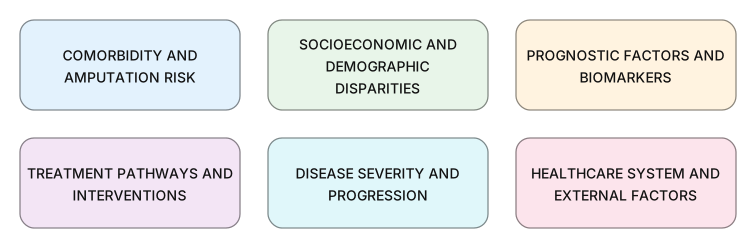
Figure 4. Main extracted research topics
Figure 4. Main extracted research topics (Results)

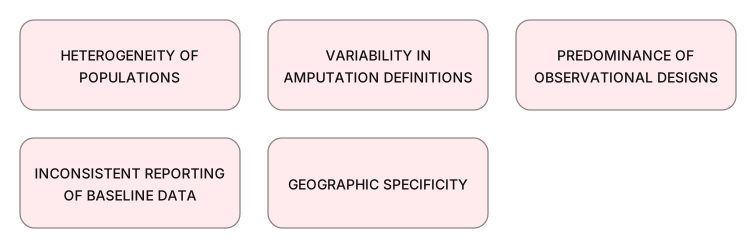
Figure 5. Limitations of current studies (topics)

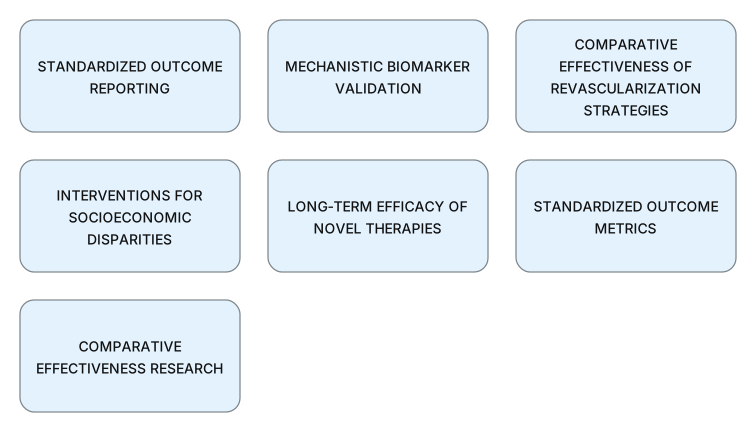
Figure 6. Future research directions (topics)