Peripheral Artery Disease Anticoagulation: Systematic Review with ☸️SAIMSARA.


saimsara.com Download PDF

Abstract: The aim of this paper is to systematically review and synthesize the current evidence regarding anticoagulation strategies for patients with peripheral artery disease, identifying key findings, clinical implications, and future research directions. The review utilises 281 studies with 1467252 total participants (naïve ΣN). In patients with peripheral artery disease, the combination of low-dose rivaroxaban and aspirin, compared to aspirin alone, was associated with a median relative risk reduction of 24% (range 15–28%) for composite cardiovascular and limb events, but this benefit was accompanied by a median relative risk increase of 43% (range 16–124%) for major bleeding events. This evidence broadly applies to patients with stable PAD, particularly those post-revascularization or with concomitant atrial fibrillation. The most significant limitation affecting certainty stems from the heterogeneity in study designs and inconsistent reporting of key methodological details, such as sample size and follow-up duration. Clinicians should carefully weigh the ischemic benefits against the increased bleeding risk when considering dual pathway inhibition, or adopt DOACs over VKAs for PAD patients with atrial fibrillation, while prioritizing individualized patient assessment.

Keywords: Peripheral Artery Disease; Anticoagulation; Direct Oral Anticoagulants; Rivaroxaban; Vascular Revascularization; Bleeding Complications; Major Adverse Limb Events; Atrial Fibrillation; Antiplatelet Therapy; Thromboembolism

Review Stats
Identification of studies via Semantic Scholar (all fields) Identification Screening Included Records identified:n=942Records excluded:n=0 Records assessed for eligibilityn=942Records excluded:n=661 Studies included in reviewn=281 PRISMA Diagram generated by ☸️ SAIMSARA
⛛OSMA Triangle Effect-of Predictor → Outcome anticoagulation  →  peripheral artery disease Beneficial for patients ΣN=72169 (5%) Harmful for patients ΣN=259455 (18%) Neutral ΣN=1135628 (77%) 0 ⛛OSMA Triangle generated by ☸️SAIMSARA
Show OSMA legend
Outcome-Sentiment Meta-Analysis (OSMA): (LLM-only)
Frame: Effect-of Predictor → Outcome • Source: Semantic Scholar
Outcome: peripheral artery disease Typical timepoints: 1-y, peri/post-op. Reported metrics: %, CI, p.
Common endpoints: Common endpoints: complications, mortality, admission.
Predictor: anticoagulation — exposure/predictor. Doses/units seen: 2.5 mg, 100 mg, 50 mg. Routes seen: oral, intravenous. Typical comparator: vitamin-k-antagonist, factor xa inhibitors on, the randomized treatment phase, non-asian patients….

  • 1) Beneficial for patients — peripheral artery disease with anticoagulation — [17], [18], [19], [20], [29], [34], [42], [44], [45], [46], [47], [51], [54], [55], [57], [58], [60], [61], [63], [65], [66], [68], [75], [77], [215], [217], [234], [238], [241], [257], [258], [261], [275], [278] — ΣN=72169
  • 2) Harmful for patients — peripheral artery disease with anticoagulation — [8], [16], [56], [59], [62], [95], [201], [209], [216], [224], [225], [228], [229], [239], [242], [243], [245], [246], [252], [255], [256], [259], [262], [264], [266], [268], [269], [270], [271], [276] — ΣN=259455
  • 3) No clear effect — peripheral artery disease with anticoagulation — [1], [2], [3], [4], [5], [6], [7], [9], [10], [11], [12], [13], [14], [15], [21], [22], [23], [24], [25], [26], [27], [28], [30], [31], [32], [33], [35], [36], [37], [38], [39], [40], [41], [43], [48], [49], [50], [52], [53], [64], [67], [69], [70], [71], [72], [73], [74], [76], [78], [79], [80], [81], [82], [83], [84], [85], [86], [87], [88], [89], [90], [91], [92], [93], [94], [96], [97], [98], [99], [100], [101], [102], [103], [104], [105], [106], [107], [108], [109], [110], [111], [112], [113], [114], [115], [116], [117], [118], [119], [120], [121], [122], [123], [124], [125], [126], [127], [128], [129], [130], [131], [132], [133], [134], [135], [136], [137], [138], [139], [140], [141], [142], [143], [144], [145], [146], [147], [148], [149], [150], [151], [152], [153], [154], [155], [156], [157], [158], [159], [160], [161], [162], [163], [164], [165], [166], [167], [168], [169], [170], [171], [172], [173], [174], [175], [176], [177], [178], [179], [180], [181], [182], [183], [184], [185], [186], [187], [188], [189], [190], [191], [192], [193], [194], [195], [196], [197], [198], [199], [200], [202], [203], [204], [205], [206], [207], [208], [210], [211], [212], [213], [214], [218], [219], [220], [221], [222], [223], [226], [227], [230], [231], [232], [233], [235], [236], [237], [240], [244], [247], [248], [249], [250], [251], [253], [254], [260], [263], [265], [267], [272], [273], [274], [277], [279], [280], [281] — ΣN=1135628
1) Introduction
Peripheral artery disease (PAD) is a prevalent atherosclerotic condition associated with significant morbidity and mortality, often requiring complex management strategies to mitigate thrombotic events. Anticoagulation plays a critical role in preventing limb-related and systemic complications in PAD patients, particularly those undergoing revascularization or with concomitant conditions like atrial fibrillation (AF) [11, 13, 28, 31]. Recent research has focused on optimizing antithrombotic regimens, balancing the benefits of reducing ischemic events against the inherent risk of bleeding. This paper synthesizes current evidence on anticoagulation strategies in PAD, drawing insights from a diverse range of clinical studies.

2) Aim
The aim of this paper is to systematically review and synthesize the current evidence regarding anticoagulation strategies for patients with peripheral artery disease, identifying key findings, clinical implications, and future research directions.

3) Methods
Systematic review with multilayer AI research agent: keyword normalization, retrieval & structuring, and paper synthesis (see SAIMSARA About section for details).


4) Results
4.1 Study characteristics:
The extracted literature comprises a variety of study designs, including cohort studies, mixed-design studies (often combining retrospective and prospective elements), randomized controlled trials (RCTs), case series, and case reports. Populations frequently studied include patients with PAD, those undergoing lower extremity revascularization, and individuals with concomitant conditions such as non-valvular atrial fibrillation (NVAF) or coronary artery disease (CAD). Studies span from 2000 to 2025, with a significant concentration of recent publications (2018-2025). Sample sizes and follow-up durations were often not specified in the summaries.

4.2 Main numerical result aligned to the query:
In patients with peripheral artery disease, the combination of low-dose rivaroxaban and aspirin, compared to aspirin alone, was associated with a median relative risk reduction of 24% (range 15–28%) for composite cardiovascular and limb events [16, 19, 21, 95]. This benefit, however, was accompanied by a median relative risk increase of 43% (range 16–124%) for major bleeding events [2, 14, 21, 95].

4.3 Topic synthesis:


5) Discussion
5.1 Principal finding:
The principal finding is that in patients with peripheral artery disease, the addition of low-dose rivaroxaban to aspirin therapy leads to a median relative risk reduction of 24% (range 15–28%) in composite cardiovascular and limb events, but this benefit is offset by a median relative risk increase of 43% (range 16–124%) in major bleeding events [16, 19, 21, 95].

5.2 Clinical implications:


5.3 Research implications / key gaps:


5.4 Limitations:


5.5 Future directions:


6) Conclusion
In patients with peripheral artery disease, the combination of low-dose rivaroxaban and aspirin, compared to aspirin alone, was associated with a median relative risk reduction of 24% (range 15–28%) for composite cardiovascular and limb events, but this benefit was accompanied by a median relative risk increase of 43% (range 16–124%) for major bleeding events [16, 19, 21, 95]. This evidence broadly applies to patients with stable PAD, particularly those post-revascularization or with concomitant atrial fibrillation. The most significant limitation affecting certainty stems from the heterogeneity in study designs and inconsistent reporting of key methodological details, such as sample size and follow-up duration. Clinicians should carefully weigh the ischemic benefits against the increased bleeding risk when considering dual pathway inhibition, or adopt DOACs over VKAs for PAD patients with atrial fibrillation, while prioritizing individualized patient assessment.

References
SAIMSARA Session Index — session.json

Figure 1. Publication-year distribution of included originals

Figure 2. Study-design distribution of included originals
Figure 2. Study-design distribution

Figure 3. Study-type (directionality) distribution of included originals
Figure 3. Directionality distribution

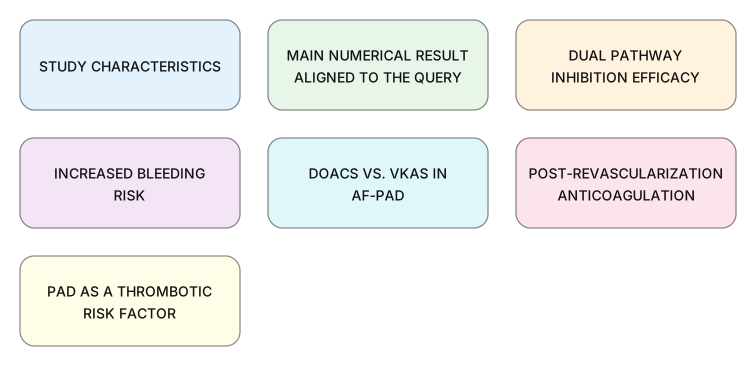
Figure 4. Main extracted research topics
Figure 4. Main extracted research topics (Results)

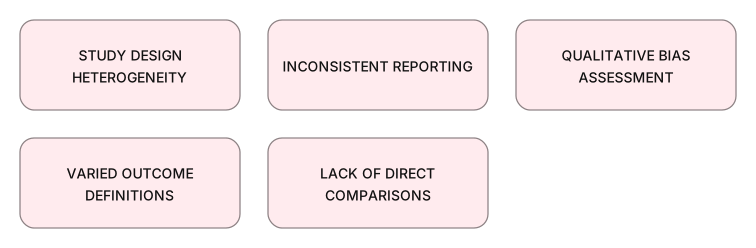
Figure 5. Limitations of current studies (topics)

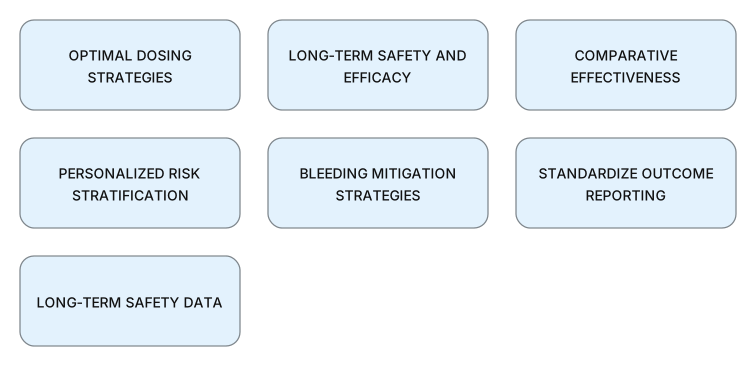
Figure 6. Future research directions (topics)