Peripheral Artery Disease Drugs: Systematic Review with ☸️SAIMSARA.


saimsara.com Download PDF

Abstract: To systematically review and synthesize the evidence regarding drug therapies for peripheral artery disease, identifying key findings, clinical implications, and research gaps. The review utilises 126 studies with 1471667 total participants (naïve ΣN). Systemic drug therapies for peripheral artery disease (PAD) or its associated cardiovascular risks consistently demonstrated a beneficial effect on various adverse outcomes, with a median hazard ratio for risk reduction of 0.70 (range 0.43 to 0.80). These findings support the widespread use of evidence-based pharmacotherapy in managing PAD across diverse patient populations, including those with comorbidities like diabetes and coronary artery disease. However, the heterogeneity of study designs and outcome measures represents the most significant limitation to synthesizing definitive conclusions. A critical next step is to conduct comparative effectiveness trials to optimize antiplatelet and anticoagulant strategies, particularly addressing clopidogrel resistance and the long-term safety of paclitaxel-coated devices.

Keywords: Peripheral Artery Disease; Pharmacotherapy; Statins; Antiplatelet; Dual Antiplatelet Therapy

Review Stats
Identification of studies via Semantic Scholar (all fields) Identification Screening Included Records identified:n=95808Records excluded:n=94808 Records assessed for eligibilityn=1000Records excluded:n=874 Studies included in reviewn=126 PRISMA Diagram generated by ☸️ SAIMSARA
⛛OSMA Triangle Effect-of Predictor → Outcome peripheral artery disease drugs  →  Outcome Beneficial for patients ΣN=228236 (16%) Harmful for patients ΣN=28033 (2%) Neutral ΣN=1215398 (83%) 0 ⛛OSMA Triangle generated by ☸️SAIMSARA
Show OSMA legend
Outcome-Sentiment Meta-Analysis (OSMA): (LLM-only)
Frame: Effect-of Predictor → Outcome • Source: Semantic Scholar
Outcome: Outcome Typical timepoints: 12-mo, 6-mo. Reported metrics: %, CI, p.
Common endpoints: Common endpoints: complications, mortality, patency.
Predictor: peripheral artery disease drugs — exposure/predictor. Doses/units seen: 2.5 mg. Routes seen: intravenous, intramuscular, oral. Typical comparator: glp1-ra or other anti-diabetic, atorvastatin, aspirin alone was cost-, bare metal stents….

  • 1) Beneficial for patients — Outcome with peripheral artery disease drugs — [3], [6], [8], [15], [22], [26], [35], [37], [39], [41], [43], [44], [45], [49], [50], [101], [105], [110], [118], [121], [122], [125] — ΣN=228236
  • 2) Harmful for patients — Outcome with peripheral artery disease drugs — [2], [16], [115], [120], [123], [124] — ΣN=28033
  • 3) No clear effect — Outcome with peripheral artery disease drugs — [1], [4], [5], [7], [9], [10], [11], [12], [13], [14], [17], [18], [19], [20], [21], [23], [24], [25], [27], [28], [29], [30], [31], [32], [33], [34], [36], [38], [40], [42], [46], [47], [48], [51], [52], [53], [54], [55], [56], [57], [58], [59], [60], [61], [62], [63], [64], [65], [66], [67], [68], [69], [70], [71], [72], [73], [74], [75], [76], [77], [78], [79], [80], [81], [82], [83], [84], [85], [86], [87], [88], [89], [90], [91], [92], [93], [94], [95], [96], [97], [98], [99], [100], [102], [103], [104], [106], [107], [108], [109], [111], [112], [113], [114], [116], [117], [119], [126] — ΣN=1215398
1) Introduction
Peripheral artery disease (PAD) is a prevalent atherosclerotic condition affecting the arteries supplying the limbs, often leading to significant morbidity and mortality. It is a major cardiovascular risk factor, frequently co-occurring with coronary artery disease (CAD), chronic kidney disease (CKD), and type 2 diabetes mellitus (T2DM) [4, 11, 72]. PAD patients experience increased risks of stroke, myocardial infarction (MI), lower limb amputation (LLA), and major adverse limb events (MALE) [3, 15, 37, 69, 91]. The management of PAD is multifaceted, encompassing lifestyle modifications, revascularization procedures, and pharmacotherapy aimed at reducing cardiovascular risk, improving symptoms, and preventing disease progression [111]. This paper synthesizes current evidence on drug therapies for PAD, examining their efficacy, safety, and emerging applications.

2) Aim
To systematically review and synthesize the evidence regarding drug therapies for peripheral artery disease, identifying key findings, clinical implications, and research gaps.

3) Methods
Systematic review with multilayer AI research agent: keyword normalization, retrieval & structuring, and paper synthesis (see SAIMSARA About section for details).


4) Results
4.1 Study characteristics
The review included a diverse range of studies, predominantly cohort studies and randomized controlled trials (RCTs), with several mixed design studies and reviews. Populations frequently included patients with type 2 diabetes mellitus (T2DM), coronary artery disease (CAD), or symptomatic peripheral artery disease (PAD), often focusing on femoropopliteal lesions. Follow-up periods varied widely, from short-term (e.g., 1 month for atorvastatin effects [6]) to intermediate (e.g., 12 months for drug-coated balloons [32, 39, 50]) and long-term (e.g., 3 years for vorapaxar [91] or up to 20 years for genetic studies [75]).

4.2 Main numerical result aligned to the query
Systemic drug therapies for peripheral artery disease (PAD) or its associated cardiovascular risks consistently demonstrated a beneficial effect on various adverse outcomes. Across multiple studies, the median hazard ratio (HR) for risk reduction of events such as lower limb amputation (LLA), major adverse limb events (MALE), stroke, or PAD incidence was 0.70, with a range from 0.43 to 0.80 [37, 91, 118, 125]. This indicates that, on average, these drug interventions reduced the risk of adverse events by approximately 30% compared to their respective comparators.

4.3 Topic synthesis


5) Discussion
5.1 Principal finding
Systemic drug therapies for peripheral artery disease (PAD) or its associated cardiovascular risks consistently demonstrated a beneficial effect on various adverse outcomes, with a median hazard ratio for risk reduction of 0.70 (range 0.43 to 0.80) [37, 91, 118, 125]. This indicates a clinically meaningful reduction in the risk of events such as lower limb amputation, major adverse limb events, stroke, or PAD incidence through pharmacological interventions.

5.2 Clinical implications


5.3 Research implications / key gaps


5.4 Limitations


5.5 Future directions


6) Conclusion
Systemic drug therapies for peripheral artery disease (PAD) or its associated cardiovascular risks consistently demonstrated a beneficial effect on various adverse outcomes, with a median hazard ratio for risk reduction of 0.70 (range 0.43 to 0.80) [37, 91, 118, 125]. These findings support the widespread use of evidence-based pharmacotherapy in managing PAD across diverse patient populations, including those with comorbidities like diabetes and coronary artery disease. However, the heterogeneity of study designs and outcome measures represents the most significant limitation to synthesizing definitive conclusions. A critical next step is to conduct comparative effectiveness trials to optimize antiplatelet and anticoagulant strategies, particularly addressing clopidogrel resistance and the long-term safety of paclitaxel-coated devices.

References
SAIMSARA Session Index — session.json

Figure 1. Publication-year distribution of included originals

Figure 2. Study-design distribution of included originals
Figure 2. Study-design distribution

Figure 3. Study-type (directionality) distribution of included originals
Figure 3. Directionality distribution

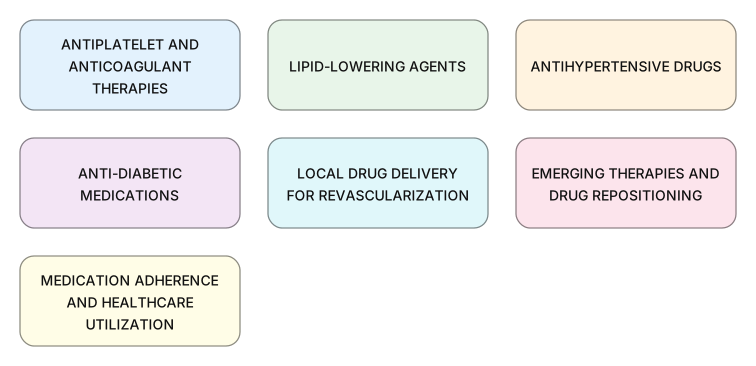
Figure 4. Main extracted research topics
Figure 4. Main extracted research topics (Results)

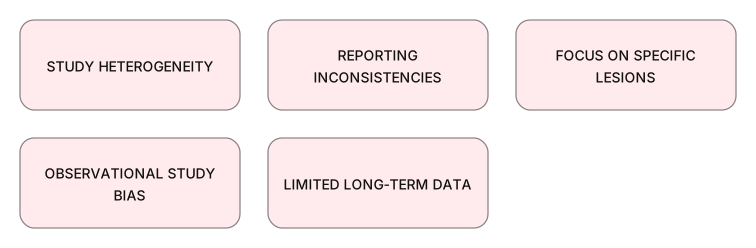
Figure 5. Limitations of current studies (topics)

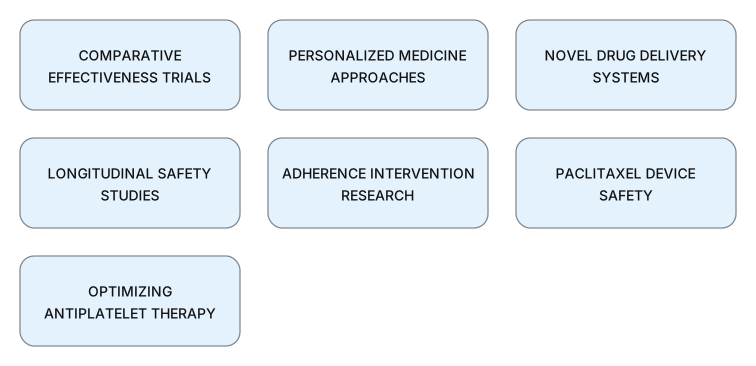
Figure 6. Future research directions (topics)