Peripheral Artery Disease Medication: Systematic Review with ☸️SAIMSARA.


saimsara.com Download PDF

Abstract: To systematically review and synthesize current evidence on peripheral artery disease medication, focusing on efficacy, adherence, and associated outcomes, to identify key clinical and research implications. The review utilises 216 studies with 1803676 total participants (naïve ΣN). Cardioprotective medications, including statins, beta-blockers, aspirin, and ACE inhibitors, are significantly associated with reduced long-term mortality in patients with peripheral arterial disease, with a median Hazard Ratio of 0.70 (range: 0.46–0.80). These findings are generally applicable to diverse PAD populations, including those with comorbidities like diabetes and those undergoing revascularization. However, the heterogeneity of outcomes reported across studies and the prevalence of retrospective designs are significant limitations affecting the certainty of specific quantitative conclusions. A concrete next step for clinicians is to consistently reinforce guideline-directed medical therapy, addressing patient adherence and managing comorbidities as integral components of PAD care.

Keywords: Peripheral Artery Disease; Pharmacotherapy; Antiplatelet Agents; Anticoagulants; Statins; Guideline-Directed Medical Therapy; Atherosclerosis; Cardiovascular Outcomes; Treatment Adherence; Restenosis

Review Stats
Identification of studies via EPMC (titles/abstracts) Identification Screening Included Records identified:n=428Records excluded:n=0 Records assessed for eligibilityn=428Records excluded:n=212 Studies included in reviewn=216 PRISMA Diagram generated by ☸️ SAIMSARA
⛛OSMA Triangle Effect-of Predictor → Outcome peripheral artery disease medication  →  Outcome Beneficial for patients ΣN=379802 (21%) Harmful for patients ΣN=246973 (14%) Neutral ΣN=1176901 (65%) 0 ⛛OSMA Triangle generated by ☸️SAIMSARA
Show OSMA legend
Outcome-Sentiment Meta-Analysis (OSMA): (LLM-only)
Frame: Effect-of Predictor → Outcome • Source: Europe PMC
Outcome: Outcome Typical timepoints: 1-y, 2-y. Reported metrics: %, CI, p.
Common endpoints: Common endpoints: mortality, complications, survival.
Predictor: peripheral artery disease medication — exposure/predictor. Doses/units seen: 2.5 mg, 50 mg. Routes seen: oral. Typical comparator: dual antiplatelet therapy, patients with other, permanent metallic stents, hormone therapy….

  • 1) Beneficial for patients — Outcome with peripheral artery disease medication — [1], [2], [8], [18], [19], [22], [25], [30], [32], [34], [42], [43], [45], [77], [85], [88], [96], [98], [104], [107], [110], [114], [115], [118], [129], [132], [133], [134], [137], [138], [140], [143], [145], [146], [149], [150], [161], [165], [166], [175] — ΣN=379802
  • 2) Harmful for patients — Outcome with peripheral artery disease medication — [9], [11], [13], [20], [38], [44], [46], [47], [50], [76], [82], [87], [91], [92], [93], [95], [97], [108], [111], [112], [119], [120], [122], [125], [127], [128], [135], [139], [142], [144], [147], [148], [152], [153], [154], [155], [157], [162], [163], [164], [168], [169], [170], [171], [173], [174] — ΣN=246973
  • 3) No clear effect — Outcome with peripheral artery disease medication — [3], [4], [5], [6], [7], [10], [12], [14], [15], [16], [17], [21], [23], [24], [26], [27], [28], [29], [31], [33], [35], [36], [37], [39], [40], [41], [48], [49], [51], [52], [53], [54], [55], [56], [57], [58], [59], [60], [61], [62], [63], [64], [65], [66], [67], [68], [69], [70], [71], [72], [73], [74], [75], [78], [79], [80], [81], [83], [84], [86], [89], [90], [94], [99], [100], [101], [102], [103], [105], [106], [109], [113], [116], [117], [121], [123], [124], [126], [130], [131], [136], [141], [151], [156], [158], [159], [160], [167], [172], [176], [177], [178], [179], [180], [181], [182], [183], [184], [185], [186], [187], [188], [189], [190], [191], [192], [193], [194], [195], [196], [197], [198], [199], [200], [201], [202], [203], [204], [205], [206], [207], [208], [209], [210], [211], [212], [213], [214], [215], [216] — ΣN=1176901
1) Introduction
Peripheral artery disease (PAD) represents a significant global health burden, characterized by atherosclerotic narrowing of non-coronary arteries, predominantly affecting the lower extremities. It is strongly associated with other cardiovascular diseases (CVD) such as coronary artery disease (CAD) and stroke, contributing to increased morbidity and mortality [119, 157, 186, 187]. Effective medication management is crucial for improving patient outcomes, reducing adverse events, and enhancing quality of life. Despite established guidelines, challenges persist in optimal prescribing, patient adherence, and the integration of novel therapeutic strategies. This paper synthesizes recent findings on the efficacy, safety, and adherence patterns of various medications used in PAD management, highlighting current gaps and future research directions.

2) Aim
To systematically review and synthesize current evidence on peripheral artery disease medication, focusing on efficacy, adherence, and associated outcomes, to identify key clinical and research implications.

3) Methods
Systematic review with multilayer AI research agent: keyword normalization, retrieval & structuring, and paper synthesis (see SAIMSARA About section for details).


4) Results
4.1 Study characteristics
The included studies encompassed a range of designs, primarily mixed-design (combining retrospective and prospective elements), cohort studies, and randomized controlled trials (RCTs). Populations frequently included patients with symptomatic PAD, those undergoing revascularization procedures (e.g., DCB angioplasty, lower extremity revascularization, infrainguinal bypass), and individuals with comorbidities such as diabetes, coronary artery disease, or abdominal aortic aneurysm. Follow-up periods varied widely, from short-term (e.g., 6 weeks, 3 months) to longer-term (e.g., 1 year, 2 years, 10 years, or lifetime projections).

4.2 Main numerical result aligned to the query
Cardioprotective medications are associated with a reduction in long-term mortality in patients with peripheral arterial disease. Specifically, statins, beta-blockers, aspirin, and ACE inhibitors were associated with reduced long-term mortality, with a median Hazard Ratio (HR) of 0.70 (range: 0.46–0.80) [177].

4.3 Topic synthesis


5) Discussion
5.1 Principal finding
The principal finding is that cardioprotective medications, including statins, beta-blockers, aspirin, and ACE inhibitors, are significantly associated with reduced long-term mortality in patients with peripheral arterial disease, with a median Hazard Ratio of 0.70 (range: 0.46–0.80) [177]. This underscores the critical role of comprehensive medical therapy in improving survival outcomes for this vulnerable population.

5.2 Clinical implications


5.3 Research implications / key gaps


5.4 Limitations


5.5 Future directions


6) Conclusion
Cardioprotective medications, including statins, beta-blockers, aspirin, and ACE inhibitors, are significantly associated with reduced long-term mortality in patients with peripheral arterial disease, with a median Hazard Ratio of 0.70 (range: 0.46–0.80) [177]. These findings are generally applicable to diverse PAD populations, including those with comorbidities like diabetes and those undergoing revascularization. However, the heterogeneity of outcomes reported across studies and the prevalence of retrospective designs are significant limitations affecting the certainty of specific quantitative conclusions. A concrete next step for clinicians is to consistently reinforce guideline-directed medical therapy, addressing patient adherence and managing comorbidities as integral components of PAD care.

References
SAIMSARA Session Index — session.json

Figure 1. Publication-year distribution of included originals

Figure 2. Study-design distribution of included originals
Figure 2. Study-design distribution

Figure 3. Study-type (directionality) distribution of included originals
Figure 3. Directionality distribution

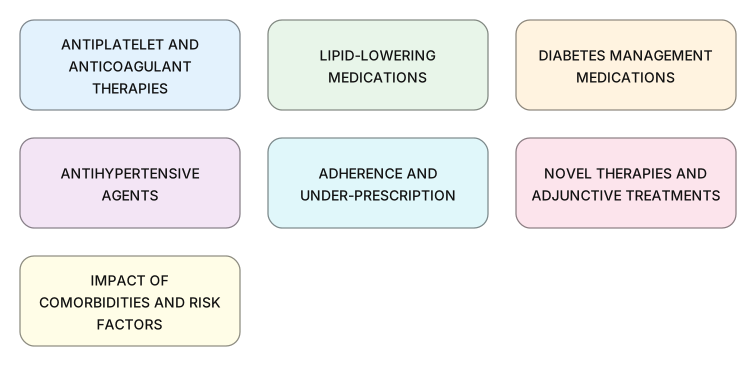
Figure 4. Main extracted research topics
Figure 4. Main extracted research topics (Results)

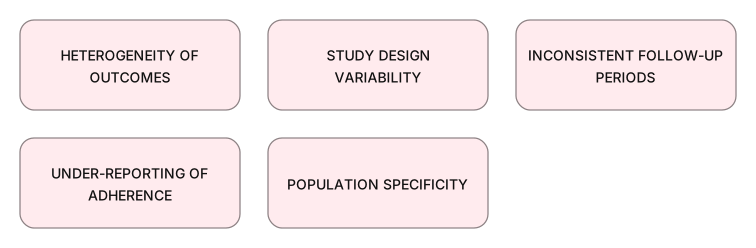
Figure 5. Limitations of current studies (topics)

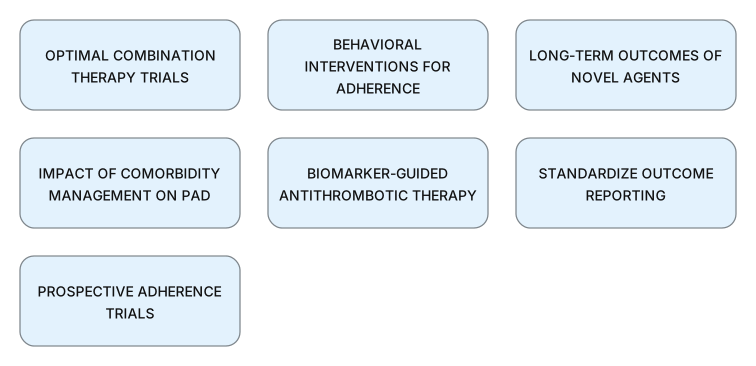
Figure 6. Future research directions (topics)