Peripheral Artery Disease Outcome: Systematic Review with ☸️SAIMSARA.


saimsara.com Download PDF

Abstract: This paper aims to systematically synthesize the current evidence on peripheral artery disease outcomes, identifying key prognostic indicators, the efficacy of various therapeutic strategies, and the influence of patient characteristics and comorbidities on disease progression and event rates. The review utilises 239 studies with 3154525 total participants (naïve ΣN). Outcomes in peripheral artery disease (PAD) patients demonstrate significant variability depending on disease severity, comorbidities, and treatment strategies. For instance, the annual death rate for symptomatic PAD patients admitted for endovascular repair was reported at 7.1%. This review highlights the complex interplay of prognostic factors, the efficacy of various pharmacological and interventional strategies, and the pervasive impact of health disparities on PAD outcomes. The heterogeneity of outcome reporting and the prevalence of observational study designs represent the most significant limitations to drawing definitive conclusions. Moving forward, a concrete next study should focus on implementing and evaluating targeted interventions to reduce the observed socioeconomic and racial disparities in PAD care and outcomes.

Keywords: Peripheral Artery Disease; Mortality; Limb Amputation; Major Adverse Limb Events; Major Adverse Cardiovascular Events; Revascularization

Review Stats
Identification of studies via Semantic Scholar (all fields) Identification Screening Included Records identified:n=124163Records excluded:n=123163 Records assessed for eligibilityn=1000Records excluded:n=761 Studies included in reviewn=239 PRISMA Diagram generated by ☸️ SAIMSARA
⛛OSMA Triangle Effect-of Predictor → Outcome peripheral artery disease  →  outcome Beneficial for patients ΣN=28108 (1%) Harmful for patients ΣN=824505 (26%) Neutral ΣN=2301912 (73%) 0 ⛛OSMA Triangle generated by ☸️SAIMSARA
Show OSMA legend
Outcome-Sentiment Meta-Analysis (OSMA): (LLM-only)
Frame: Effect-of Predictor → Outcome • Source: Semantic Scholar
Outcome: outcome Typical timepoints: 1-y, 12-mo. Reported metrics: %, CI, p.
Common endpoints: Common endpoints: mortality, complications, admission.
Predictor: peripheral artery disease — exposure/predictor. Doses/units seen: 1.94 mg, 1.35 mg, 30 mg. Routes seen: oral. Typical comparator: patients without bb, bare metal stents, usual care, control….

  • 1) Beneficial for patients — outcome with peripheral artery disease — [8], [9], [15], [16], [17], [19], [25], [28], [29], [32], [45], [72], [74], [75], [165], [175], [201], [204], [228], [229], [233] — ΣN=28108
  • 2) Harmful for patients — outcome with peripheral artery disease — [1], [2], [6], [7], [10], [12], [13], [18], [20], [21], [24], [26], [27], [31], [33], [34], [35], [36], [38], [40], [42], [48], [49], [50], [55], [59], [62], [63], [64], [66], [67], [68], [69], [151], [159], [163], [164], [166], [169], [172], [202], [203], [205], [206], [207], [208], [209], [210], [211], [212], [213], [215], [216], [218], [220], [221], [222], [223], [224], [226], [231], [232], [235], [237], [238], [239] — ΣN=824505
  • 3) No clear effect — outcome with peripheral artery disease — [3], [4], [5], [11], [14], [22], [23], [30], [37], [39], [41], [43], [44], [46], [47], [51], [52], [53], [54], [56], [57], [58], [60], [61], [65], [70], [71], [73], [76], [77], [78], [79], [80], [81], [82], [83], [84], [85], [86], [87], [88], [89], [90], [91], [92], [93], [94], [95], [96], [97], [98], [99], [100], [101], [102], [103], [104], [105], [106], [107], [108], [109], [110], [111], [112], [113], [114], [115], [116], [117], [118], [119], [120], [121], [122], [123], [124], [125], [126], [127], [128], [129], [130], [131], [132], [133], [134], [135], [136], [137], [138], [139], [140], [141], [142], [143], [144], [145], [146], [147], [148], [149], [150], [152], [153], [154], [155], [156], [157], [158], [160], [161], [162], [167], [168], [170], [171], [173], [174], [176], [177], [178], [179], [180], [181], [182], [183], [184], [185], [186], [187], [188], [189], [190], [191], [192], [193], [194], [195], [196], [197], [198], [199], [200], [214], [217], [219], [225], [227], [230], [234], [236] — ΣN=2301912
1) Introduction
Peripheral artery disease (PAD) is a chronic, progressive atherosclerotic condition affecting arteries outside of the heart and brain, predominantly in the lower extremities. It manifests with symptoms ranging from intermittent claudication (IC) to critical limb ischemia (CLI), significantly impacting patients' quality of life and functional capacity. PAD is associated with a high burden of cardiovascular morbidity and mortality, including major adverse cardiovascular events (MACE) and major adverse limb events (MALE), as well as an increased risk of amputation. Understanding the diverse outcomes in PAD, including prognostic factors, effective interventions, and existing disparities, is crucial for improving patient management and long-term prognosis.

2) Aim
This paper aims to systematically synthesize the current evidence on peripheral artery disease outcomes, identifying key prognostic indicators, the efficacy of various therapeutic strategies, and the influence of patient characteristics and comorbidities on disease progression and event rates.

3) Methods
Systematic review with multilayer AI research agent: keyword normalization, retrieval & structuring, and paper synthesis (see SAIMSARA About section for details).


4) Results
4.1 Study characteristics: The included studies predominantly consist of cohort designs (e.g., [1, 3, 4, 7]), mixed-design studies (e.g., [2, 5, 6]), and randomized controlled trials (RCTs) (e.g., [8, 9, 11]). Populations generally comprise patients with symptomatic PAD, often undergoing endovascular repair or revascularization, or those with specific comorbidities like diabetes. Sample sizes vary widely, from small experimental studies (e.g., N=15 [25]) to large registry analyses (e.g., N=41,702 [2], N=59,784 [5]). Follow-up periods range from short-term (e.g., 8 weeks [19]) to long-term (e.g., 10 years [32, 88]) or even decades (e.g., 21 years [64]).

4.2 Main numerical result aligned to the query:
Outcomes in peripheral artery disease (PAD) patients demonstrate significant variability depending on disease severity, comorbidities, and treatment strategies. For instance, the annual death rate for symptomatic PAD patients admitted for endovascular repair was reported at 7.1% [1]. One-year major amputation rates ranged from 0.7% in patients with claudication (Rutherford categories 2-3) to 18.3% in those with significant tissue loss (Rutherford category 6) following peripheral endovascular intervention [175]. Similarly, 1-year major adverse cardiovascular events (MACE) ranged from 8.2% in non-chronic limb-threatening ischemia (CLTI) patients to 29.5% in CLTI patients undergoing peripheral vascular intervention [197].

4.3 Topic synthesis:


5) Discussion
5.1 Principal finding: The annual death rate for symptomatic peripheral artery disease patients admitted for endovascular repair was reported at 7.1% [1], highlighting the significant mortality burden associated with this condition.

5.2 Clinical implications:


5.3 Research implications / key gaps:


5.4 Limitations:


5.5 Future directions:


6) Conclusion
Outcomes in peripheral artery disease (PAD) patients demonstrate significant variability depending on disease severity, comorbidities, and treatment strategies. For instance, the annual death rate for symptomatic PAD patients admitted for endovascular repair was reported at 7.1% [1]. This review highlights the complex interplay of prognostic factors, the efficacy of various pharmacological and interventional strategies, and the pervasive impact of health disparities on PAD outcomes. The heterogeneity of outcome reporting and the prevalence of observational study designs represent the most significant limitations to drawing definitive conclusions. Moving forward, a concrete next study should focus on implementing and evaluating targeted interventions to reduce the observed socioeconomic and racial disparities in PAD care and outcomes.

References
SAIMSARA Session Index — session.json

Figure 1. Publication-year distribution of included originals

Figure 2. Study-design distribution of included originals
Figure 2. Study-design distribution

Figure 3. Study-type (directionality) distribution of included originals
Figure 3. Directionality distribution

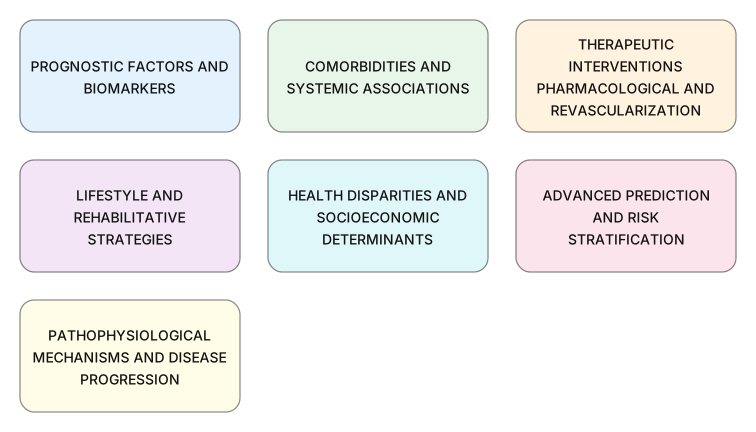
Figure 4. Main extracted research topics
Figure 4. Main extracted research topics (Results)

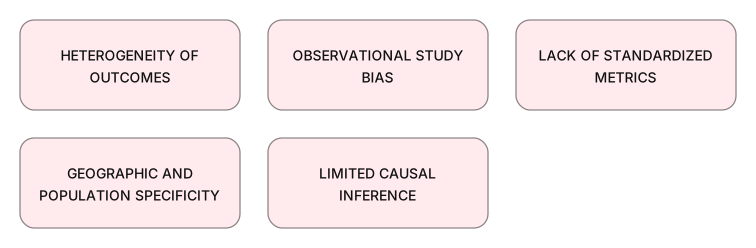
Figure 5. Limitations of current studies (topics)

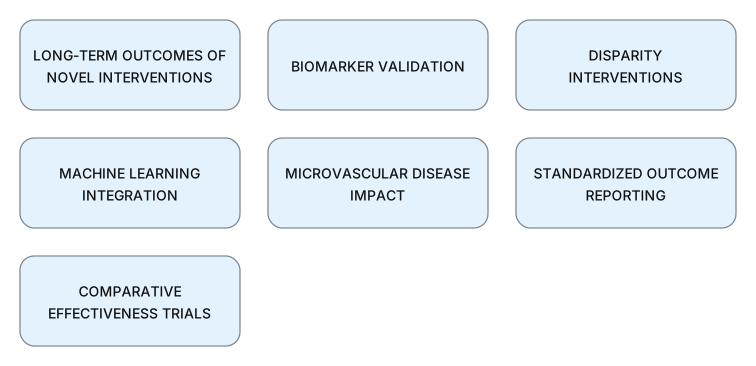
Figure 6. Future research directions (topics)