Peripheral Artery Disease and Smoking: Systematic Review with ☸️SAIMSARA.


saimsara.com Download PDF

Abstract: The aim of this paper is to comprehensively synthesize the evidence concerning the association between peripheral artery disease and smoking, including its epidemiological impact, biological mechanisms, clinical consequences, and the efficacy and challenges of smoking cessation interventions. The review utilises 232 studies with 2583291 total participants (naïve ΣN). The median odds ratio or hazard ratio for the association between current/active smoking (or genetic liability to smoking) and peripheral artery disease was 2.36, ranging from 1.301 to 4.01, unequivocally establishing smoking as a potent risk factor for PAD. While the decline in smoking-related PAD burden is observed in high-income countries, significant challenges persist in achieving widespread cessation, particularly among affected patient populations. The heterogeneity of study designs and variability in reporting metrics represent the most significant limitations to synthesizing a unified understanding. Therefore, a practical takeaway for clinicians is the critical and continuous emphasis on smoking cessation for all PAD patients, coupled with robust support mechanisms.

Keywords: Peripheral Artery Disease; Smoking; Cigarette Smoking; Smoking Cessation; Risk Factors; Atherosclerosis; Cardiovascular Disease; Disease Burden; Mortality; Inflammation

Review Stats
Identification of studies via Semantic Scholar (all fields) Identification Screening Included Records identified:n=3618Records excluded:n=2618 Records assessed for eligibilityn=1000Records excluded:n=768 Studies included in reviewn=232 PRISMA Diagram generated by ☸️ SAIMSARA
⛛OSMA Triangle Effect-of Predictor → Outcome smoking  →  peripheral artery disease Beneficial for patients ΣN=6681 (0%) Harmful for patients ΣN=2135119 (83%) Neutral ΣN=441491 (17%) 0 ⛛OSMA Triangle generated by ☸️SAIMSARA
Show OSMA legend
Outcome-Sentiment Meta-Analysis (OSMA): (LLM-only)
Frame: Effect-of Predictor → Outcome • Source: Semantic Scholar
Outcome: peripheral artery disease Typical timepoints: 10-y, 12-mo. Reported metrics: %, CI, p.
Common endpoints: Common endpoints: complications, mortality, admission.
Predictor: smoking — exposure/predictor. Doses/units seen: 60 g. Typical comparator: high sdi countries in the past, healthy individuals, never smokers, men….

  • 1) Beneficial for patients — peripheral artery disease with smoking — [2], [12], [24], [25], [39], [109], [200], [211] — ΣN=6681
  • 2) Harmful for patients — peripheral artery disease with smoking — [1], [3], [5], [7], [8], [9], [11], [13], [14], [15], [16], [19], [20], [22], [26], [28], [30], [33], [34], [35], [37], [41], [44], [45], [46], [49], [50], [51], [52], [54], [55], [56], [59], [62], [63], [65], [66], [67], [71], [74], [75], [102], [103], [104], [105], [108], [115], [116], [118], [119], [121], [122], [123], [124], [125], [151], [152], [153], [154], [155], [157], [158], [159], [160], [161], [162], [165], [166], [167], [168], [169], [170], [172], [173], [174], [176], [178], [179], [180], [181], [183], [184], [185], [186], [188], [190], [199], [203], [204], [205], [208], [212], [215], [218], [219], [221], [223], [224], [227] — ΣN=2135119
  • 3) No clear effect — peripheral artery disease with smoking — [4], [6], [10], [17], [18], [21], [23], [27], [29], [31], [32], [36], [38], [40], [42], [43], [47], [48], [53], [57], [58], [60], [61], [64], [68], [69], [70], [72], [73], [76], [77], [78], [79], [80], [81], [82], [83], [84], [85], [86], [87], [88], [89], [90], [91], [92], [93], [94], [95], [96], [97], [98], [99], [100], [101], [106], [107], [110], [111], [112], [113], [114], [117], [120], [126], [127], [128], [129], [130], [131], [132], [133], [134], [135], [136], [137], [138], [139], [140], [141], [142], [143], [144], [145], [146], [147], [148], [149], [150], [156], [163], [164], [171], [175], [177], [182], [187], [189], [191], [192], [193], [194], [195], [196], [197], [198], [201], [202], [206], [207], [209], [210], [213], [214], [216], [217], [220], [222], [225], [226], [228], [229], [230], [231], [232] — ΣN=441491
1) Introduction
Peripheral artery disease (PAD) represents a significant global health burden, characterized by atherosclerotic narrowing of non-coronary arteries, most commonly affecting the lower extremities. A wealth of evidence consistently identifies cigarette smoking as a primary and potent risk factor for the development and progression of PAD, exerting a profound influence on its incidence, severity, and clinical outcomes. This paper synthesizes current research on the intricate relationship between smoking and PAD, encompassing epidemiological trends, underlying biological mechanisms, clinical implications of smoking cessation, and the challenges in managing this critical modifiable risk factor.

2) Aim
The aim of this paper is to comprehensively synthesize the evidence concerning the association between peripheral artery disease and smoking, including its epidemiological impact, biological mechanisms, clinical consequences, and the efficacy and challenges of smoking cessation interventions.

3) Methods
Systematic review with multilayer AI research agent: keyword normalization, retrieval & structuring, and paper synthesis (see SAIMSARA About section for details).


4) Results
4.1 Study characteristics:
The included studies comprised a diverse range of designs, including randomized controlled trials (RCTs) [2, 43, 75, 133, 142, 148, 211, 230, 231], prospective and retrospective cohort studies [3, 6, 7, 8, 10, 11, 14, 15, 16, 17, 19, 20, 24, 27, 28, 29, 30, 31, 33, 34, 35, 36, 38, 39, 41, 42, 46, 47, 48, 49, 50, 51, 54, 55, 58, 62, 63, 65, 66, 67, 68, 69, 71, 73, 75, 76, 77, 81, 83, 84, 86, 91, 92, 95, 96, 97, 98, 102, 103, 107, 112, 113, 117, 118, 119, 120, 121, 122, 123, 125, 128, 129, 130, 135, 137, 138, 146, 149, 150, 154, 155, 156, 157, 159, 160, 161, 162, 163, 164, 165, 167, 168, 171, 172, 173, 175, 176, 177, 178, 181, 182, 183, 184, 188, 189, 190, 193, 194, 195, 197, 200, 201, 203, 204, 208, 210, 215, 218, 222, 223, 224, 225, 228, 229], cross-sectional studies [4, 5, 9, 12, 13, 26, 32, 37, 45, 48, 49, 50, 52, 53, 59, 64, 67, 70, 72, 79, 90, 93, 101, 110, 126, 127, 133, 141, 151, 152, 153, 158, 166, 169, 180, 183, 187, 191, 192, 196, 198, 205, 213, 214, 216, 217, 220, 226, 227], and case-control studies [13, 32, 51, 53, 64, 70, 110, 170, 180, 191, 206, 227]. Populations varied widely, from general U.S. and high socio-demographic index (SDI) countries [1] to specific cohorts like Swedish men [3], individuals with type 2 diabetes [37, 55, 59, 81, 104, 115, 119, 123, 132, 137, 139, 162, 165, 166, 197, 208, 212, 226, 227, 230], Black individuals [28, 50, 73, 189], and patients undergoing various vascular procedures [14, 36, 38, 75, 96, 97, 100, 113, 114, 129, 147, 161, 196, 215, 217, 219, 224, 229]. Follow-up periods ranged from N/A for cross-sectional studies to 25 years [54], with common durations including 9.1 years [3], 11.9 years [15], 12.6 years [20], and 31 months [1].

4.2 Main numerical result aligned to the query:
The median odds ratio (OR) or hazard ratio (HR) for the association between current/active smoking (or genetic liability to smoking) and the presence or development of peripheral artery disease was 2.36 [143], with values ranging from 1.301 [168] to 4.01 [3]. This indicates a consistently elevated risk of PAD in smokers across various populations and study designs.

4.3 Topic synthesis:


5) Discussion
5.1 Principal finding:
The median odds or hazard ratio for the association between current/active smoking (or genetic liability to smoking) and peripheral artery disease was 2.36 [143], ranging from 1.301 [168] to 4.01 [3], indicating that smokers face a substantially increased risk of developing or having PAD compared to non-smokers.

5.2 Clinical implications:


5.3 Research implications / key gaps:


5.4 Limitations:


5.5 Future directions:


6) Conclusion
The median odds ratio or hazard ratio for the association between current/active smoking (or genetic liability to smoking) and peripheral artery disease was 2.36 [143], ranging from 1.301 [168] to 4.01 [3], unequivocally establishing smoking as a potent risk factor for PAD. While the decline in smoking-related PAD burden is observed in high-income countries, significant challenges persist in achieving widespread cessation, particularly among affected patient populations. The heterogeneity of study designs and variability in reporting metrics represent the most significant limitations to synthesizing a unified understanding. Therefore, a practical takeaway for clinicians is the critical and continuous emphasis on smoking cessation for all PAD patients, coupled with robust support mechanisms.

References
SAIMSARA Session Index — session.json

Figure 1. Publication-year distribution of included originals

Figure 2. Study-design distribution of included originals
Figure 2. Study-design distribution

Figure 3. Study-type (directionality) distribution of included originals
Figure 3. Directionality distribution

Figure 4. Main extracted research topics
Figure 4. Main extracted research topics (Results)

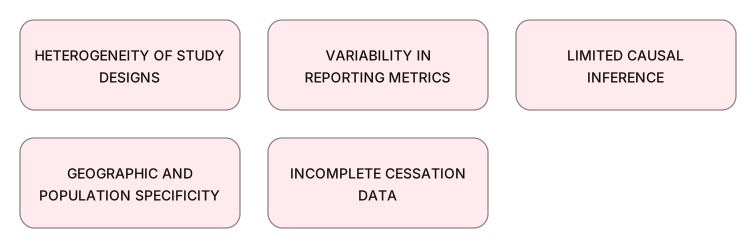
Figure 5. Limitations of current studies (topics)

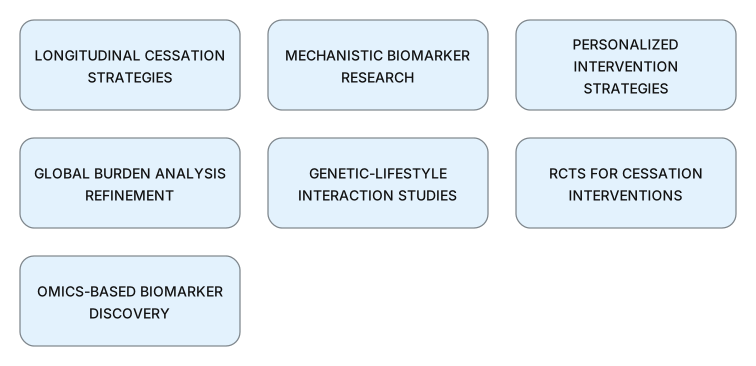
Figure 6. Future research directions (topics)