
SAIMSARA Journal

Machine Generated Science • ISSN 3054-3991

Personalized Healthcare and Precision Medicine: Scoping Review with ☸️SAIMSARA.

Longevity icon

Longevity & Public Health

Issue 2, Volume 1, 2026

DOI: 10.62487/saimsaraec3e56f2

Editorial note
• Last update: 2026-04-27 08:57:50
What is this paper about
Personalized healthcare is no longer just a promise of precision medicine — this review shows where it is already becoming clinically real, from AI prediction and pharmacogenomics to wearable monitoring and tailored care pathways. Across more than 1,300 original studies, the paper maps which personalized strategies are truly improving diagnosis, chronic disease control, and care delivery — and where the field still risks failing on fairness, infrastructure, and real-world implementation.
Additional notes
References [347] and [1147] are cited in preprint form.
Human-verified editorial review Verified by World ID proof-of-human. This editorial layer was submitted from a SAIMSARA account verified as a unique human.

Evidence preview · Did you know?
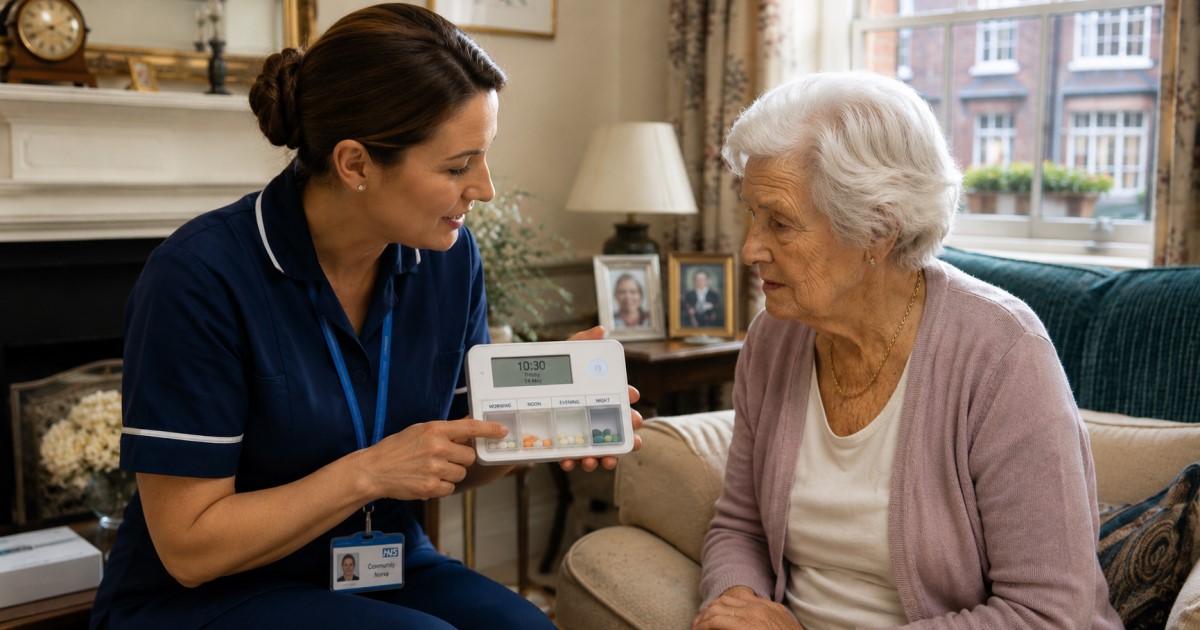
Realistic personalized healthcare scene showing remote monitoring, home care, and reduced hospital use.

Personalization can reduce hospital use

Did you know? One personalized home-health system reduced rehospitalization from 12% to 6% and emergency visits from 21% to 9%.

Personalized care is not only predictive — it can change real hospital use.

Realistic clinical AI dashboard showing patient-specific diagnostic prediction and precision medicine signals.

Personalized AI is already measurable

Did you know? AI-driven personalization reported a 10.70% gain in diagnosis prediction, while one smart diagnostic scheme reached 97.16% accuracy.

The strongest signal is that personalized AI is already producing measurable diagnostic gains.

Realistic precision medicine governance scene showing privacy, consent, genomic data, and patient trust.

Trust is the real bottleneck

Did you know? In one multinational survey, only 12.11% had high knowledge of personalized medicine, yet 81.5% supported genetic testing and 52.35% were willing to share health data.

Adoption may depend less on enthusiasm than on literacy, trust, privacy, and governance.

Swipe sideways on mobile · full evidence map opens after unlock

Abstract: The aim of this paper is to synthesize evidence regarding the development, implementation, and evaluation of personalized healthcare strategies, focusing on AI-driven predictive modeling, digital health technologies, and the socio-educational barriers to clinical integration. The review utilises 1334 original studies with 9573007 total participants (topic deduplicated ΣN). This evidence map suggests that personalized healthcare is increasingly being operationalized through artificial intelligence-enabled prediction, pharmacogenomics, digital self-management, and continuous sensing, with prominent signals including a 10.70% gain in diagnosis prediction, up to 97.16% diagnostic accuracy in personalized federated smart healthcare, and clinically relevant improvements in chronic disease management such as better glycemic and blood pressure control. Across the mapped literature, the most consistent pattern was that individualized recommendations, monitoring, and communication were associated with better alignment of care to patient risk, treatment response, and daily context, particularly in diabetes, cardiovascular care, medication management, rehabilitation, and maternal or elderly care. The review also highlights that personalized healthcare is not only a computational enterprise but a delivery-system challenge, because implementation depends on interoperable data infrastructure, privacy-preserving governance, workforce readiness, and equitable representation in genomic and algorithmic models. For practice, the findings support a role for embedding personalized decision support, remote monitoring, and tailored education into routine care pathways where they can strengthen prevention, adherence, and earlier intervention. At the same time, the mapped evidence remains heterogeneous and often short term, so the field would benefit most from prospective, clinically embedded studies that use standardized outcomes, include diverse populations, and test whether personalized models remain effective, fair, and sustainable over time.

Keywords: Personalized Healthcare; Federated Learning; Electronic Health Records; Machine Learning; Wearable Health Monitoring; Patient-Centered Care; Predictive Analytics; Deep Learning; Precision Medicine; Health Information Technology

Review Stats

Get access to the full paper

Unlock the full evidence map

The full evidence review, including the Introduction, Methods, Results, Discussion, Conclusion, figures, and complete reference index, opens after purchase or sign-in. The Evidence Object JSON is a separate machine-readable evidence product: a concentrated synthesis of results, topic-level evidence, and discussion across original and non-original studies. It can be directly input into your LLM, agent, or RAG workflow.

Reference Index (337)