Risk Factors of Aortic Aneurysm: Systematic Review with ☸️SAIMSARA.


saimsara.com Download PDF

Abstract: The aim of this paper is to systematically identify and synthesize the risk factors associated with aortic aneurysm and dissection based on a structured extraction summary of scientific literature. The review utilises 206 studies with 852286 total participants (naïve ΣN). The prevalence of abdominal aortic aneurysm (AAA) ranges from 0.33% to 9.0%, with a median prevalence of 2.3% across diverse populations and screening contexts. This highlights the significant, albeit variable, burden of aortic aneurysm disease. The generalizability of these findings is somewhat limited by the heterogeneity of study designs and populations included in the synthesis. The inconsistent outcome metrics across studies most affects certainty in drawing universal conclusions. Clinicians should prioritize aggressive management of modifiable risk factors, particularly smoking and hypertension, and consider targeted screening for high-risk individuals.

Keywords: Smoking; Hypertension; Obesity; Dyslipidemia; Alcohol consumption; Physical inactivity; Genetic factors; High systolic blood pressure; Dietary sodium intake; Lead exposure

Review Stats
Identification of studies via Semantic Scholar (all fields) Identification Screening Included Records identified:n=5700Records excluded:n=4700 Records assessed for eligibilityn=1000Records excluded:n=794 Studies included in reviewn=206 PRISMA Diagram generated by ☸️ SAIMSARA
⛛OSMA Triangle Effect-of Predictor → Outcome risk factors  →  aortic aneurysm Beneficial for patients ΣN=4468 (1%) Harmful for patients ΣN=744814 (87%) Neutral ΣN=103004 (12%) 0 ⛛OSMA Triangle generated by ☸️SAIMSARA
Show OSMA legend
Outcome-Sentiment Meta-Analysis (OSMA): (LLM-only)
Frame: Effect-of Predictor → Outcome • Source: Semantic Scholar
Outcome: aortic aneurysm Typical timepoints: peri/post-op, 10-y. Reported metrics: %, CI, p.
Common endpoints: Common endpoints: mortality, complications, survival.
Predictor: risk factors — exposure/predictor. Doses/units seen: 25 kg, 455g. Routes seen: oral, iv. Typical comparator: thoracic aortic aneurysms, noncarriers, controls, patients operated on for….

  • 1) Beneficial for patients — aortic aneurysm with risk factors — [125] — ΣN=4468
  • 2) Harmful for patients — aortic aneurysm with risk factors — [1], [2], [3], [4], [5], [7], [8], [9], [10], [12], [13], [14], [16], [18], [19], [21], [23], [24], [26], [27], [29], [31], [33], [37], [38], [41], [42], [45], [46], [48], [50], [64], [69], [70], [75], [76], [80], [81], [85], [86], [87], [89], [90], [91], [92], [94], [95], [97], [99], [106], [107], [109], [110], [111], [118], [119], [121], [123], [126], [128], [129], [130], [132], [133], [134], [136], [137], [138], [140], [141], [142], [143], [144], [145], [147], [148], [149], [150], [165], [176], [177], [180], [181], [182], [183], [184], [186], [190], [191], [192], [194], [195], [196], [197], [198], [199], [200], [201], [202], [204], [205] — ΣN=744814
  • 3) No clear effect — aortic aneurysm with risk factors — [6], [11], [15], [17], [20], [22], [25], [28], [30], [32], [34], [35], [36], [39], [40], [43], [44], [47], [49], [51], [52], [53], [54], [55], [56], [57], [58], [59], [60], [61], [62], [63], [65], [66], [67], [68], [71], [72], [73], [74], [77], [78], [79], [82], [83], [84], [88], [93], [96], [98], [100], [101], [102], [103], [104], [105], [108], [112], [113], [114], [115], [116], [117], [120], [122], [124], [127], [131], [135], [139], [146], [151], [152], [153], [154], [155], [156], [157], [158], [159], [160], [161], [162], [163], [164], [166], [167], [168], [169], [170], [171], [172], [173], [174], [175], [178], [179], [185], [187], [188], [189], [193], [203], [206] — ΣN=103004
1) Introduction
Aortic aneurysms (AA) and aortic dissections (AD) represent significant cardiovascular pathologies with increasing global burden, particularly early-onset forms [2]. While age-standardized mortality rates have shown some decline in certain regions and globally over past decades [8, 10, 35], recent projections indicate a potential rebound and increase in the global death burden of AA [9]. Identifying and understanding the diverse risk factors contributing to the development, progression, and rupture of aortic aneurysms is crucial for effective prevention, early diagnosis, and improved patient outcomes. This paper synthesizes current research on established and emerging risk factors, encompassing demographic, lifestyle, metabolic, genetic, and hemodynamic influences.

2) Aim
The aim of this paper is to systematically identify and synthesize the risk factors associated with aortic aneurysm and dissection based on a structured extraction summary of scientific literature.

3) Methods
Systematic review with multilayer AI research agent: keyword normalization, retrieval & structuring, and paper synthesis (see SAIMSARA About section for details).


4) Results
4.1 Study characteristics:
The structured summary includes studies with diverse designs, primarily cohort (n=30), mixed (n=30), and case-control (n=7), along with cross-sectional (n=3) and one RCT. Populations ranged from global cohorts across 204 countries and regions [2, 8] to specific demographics such as 65-year-old men in Oslo [21], community-based Japanese cohorts [5], and patients of European ancestry [3]. Follow-up periods varied significantly, from short-term (e.g., 90-day incidence [119]) to long-term durations up to 34 years [26].

4.2 Main numerical result aligned to the query:
The prevalence of abdominal aortic aneurysm (AAA) varied considerably across different populations and screening contexts, with a median prevalence of 2.3% and a range from 0.33% in Middle China (aged 40 years or older) [25] to 9.0% in patients with intermittent claudication [80]. Specifically, the overall prevalence of aortic aneurysms was reported as 2.1% in the general population [118], 4.8% in Europe [201], and 0.92% globally among persons aged 30 to 79 years [180].

4.3 Topic synthesis:


5) Discussion
5.1 Principal finding:
The prevalence of abdominal aortic aneurysm (AAA) ranges from 0.33% to 9.0%, with a median prevalence of 2.3% across diverse populations and screening contexts [25, 48, 64, 75, 80, 118, 176, 180, 201]. This highlights the significant, albeit variable, burden of aortic aneurysm disease.

5.2 Clinical implications:


5.3 Research implications / key gaps:


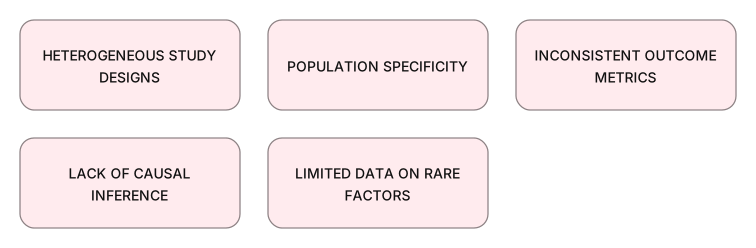
5.4 Limitations:


5.5 Future directions:


6) Conclusion
The prevalence of abdominal aortic aneurysm (AAA) ranges from 0.33% to 9.0%, with a median prevalence of 2.3% across diverse populations and screening contexts [25, 48, 64, 75, 80, 118, 176, 180, 201]. This highlights the significant, albeit variable, burden of aortic aneurysm disease. The generalizability of these findings is somewhat limited by the heterogeneity of study designs and populations included in the synthesis. The inconsistent outcome metrics across studies most affects certainty in drawing universal conclusions. Clinicians should prioritize aggressive management of modifiable risk factors, particularly smoking and hypertension, and consider targeted screening for high-risk individuals.

References
SAIMSARA Session Index — session.json

Figure 1. Publication-year distribution of included originals

Figure 2. Study-design distribution of included originals
Figure 2. Study-design distribution

Figure 3. Study-type (directionality) distribution of included originals
Figure 3. Directionality distribution

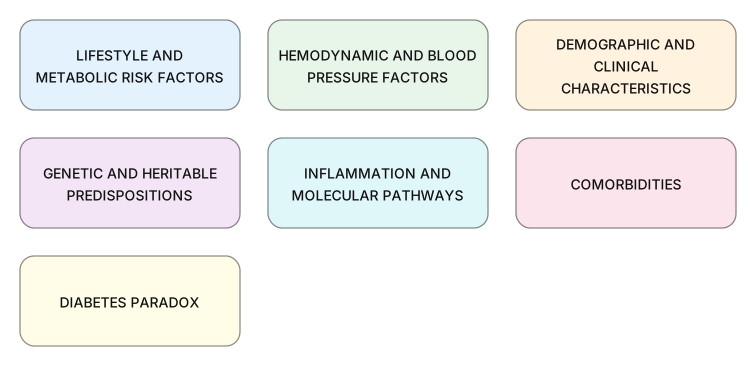
Figure 4. Main extracted research topics
Figure 4. Main extracted research topics (Results)

Figure 5. Limitations of current studies (topics)

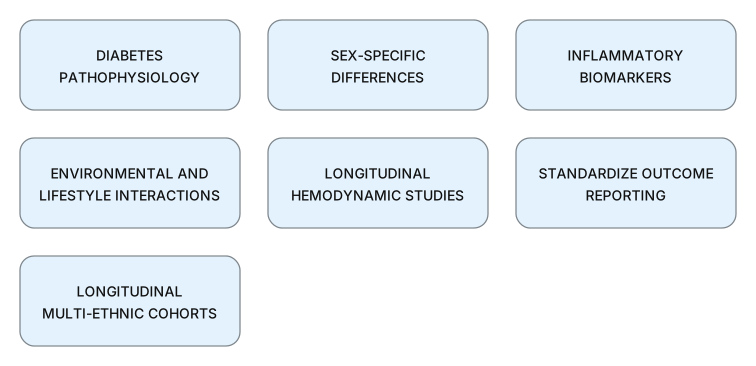
Figure 6. Future research directions (topics)