Statin Therapy: Systematic Review with ☸️SAIMSARA.


saimsara.com Download PDF

Abstract: The aim of this paper is to systematically review and synthesize current evidence on statin therapy, identifying its multifaceted clinical outcomes, mechanisms, challenges in implementation, and areas for future research. The review utilises 214 studies with 4085869 total participants (naïve ΣN). Statin therapy is a highly effective intervention, fundamentally altering lipid profiles by reducing LDL-C and consistently lowering the risk of major adverse cardiovascular events and mortality. Beyond its primary cardiovascular benefits, evidence suggests statins offer protective effects across a spectrum of non-cardiovascular conditions, including certain cancers, infections, and neurodegenerative diseases. However, challenges persist in achieving optimal LDL-C goals, improving patient adherence, and fully understanding the mechanisms underlying statins' pleiotropic effects. A notable limitation is the heterogeneity in study designs and outcome reporting, which complicates direct quantitative comparisons. Future research should prioritize standardizing outcome metrics and investigating genetic and microbiome factors to personalize statin therapy and maximize its broad health benefits.

Keywords: Statin therapy; Cardiovascular disease; LDL cholesterol; Atherosclerosis; Inflammation; Diabetes mellitus; Plaque regression; Medication adherence; Myocardial infarction; Neurodegenerative diseases

Review Stats
Identification of studies via Semantic Scholar (all fields) Identification Screening Included Records identified:n=4630172Records excluded:n=4629172 Records assessed for eligibilityn=1000Records excluded:n=786 Studies included in reviewn=214 PRISMA Diagram generated by ☸️ SAIMSARA
⛛OSMA Triangle Effect-of Predictor → Outcome statin therapy  →  Outcome Beneficial for patients ΣN=1567855 (38%) Harmful for patients ΣN=613700 (15%) Neutral ΣN=1904314 (47%) 0 ⛛OSMA Triangle generated by ☸️SAIMSARA
Show OSMA legend
Outcome-Sentiment Meta-Analysis (OSMA): (LLM-only)
Frame: Effect-of Predictor → Outcome • Source: Semantic Scholar
Outcome: Outcome Typical timepoints: 12-mo, 6-mo. Reported metrics: %, CI, p.
Common endpoints: Common endpoints: mortality, complications, admission.
Predictor: statin therapy — exposure/predictor. Doses/units seen: 70 mg. Routes seen: oral. Typical comparator: placebo, placebo over 18 months, placebo or monotherapies when, low- or moderate-intensity….

  • 1) Beneficial for patients — Outcome with statin therapy — [10], [11], [13], [16], [17], [19], [21], [23], [26], [32], [34], [65], [70], [78], [87], [101], [106], [107], [112], [113], [114], [123], [124], [130], [131], [137], [140], [144], [147], [181], [182], [184], [185], [187], [188], [192], [197], [198], [208], [209], [210] — ΣN=1567855
  • 2) Harmful for patients — Outcome with statin therapy — [5], [12], [109], [141], [146], [148], [150] — ΣN=613700
  • 3) No clear effect — Outcome with statin therapy — [1], [2], [3], [4], [6], [7], [8], [9], [14], [15], [18], [20], [22], [24], [25], [27], [28], [29], [30], [31], [33], [35], [36], [37], [38], [39], [40], [41], [42], [43], [44], [45], [46], [47], [48], [49], [50], [51], [52], [53], [54], [55], [56], [57], [58], [59], [60], [61], [62], [63], [64], [66], [67], [68], [69], [71], [72], [73], [74], [75], [76], [77], [79], [80], [81], [82], [83], [84], [85], [86], [88], [89], [90], [91], [92], [93], [94], [95], [96], [97], [98], [99], [100], [102], [103], [104], [105], [108], [110], [111], [115], [116], [117], [118], [119], [120], [121], [122], [125], [126], [127], [128], [129], [132], [133], [134], [135], [136], [138], [139], [142], [143], [145], [149], [151], [152], [153], [154], [155], [156], [157], [158], [159], [160], [161], [162], [163], [164], [165], [166], [167], [168], [169], [170], [171], [172], [173], [174], [175], [176], [177], [178], [179], [180], [183], [186], [189], [190], [191], [193], [194], [195], [196], [199], [200], [201], [202], [203], [204], [205], [206], [207], [211], [212], [213], [214] — ΣN=1904314
1) Introduction
Statin therapy represents a cornerstone in the management of cardiovascular diseases (CVD) by primarily targeting dyslipidemia, particularly elevated low-density lipoprotein cholesterol (LDL-C). Beyond their lipid-lowering capabilities, statins exhibit a range of pleiotropic effects, influencing inflammation, plaque stabilization, and potentially impacting various non-cardiovascular conditions. This paper synthesizes a broad spectrum of research on statin therapy, encompassing its efficacy in primary and secondary prevention, its effects on diverse patient populations, associated risks, and emerging insights into its mechanisms of action.

2) Aim
The aim of this paper is to systematically review and synthesize current evidence on statin therapy, identifying its multifaceted clinical outcomes, mechanisms, challenges in implementation, and areas for future research.

3) Methods
Systematic review with multilayer AI research agent: keyword normalization, retrieval & structuring, and paper synthesis (see SAIMSARA About section for details).


4) Results
4.1 Study characteristics:
The included studies comprise a diverse range of designs, with a notable prevalence of randomized controlled trials (RCTs) and cohort studies, alongside mixed-design, cross-sectional, experimental, and case-control investigations. Populations studied are extensive, covering patients with or at high risk of atherosclerotic disease, acute myocardial infarction, familial hypercholesterolemia, diabetes, chronic kidney disease, various infections (e.g., SARS-CoV-2, pneumonia, HIV, tuberculosis), and specific conditions like cancer, cirrhosis, and inflammatory diseases. Follow-up periods varied widely, from short durations of weeks or months to extended periods of up to 20 years, with many studies not specifying a follow-up duration.

4.2 Main numerical result aligned to the query:
Due to heterogeneity in outcome metrics, units, and timepoints across studies, a single central value for the direct effect of statin therapy on lipid reduction or cardiovascular events cannot be precisely computed. However, statin therapy consistently demonstrates significant reductions in low-density lipoprotein cholesterol and a lower risk of major adverse cardiovascular events and mortality across various patient populations. For example, statin treatment for 5 years was associated with a 24% reduction in myocardial infarction and a 35% reduction in heart failure over a 20-year period [23]. In patients with acute myocardial infarction, statin use within 24 hours of hospitalization was associated with a significantly lower in-hospital mortality rate of 4.0% compared to 15.4% in those without statin use [172].

4.3 Topic synthesis:


5) Discussion
5.1 Principal finding:
Statin therapy is unequivocally effective in reducing low-density lipoprotein cholesterol and is associated with a lower risk of major adverse cardiovascular events and mortality across a wide range of patient populations [23, 172].

5.2 Clinical implications:


5.3 Research implications / key gaps:


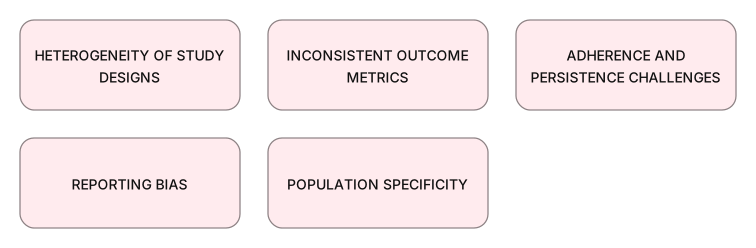
5.4 Limitations:


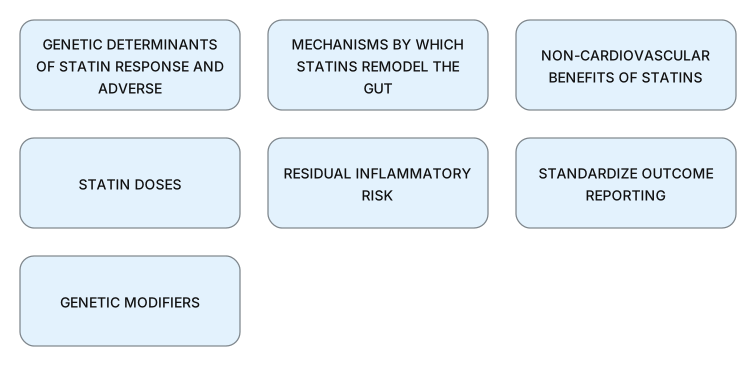
5.5 Future directions:


6) Conclusion
Statin therapy is a highly effective intervention, fundamentally altering lipid profiles by reducing LDL-C and consistently lowering the risk of major adverse cardiovascular events and mortality. Beyond its primary cardiovascular benefits, evidence suggests statins offer protective effects across a spectrum of non-cardiovascular conditions, including certain cancers, infections, and neurodegenerative diseases. However, challenges persist in achieving optimal LDL-C goals, improving patient adherence, and fully understanding the mechanisms underlying statins' pleiotropic effects. A notable limitation is the heterogeneity in study designs and outcome reporting, which complicates direct quantitative comparisons. Future research should prioritize standardizing outcome metrics and investigating genetic and microbiome factors to personalize statin therapy and maximize its broad health benefits.

References
SAIMSARA Session Index — session.json

Figure 1. Publication-year distribution of included originals

Figure 2. Study-design distribution of included originals
Figure 2. Study-design distribution

Figure 3. Study-type (directionality) distribution of included originals
Figure 3. Directionality distribution

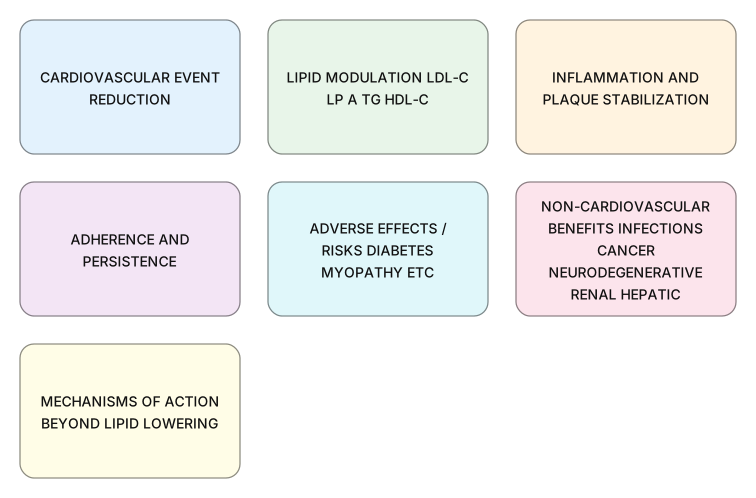
Figure 4. Main extracted research topics
Figure 4. Main extracted research topics (Results)

Figure 5. Limitations of current studies (topics)

Figure 6. Future research directions (topics)