Symptomatic Carotid Stenosis: Systematic Review with ☸️SAIMSARA.


saimsara.com Download PDF

Abstract: To systematically review the evidence on symptomatic carotid stenosis, synthesizing key findings regarding its diagnosis, risk factors, treatment efficacy, and plaque characteristics, and to identify critical gaps for future research. The review utilises 229 studies with 84507 total participants (naïve ΣN). The perioperative stroke or death rate for carotid endarterectomy (CEA) in symptomatic carotid stenosis patients ranged from 1.7% to 8.1%, with a median of 4.0%, while for carotid artery stenting (CAS) or transfemoral carotid artery stenting (TFCAS), it ranged from 2.0% to 8.5%, with a median of 5.1%. This review highlights the ongoing debate and evolving landscape of interventions for symptomatic carotid stenosis, emphasizing the importance of individualized patient assessment. The heterogeneity in study designs and outcome definitions across the literature is the single limitation that most affects certainty in drawing definitive conclusions. Clinicians should consider plaque characteristics and the timing of intervention in addition to stenosis degree when selecting revascularization strategies, with newer techniques like TCAR showing promise.

Keywords: Symptomatic Carotid Stenosis; Carotid Endarterectomy; Stroke

Review Stats
Identification of studies via Semantic Scholar (all fields) Identification Screening Included Records identified:n=52833Records excluded:n=51833 Records assessed for eligibilityn=1000Records excluded:n=771 Studies included in reviewn=229 PRISMA Diagram generated by ☸️ SAIMSARA
⛛OSMA Triangle Effect-of Predictor → Outcome carotid stenosis  →  symptomatic Beneficial for patients ΣN=7998 (9%) Harmful for patients ΣN=38553 (46%) Neutral ΣN=37956 (45%) 0 ⛛OSMA Triangle generated by ☸️SAIMSARA
Show OSMA legend
Outcome-Sentiment Meta-Analysis (OSMA): (LLM-only)
Frame: Effect-of Predictor → Outcome • Source: Semantic Scholar
Outcome: symptomatic Typical timepoints: peri/post-op, 7-day. Reported metrics: %, CI, p.
Common endpoints: Common endpoints: complications, mortality, occlusion.
Predictor: carotid stenosis — exposure/predictor. Routes seen: intravenous. Typical comparator: endarterectomy for the, carotid endarterectomy, optimized medical therapy, cea across all timing cohorts….

  • 1) Beneficial for patients — symptomatic with carotid stenosis — [9], [31], [36], [37], [41], [42], [46], [75], [85] — ΣN=7998
  • 2) Harmful for patients — symptomatic with carotid stenosis — [4], [7], [12], [13], [16], [22], [27], [29], [67], [76], [78], [89], [90], [97], [100], [206], [224], [225], [226], [228], [229] — ΣN=38553
  • 3) No clear effect — symptomatic with carotid stenosis — [1], [2], [3], [5], [6], [8], [10], [11], [14], [15], [17], [18], [19], [20], [21], [23], [24], [25], [26], [28], [30], [32], [33], [34], [35], [38], [39], [40], [43], [44], [45], [47], [48], [49], [50], [51], [52], [53], [54], [55], [56], [57], [58], [59], [60], [61], [62], [63], [64], [65], [66], [68], [69], [70], [71], [72], [73], [74], [77], [79], [80], [81], [82], [83], [84], [86], [87], [88], [91], [92], [93], [94], [95], [96], [98], [99], [101], [102], [103], [104], [105], [106], [107], [108], [109], [110], [111], [112], [113], [114], [115], [116], [117], [118], [119], [120], [121], [122], [123], [124], [125], [126], [127], [128], [129], [130], [131], [132], [133], [134], [135], [136], [137], [138], [139], [140], [141], [142], [143], [144], [145], [146], [147], [148], [149], [150], [151], [152], [153], [154], [155], [156], [157], [158], [159], [160], [161], [162], [163], [164], [165], [166], [167], [168], [169], [170], [171], [172], [173], [174], [175], [176], [177], [178], [179], [180], [181], [182], [183], [184], [185], [186], [187], [188], [189], [190], [191], [192], [193], [194], [195], [196], [197], [198], [199], [200], [201], [202], [203], [204], [205], [207], [208], [209], [210], [211], [212], [213], [214], [215], [216], [217], [218], [219], [220], [221], [222], [223], [227] — ΣN=37956
1) Introduction
Symptomatic carotid stenosis, characterized by narrowing of the carotid arteries accompanied by transient ischemic attacks (TIAs), amaurosis fugax, retinal ischemia, or ischemic stroke, represents a significant risk factor for recurrent cerebrovascular events [4, 28, 164]. Early identification and appropriate management are crucial for preventing further neurological deficits and functional impairment [23, 37]. Over decades, research has focused on the efficacy and safety of various interventions, including carotid endarterectomy (CEA) and carotid artery stenting (CAS), as well as the underlying pathophysiology of plaque vulnerability and optimal diagnostic strategies. This paper synthesizes findings from a broad range of studies to provide a comprehensive overview of the current understanding of symptomatic carotid stenosis.

2) Aim
To systematically review the evidence on symptomatic carotid stenosis, synthesizing key findings regarding its diagnosis, risk factors, treatment efficacy, and plaque characteristics, and to identify critical gaps for future research.

3) Methods
Systematic review with multilayer AI research agent: keyword normalization, retrieval & structuring, and paper synthesis (see SAIMSARA About section for details).


4) Results
4.1 Study characteristics: The body of evidence comprises a diverse set of studies, predominantly randomized controlled trials (RCTs) and cohort studies, with a significant number of mixed-design and retrospective analyses. Populations typically include adult patients presenting with symptomatic carotid stenosis, often defined by specific neurological events such as TIA or ischemic stroke, and varying degrees of stenosis (e.g., high-grade, moderate, mild, or near-occlusion). Follow-up periods range from short-term (e.g., 30 days, in-hospital) to long-term (e.g., 1 year, 4 years, 5 years, 10 years).

4.2 Main numerical result aligned to the query:
The perioperative stroke or death rate for carotid endarterectomy (CEA) in symptomatic carotid stenosis patients ranged from 1.7% to 8.1% [7, 22, 155, 222], with a median of 4.0% [7, 22]. For carotid artery stenting (CAS) or transfemoral carotid artery stenting (TFCAS), the perioperative stroke or death rate ranged from 2.0% to 8.5% [5, 12, 16, 22, 75, 155, 222], with a median of 5.1% [5]. There is considerable heterogeneity in definitions of "perioperative" and "procedural" events, as well as the specific outcomes included (e.g., stroke, death, myocardial infarction), making direct comparisons challenging across all studies.

4.3 Topic synthesis:


5) Discussion
5.1 Principal finding: The perioperative stroke or death rate for carotid endarterectomy (CEA) in symptomatic carotid stenosis patients ranged from 1.7% to 8.1% [7, 22, 155, 222], with a median of 4.0% [7, 22], while for carotid artery stenting (CAS) or transfemoral carotid artery stenting (TFCAS), it ranged from 2.0% to 8.5% [5, 12, 16, 22, 75, 155, 222], with a median of 5.1% [5]. This suggests a generally comparable, though sometimes higher, perioperative risk for CAS/TFCAS compared to CEA, with important nuances regarding timing and specific techniques.

5.2 Clinical implications:


5.3 Research implications / key gaps:


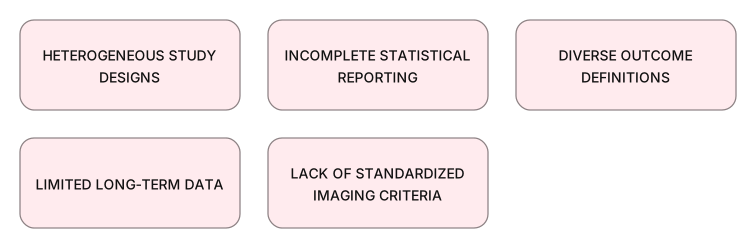
5.4 Limitations:


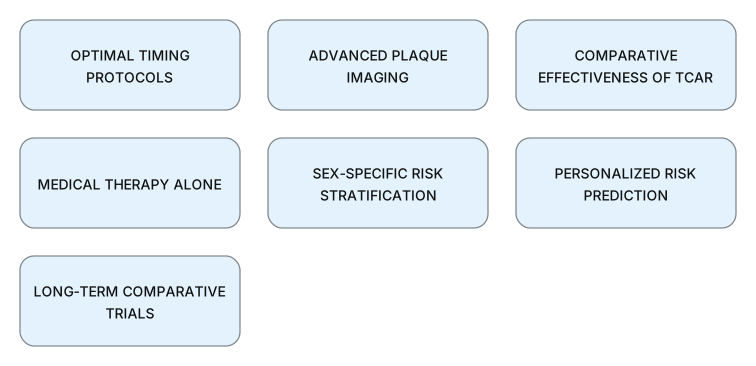
5.5 Future directions:


6) Conclusion
The perioperative stroke or death rate for carotid endarterectomy (CEA) in symptomatic carotid stenosis patients ranged from 1.7% to 8.1% [7, 22, 155, 222], with a median of 4.0% [7, 22], while for carotid artery stenting (CAS) or transfemoral carotid artery stenting (TFCAS), it ranged from 2.0% to 8.5% [5, 12, 16, 22, 75, 155, 222], with a median of 5.1% [5]. This review highlights the ongoing debate and evolving landscape of interventions for symptomatic carotid stenosis, emphasizing the importance of individualized patient assessment. The heterogeneity in study designs and outcome definitions across the literature is the single limitation that most affects certainty in drawing definitive conclusions. Clinicians should consider plaque characteristics and the timing of intervention in addition to stenosis degree when selecting revascularization strategies, with newer techniques like TCAR showing promise.

References
SAIMSARA Session Index — session.json

Figure 1. Publication-year distribution of included originals

Figure 2. Study-design distribution of included originals
Figure 2. Study-design distribution

Figure 3. Study-type (directionality) distribution of included originals
Figure 3. Directionality distribution

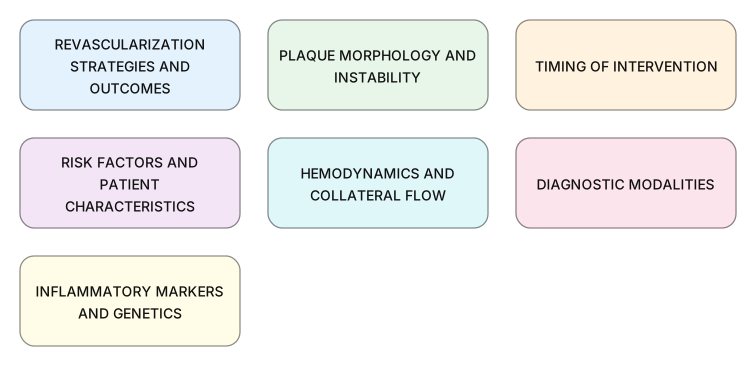
Figure 4. Main extracted research topics
Figure 4. Main extracted research topics (Results)

Figure 5. Limitations of current studies (topics)

Figure 6. Future research directions (topics)