Thoracoabdominal Aortic Aneurysm: Systematic Review with ☸️SAIMSARA.


saimsara.com Download PDF

Abstract: To systematically review and synthesize the current literature on thoracoabdominal aortic aneurysms, focusing on treatment outcomes, complications, and diagnostic and management strategies. The review utilises 240 studies with 24989 total participants (naïve ΣN). For elective endovascular repair of thoracoabdominal aortic aneurysms, the 30-day mortality rate demonstrated a median of 5.0%, with a range of 0.9% to 8.0%, highlighting the improving safety of these complex procedures. While endovascular techniques offer promising outcomes, particularly in carefully selected patients, the heterogeneity in study designs and outcome reporting significantly limits the certainty of broad conclusions. A critical next step is to establish standardized outcome reporting for TAAA repair to enable more robust comparative effectiveness research.

Keywords: Thoracoabdominal aortic aneurysm; Endovascular aneurysm repair; Spinal cord ischemia; Open surgical repair; Acute kidney injury; Physician modified endografts; Fenestrated branched EVAR; Aortic dissection; Aortic-related mortality; Biomarkers

Review Stats
Identification of studies via Semantic Scholar (all fields) Identification Screening Included Records identified:n=77215Records excluded:n=76215 Records assessed for eligibilityn=1000Records excluded:n=760 Studies included in reviewn=240 PRISMA Diagram generated by ☸️ SAIMSARA
⛛OSMA Triangle Effect-of Predictor → Outcome thoracoabdominal aortic aneurysm  →  Outcome Beneficial for patients ΣN=0 (0%) Harmful for patients ΣN=5249 (21%) Neutral ΣN=19740 (79%) 0 ⛛OSMA Triangle generated by ☸️SAIMSARA
Show OSMA legend
Outcome-Sentiment Meta-Analysis (OSMA): (LLM-only)
Frame: Effect-of Predictor → Outcome • Source: Semantic Scholar
Outcome: Outcome Typical timepoints: 30-day, 5-y. Reported metrics: %, CI, p.
Common endpoints: Common endpoints: mortality, complications, survival.
Predictor: thoracoabdominal aortic aneurysm — exposure/predictor. Routes seen: iv, intravenous. Typical comparator: control, continuous positive airway, computed tomography, those who did not….

  • 1) Beneficial for patients — Outcome with thoracoabdominal aortic aneurysm — — — ΣN=0
  • 2) Harmful for patients — Outcome with thoracoabdominal aortic aneurysm — [37], [50], [52], [102], [154], [156], [160], [164], [179], [207], [208], [211], [220], [229], [231], [236], [239] — ΣN=5249
  • 3) No clear effect — Outcome with thoracoabdominal aortic aneurysm — [1], [2], [3], [4], [5], [6], [7], [8], [9], [10], [11], [12], [13], [14], [15], [16], [17], [18], [19], [20], [21], [22], [23], [24], [25], [26], [27], [28], [29], [30], [31], [32], [33], [34], [35], [36], [38], [39], [40], [41], [42], [43], [44], [45], [46], [47], [48], [49], [51], [53], [54], [55], [56], [57], [58], [59], [60], [61], [62], [63], [64], [65], [66], [67], [68], [69], [70], [71], [72], [73], [74], [75], [76], [77], [78], [79], [80], [81], [82], [83], [84], [85], [86], [87], [88], [89], [90], [91], [92], [93], [94], [95], [96], [97], [98], [99], [100], [101], [103], [104], [105], [106], [107], [108], [109], [110], [111], [112], [113], [114], [115], [116], [117], [118], [119], [120], [121], [122], [123], [124], [125], [126], [127], [128], [129], [130], [131], [132], [133], [134], [135], [136], [137], [138], [139], [140], [141], [142], [143], [144], [145], [146], [147], [148], [149], [150], [151], [152], [153], [155], [157], [158], [159], [161], [162], [163], [165], [166], [167], [168], [169], [170], [171], [172], [173], [174], [175], [176], [177], [178], [180], [181], [182], [183], [184], [185], [186], [187], [188], [189], [190], [191], [192], [193], [194], [195], [196], [197], [198], [199], [200], [201], [202], [203], [204], [205], [206], [209], [210], [212], [213], [214], [215], [216], [217], [218], [219], [221], [222], [223], [224], [225], [226], [227], [228], [230], [232], [233], [234], [235], [237], [238], [240] — ΣN=19740
1) Introduction
Thoracoabdominal aortic aneurysms (TAAAs) represent a complex and life-threatening vascular pathology, characterized by dilation spanning both the thoracic and abdominal aorta, often involving major visceral and renal arteries [138]. Repair of TAAAs, whether through open surgical or endovascular techniques, presents significant challenges due to the extensive nature of the disease and the critical structures involved, leading to a high risk of morbidity and mortality [11, 231]. Complications such as spinal cord ischemia (SCI), acute kidney injury (AKI), and major adverse events remain prevalent, necessitating continuous advancements in surgical techniques, endovascular devices, and perioperative management strategies [5, 23, 145]. This paper synthesizes current evidence on TAAA treatment outcomes, associated complications, and emerging therapeutic and diagnostic approaches.

2) Aim
To systematically review and synthesize the current literature on thoracoabdominal aortic aneurysms, focusing on treatment outcomes, complications, and diagnostic and management strategies.

3) Methods
Systematic review with multilayer AI research agent: keyword normalization, retrieval & structuring, and paper synthesis (see SAIMSARA About section for details).


4) Results
4.1 Study characteristics:
The reviewed literature primarily consists of cohort studies, often retrospective or prospective, alongside mixed-design studies and a few randomized controlled trials. Populations range from general TAAA patients to specific subgroups such as those with post-dissection aneurysms, connective tissue disorders, or advanced age. Follow-up periods vary widely, from immediate post-operative (e.g., 72 hours [2]) to short-term (e.g., 30 days [5]), mid-term (e.g., 21 months [1]), and long-term (e.g., 5 years [8] or even 10 years [33]).

4.2 Main numerical result aligned to the query:
For elective endovascular repair of thoracoabdominal aortic aneurysms, the 30-day mortality rate demonstrated a median of 5.0% [160] across various studies. The reported range for this outcome was 0.9% to 8.0% [183, 5], indicating some heterogeneity in outcomes depending on the specific endovascular technique and patient cohort.

4.3 Topic synthesis:


5) Discussion
5.1 Principal finding:
For elective endovascular repair of thoracoabdominal aortic aneurysms, the 30-day mortality rate demonstrated a median of 5.0% [160], with a range of 0.9% to 8.0% [183, 5].

5.2 Clinical implications:


5.3 Research implications / key gaps:


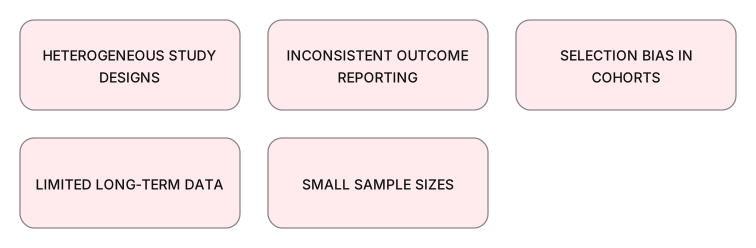
5.4 Limitations


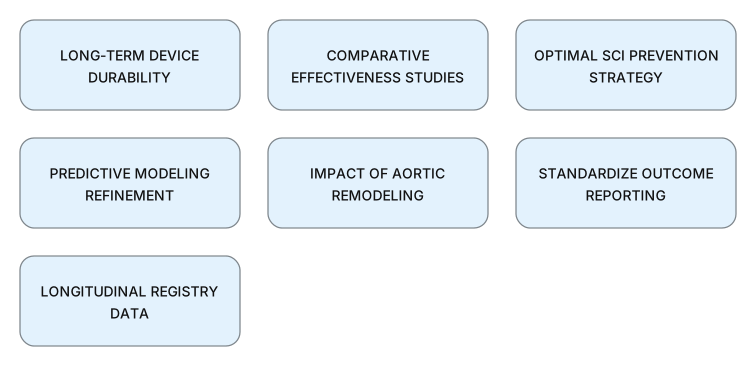
5.5 Future directions


6) Conclusion
For elective endovascular repair of thoracoabdominal aortic aneurysms, the 30-day mortality rate demonstrated a median of 5.0% [160], with a range of 0.9% to 8.0% [183, 5], highlighting the improving safety of these complex procedures. While endovascular techniques offer promising outcomes, particularly in carefully selected patients, the heterogeneity in study designs and outcome reporting significantly limits the certainty of broad conclusions. A critical next step is to establish standardized outcome reporting for TAAA repair to enable more robust comparative effectiveness research.

References
SAIMSARA Session Index — session.json

Figure 1. Publication-year distribution of included originals

Figure 2. Study-design distribution of included originals
Figure 2. Study-design distribution

Figure 3. Study-type (directionality) distribution of included originals
Figure 3. Directionality distribution

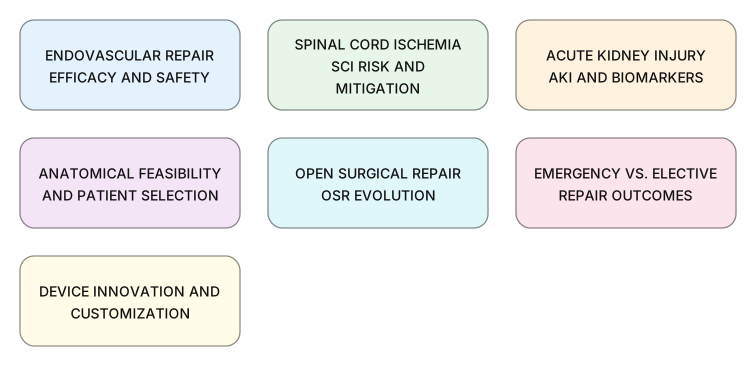
Figure 4. Main extracted research topics
Figure 4. Main extracted research topics (Results)

Figure 5. Limitations of current studies (topics)

Figure 6. Future research directions (topics)