Type B Aortic Dissection: Systematic Review with ☸️SAIMSARA.


saimsara.com Download PDF

Abstract: The aim of this paper is to systematically review and synthesize the current literature on type B aortic dissection, extracting and structuring key findings to identify predominant research themes, significant numerical results, clinical implications, and future research directions. The review utilises 382 studies with 89251 total participants (naïve ΣN). Research on type B aortic dissection spans a broad spectrum, from identifying critical prognostic factors like maximal aortic diameter, false lumen dynamics, and aortic arch morphology, to evaluating the efficacy and complications of various treatment strategies. Endovascular repair (TEVAR) has emerged as a cornerstone, demonstrating superior false lumen thrombosis compared to medical therapy, though its long-term mortality benefit for uncomplicated cases remains debated. Computational modeling and advanced imaging techniques are increasingly providing patient-specific hemodynamic insights and aiding in surgical planning. Despite advancements, the variability in reported mortality (median 6.4%, range 2-13.9%) highlights the complexity of this condition. A key limitation is the prevalence of retrospective studies, which necessitates future prospective, multi-center trials. Clinically, careful risk stratification using anatomical and inflammatory markers, coupled with personalized treatment approaches, is crucial to improve patient outcomes.

Keywords: Type B aortic dissection; False lumen; Thoracic endovascular aortic repair; Aortic remodeling; Computational fluid dynamics; 4D Flow MRI; False lumen thrombosis; Hemodynamics; Acute aortic dissection; Prognosis

Review Stats
Identification of studies via Semantic Scholar (all fields) Identification Screening Included Records identified:n=28208Records excluded:n=27208 Records assessed for eligibilityn=1000Records excluded:n=618 Studies included in reviewn=382 PRISMA Diagram generated by ☸️ SAIMSARA
⛛OSMA Triangle Effect-of Predictor → Outcome type B aortic dissection  →  Outcome Beneficial for patients ΣN=502 (1%) Harmful for patients ΣN=13591 (15%) Neutral ΣN=75158 (84%) 0 ⛛OSMA Triangle generated by ☸️SAIMSARA
Show OSMA legend
Outcome-Sentiment Meta-Analysis (OSMA): (LLM-only)
Frame: Effect-of Predictor → Outcome • Source: Semantic Scholar
Outcome: Outcome Typical timepoints: peri/post-op, 30-day. Reported metrics: %, CI, p.
Common endpoints: Common endpoints: mortality, complications, survival.
Predictor: type B aortic dissection — exposure/predictor. Routes seen: iv. Typical comparator: a rigid model, manual methods, control, optimal medical therapy….

  • 1) Beneficial for patients — Outcome with type B aortic dissection — [127] — ΣN=502
  • 2) Harmful for patients — Outcome with type B aortic dissection — [1], [28], [34], [35], [38], [40], [41], [43], [45], [50], [60], [62], [183], [189], [190], [191], [192], [194], [229], [233], [234], [235], [236], [241], [272], [273], [276], [278], [280], [284], [285], [288], [289], [290], [294], [296], [298], [352], [370] — ΣN=13591
  • 3) No clear effect — Outcome with type B aortic dissection — [2], [3], [4], [5], [6], [7], [8], [9], [10], [11], [12], [13], [14], [15], [16], [17], [18], [19], [20], [21], [22], [23], [24], [25], [26], [27], [29], [30], [31], [32], [33], [36], [37], [39], [42], [44], [46], [47], [48], [49], [51], [52], [53], [54], [55], [56], [57], [58], [59], [61], [63], [64], [65], [66], [67], [68], [69], [70], [71], [72], [73], [74], [75], [76], [77], [78], [79], [80], [81], [82], [83], [84], [85], [86], [87], [88], [89], [90], [91], [92], [93], [94], [95], [96], [97], [98], [99], [100], [101], [102], [103], [104], [105], [106], [107], [108], [109], [110], [111], [112], [113], [114], [115], [116], [117], [118], [119], [120], [121], [122], [123], [124], [125], [126], [128], [129], [130], [131], [132], [133], [134], [135], [136], [137], [138], [139], [140], [141], [142], [143], [144], [145], [146], [147], [148], [149], [150], [151], [152], [153], [154], [155], [156], [157], [158], [159], [160], [161], [162], [163], [164], [165], [166], [167], [168], [169], [170], [171], [172], [173], [174], [175], [176], [177], [178], [179], [180], [181], [182], [184], [185], [186], [187], [188], [193], [195], [196], [197], [198], [199], [200], [201], [202], [203], [204], [205], [206], [207], [208], [209], [210], [211], [212], [213], [214], [215], [216], [217], [218], [219], [220], [221], [222], [223], [224], [225], [226], [227], [228], [230], [231], [232], [237], [238], [239], [240], [242], [243], [244], [245], [246], [247], [248], [249], [250], [251], [252], [253], [254], [255], [256], [257], [258], [259], [260], [261], [262], [263], [264], [265], [266], [267], [268], [269], [270], [271], [274], [275], [277], [279], [281], [282], [283], [286], [287], [291], [292], [293], [295], [297], [299], [300], [301], [302], [303], [304], [305], [306], [307], [308], [309], [310], [311], [312], [313], [314], [315], [316], [317], [318], [319], [320], [321], [322], [323], [324], [325], [326], [327], [328], [329], [330], [331], [332], [333], [334], [335], [336], [337], [338], [339], [340], [341], [342], [343], [344], [345], [346], [347], [348], [349], [350], [351], [353], [354], [355], [356], [357], [358], [359], [360], [361], [362], [363], [364], [365], [366], [367], [368], [369], [371], [372], [373], [374], [375], [376], [377], [378], [379], [380], [381], [382] — ΣN=75158
1) Introduction
Type B aortic dissection (TBAD), characterized by an intimal tear distal to the left subclavian artery, represents a significant cardiovascular emergency with diverse clinical presentations and outcomes. The management of TBAD has evolved considerably, encompassing medical, endovascular, and open surgical strategies. Understanding the intricate interplay of anatomical, hemodynamic, and patient-specific factors is crucial for accurate diagnosis, risk stratification, and optimizing therapeutic interventions to improve patient prognosis and long-term aortic remodeling. This paper synthesizes current research on TBAD, highlighting key findings across diagnostic, prognostic, and therapeutic domains.

2) Aim
The aim of this paper is to systematically review and synthesize the current literature on type B aortic dissection, extracting and structuring key findings to identify predominant research themes, significant numerical results, clinical implications, and future research directions.

3) Methods
Systematic review with multilayer AI research agent: keyword normalization, retrieval & structuring, and paper synthesis (see SAIMSARA About section for details).


4) Results

4.1 Study characteristics
The included studies predominantly comprised retrospective cohort analyses, mixed-design investigations combining retrospective data with other methodologies, and numerous synthetic/simulation studies focusing on computational fluid dynamics (CFD) and biomechanical modeling. Patient populations were primarily Chinese or general adult cohorts with acute or chronic type B aortic dissection, with some studies focusing on specific subgroups such as Marfan syndrome patients or octogenarians. Follow-up periods varied widely, from in-hospital outcomes to long-term surveillance spanning up to 13 years.

4.2 Main numerical result aligned to the query
Across various studies, the in-hospital or 30-day mortality rate for type B aortic dissection patients, encompassing both medically and endovascularly managed cases, showed a median of 6.4% [322]. Reported rates ranged from 2% [302] to 13.9% [352], reflecting heterogeneity in patient cohorts, complication status, and treatment strategies.

4.3 Topic synthesis


5) Discussion

5.1 Principal finding
The median in-hospital or 30-day mortality rate for type B aortic dissection patients was found to be 6.4% [322], with a range from 2% to 13.9% across various studies, indicating a significant, albeit variable, immediate risk associated with this condition.

5.2 Clinical implications


5.3 Research implications / key gaps


5.4 Limitations


5.5 Future directions


6) Conclusion
Research on type B aortic dissection spans a broad spectrum, from identifying critical prognostic factors like maximal aortic diameter, false lumen dynamics, and aortic arch morphology, to evaluating the efficacy and complications of various treatment strategies. Endovascular repair (TEVAR) has emerged as a cornerstone, demonstrating superior false lumen thrombosis compared to medical therapy, though its long-term mortality benefit for uncomplicated cases remains debated. Computational modeling and advanced imaging techniques are increasingly providing patient-specific hemodynamic insights and aiding in surgical planning. Despite advancements, the variability in reported mortality (median 6.4%, range 2-13.9%) highlights the complexity of this condition. A key limitation is the prevalence of retrospective studies, which necessitates future prospective, multi-center trials. Clinically, careful risk stratification using anatomical and inflammatory markers, coupled with personalized treatment approaches, is crucial to improve patient outcomes.

References
SAIMSARA Session Index — session.json

Figure 1. Publication-year distribution of included originals

Figure 2. Study-design distribution of included originals
Figure 2. Study-design distribution

Figure 3. Study-type (directionality) distribution of included originals
Figure 3. Directionality distribution

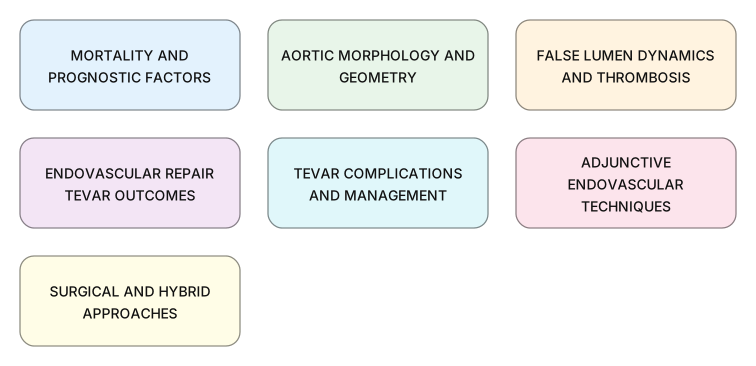
Figure 4. Main extracted research topics
Figure 4. Main extracted research topics (Results)

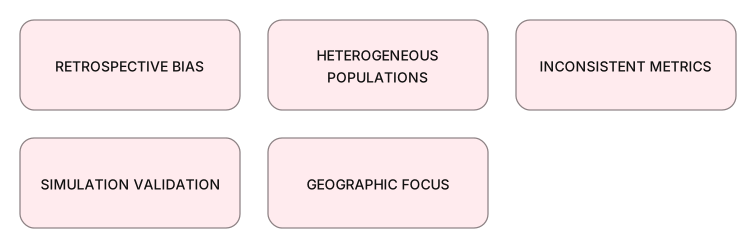
Figure 5. Limitations of current studies (topics)

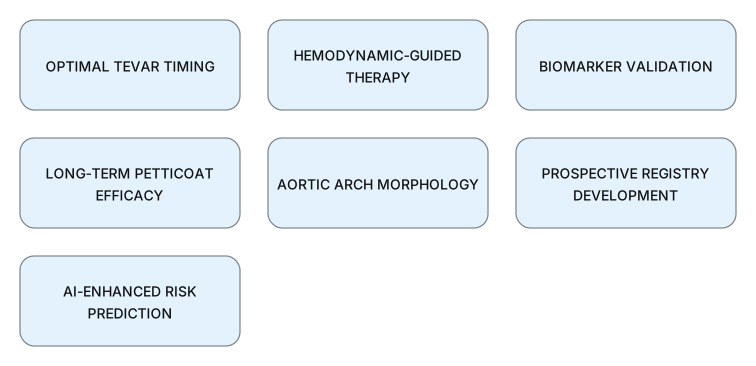
Figure 6. Future research directions (topics)