Varicose Veins and Prevalence: Systematic Review with ☸️SAIMSARA.


saimsara.com Download PDF

Abstract: This paper aims to systematically review the prevalence of varicose veins and synthesize associated demographic, occupational, and clinical factors based on the provided structured extraction summary. The review utilises 270 studies with 425805 total participants (naïve ΣN). This systematic review reveals that varicose veins represent a highly prevalent and multifactorial condition, affecting a substantial proportion of the adult population globally, with an unweighted median prevalence of 25.3%. Key research topics include the significant impact of occupational factors, strong genetic predispositions, and the influence of age, gender, and pregnancy on prevalence. The widespread reliance on cross-sectional study designs represents a limitation, hindering causal inference. Moving forward, large-scale prospective cohort studies and the implementation of standardized diagnostic protocols are crucial to enhance our understanding of varicose vein epidemiology and to inform more effective preventive and therapeutic strategies.

Keywords: Varicose veins; Prevalence; Epidemiology; Chronic venous insufficiency; Chronic venous disease; Occupational health; Nurses; Teachers; Healthcare workers; Risk factors

Review Stats
Identification of studies via Semantic Scholar (all fields) Identification Screening Included Records identified:n=869Records excluded:n=0 Records assessed for eligibilityn=869Records excluded:n=599 Studies included in reviewn=270 PRISMA Diagram generated by ☸️ SAIMSARA
⛛OSMA Triangle Effect-of Predictor → Outcome varicose veins  →  prevalence Beneficial for patients ΣN=0 (0%) Harmful for patients ΣN=4349 (1%) Neutral ΣN=421456 (99%) 0 ⛛OSMA Triangle generated by ☸️SAIMSARA
Show OSMA legend
Outcome-Sentiment Meta-Analysis (OSMA): (LLM-only)
Frame: Effect-of Predictor → Outcome • Source: Semantic Scholar
Outcome: prevalence Typical timepoints: 50-y, 60-y. Reported metrics: %, CI, p.
Common endpoints: Common endpoints: healing, complications, recurrence.
Predictor: varicose veins — exposure/predictor. Routes seen: oral, subcutaneous. Typical comparator: non-diabetic patients. a, cvd in patients with hd, men, healthy subjects….

  • 1) Beneficial for patients — prevalence with varicose veins — — — ΣN=0
  • 2) Harmful for patients — prevalence with varicose veins — [214], [226], [230] — ΣN=4349
  • 3) No clear effect — prevalence with varicose veins — [1], [2], [3], [4], [5], [6], [7], [8], [9], [10], [11], [12], [13], [14], [15], [16], [17], [18], [19], [20], [21], [22], [23], [24], [25], [26], [27], [28], [29], [30], [31], [32], [33], [34], [35], [36], [37], [38], [39], [40], [41], [42], [43], [44], [45], [46], [47], [48], [49], [50], [51], [52], [53], [54], [55], [56], [57], [58], [59], [60], [61], [62], [63], [64], [65], [66], [67], [68], [69], [70], [71], [72], [73], [74], [75], [76], [77], [78], [79], [80], [81], [82], [83], [84], [85], [86], [87], [88], [89], [90], [91], [92], [93], [94], [95], [96], [97], [98], [99], [100], [101], [102], [103], [104], [105], [106], [107], [108], [109], [110], [111], [112], [113], [114], [115], [116], [117], [118], [119], [120], [121], [122], [123], [124], [125], [126], [127], [128], [129], [130], [131], [132], [133], [134], [135], [136], [137], [138], [139], [140], [141], [142], [143], [144], [145], [146], [147], [148], [149], [150], [151], [152], [153], [154], [155], [156], [157], [158], [159], [160], [161], [162], [163], [164], [165], [166], [167], [168], [169], [170], [171], [172], [173], [174], [175], [176], [177], [178], [179], [180], [181], [182], [183], [184], [185], [186], [187], [188], [189], [190], [191], [192], [193], [194], [195], [196], [197], [198], [199], [200], [201], [202], [203], [204], [205], [206], [207], [208], [209], [210], [211], [212], [213], [215], [216], [217], [218], [219], [220], [221], [222], [223], [224], [225], [227], [228], [229], [231], [232], [233], [234], [235], [236], [237], [238], [239], [240], [241], [242], [243], [244], [245], [246], [247], [248], [249], [250], [251], [252], [253], [254], [255], [256], [257], [258], [259], [260], [261], [262], [263], [264], [265], [266], [267], [268], [269], [270] — ΣN=421456
1) Introduction
Varicose veins (VVs) represent a significant global health concern, characterized by elongated, widened, and tortuous veins, predominantly affecting the lower extremities. This condition is widely recognized as a common manifestation of chronic venous disease (CVD) or chronic venous insufficiency (CVI), impacting a substantial portion of the adult population worldwide. Its multifactorial etiology involves a complex interplay of genetic predispositions, demographic factors such as age and gender, and occupational exposures, including prolonged standing or sitting. Understanding the prevalence and associated risk factors of VVs is crucial for public health planning, early diagnosis, and targeted interventions.

2) Aim
This paper aims to systematically review the prevalence of varicose veins and synthesize associated demographic, occupational, and clinical factors based on the provided structured extraction summary.

3) Methods
Systematic review with multilayer AI research agent: keyword normalization, retrieval & structuring, and paper synthesis (see SAIMSARA About section for details).


4) Results
4.1 Study characteristics
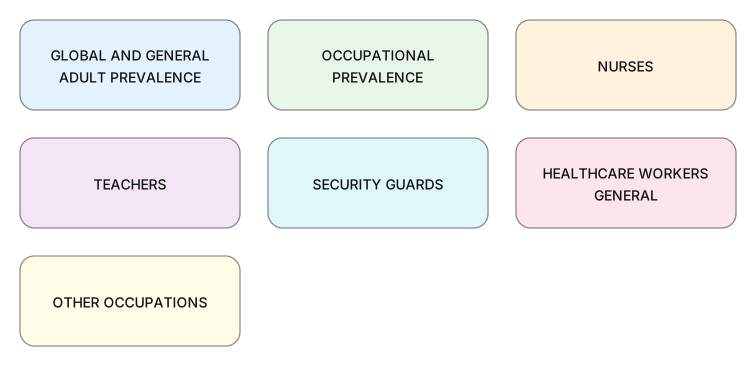
The included studies predominantly employed cross-sectional designs, with a notable presence of cohort, mixed, and experimental studies. Populations investigated were diverse, ranging from general adult populations and specific occupational groups such as nurses, teachers, and security guards, to patients with particular comorbidities or demographic profiles. Most studies did not report a follow-up period, while others had follow-ups ranging from 30 days to 10 years.

4.2 Main numerical result aligned to the query
The prevalence of varicose veins across various populations and settings demonstrates considerable heterogeneity, ranging from 0.784% [16] to 69.56% [73]. Among studies reporting a single prevalence percentage for varicose veins, the unweighted median prevalence was 25.3%. Representative prevalence figures include 8% among security guards in Lahore [1], 38% among final-year nursing students in Bangalore [4], 13.3% in the Gutenberg Health Study [131], and 60% among healthcare workers [7]. This wide range underscores the influence of population characteristics, diagnostic methods, and geographical factors on reported prevalence rates.

4.3 Topic synthesis


5) Discussion
5.1 Principal finding
This systematic review highlights a highly variable prevalence of varicose veins across different populations and settings, with an unweighted median prevalence of 25.3% (ranging from 0.784% to 69.56%) [1, 73]. This broad range underscores the complex interplay of demographic, occupational, and genetic factors influencing the condition.

5.2 Clinical implications


5.3 Research implications / key gaps


5.4 Limitations


5.5 Future directions


6) Conclusion
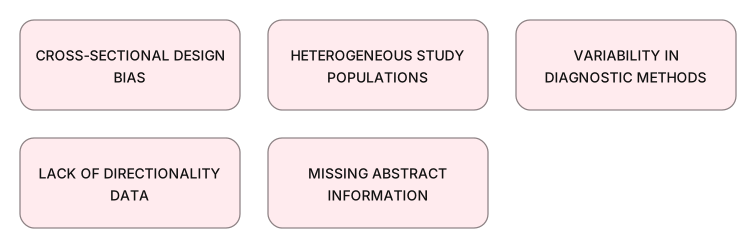
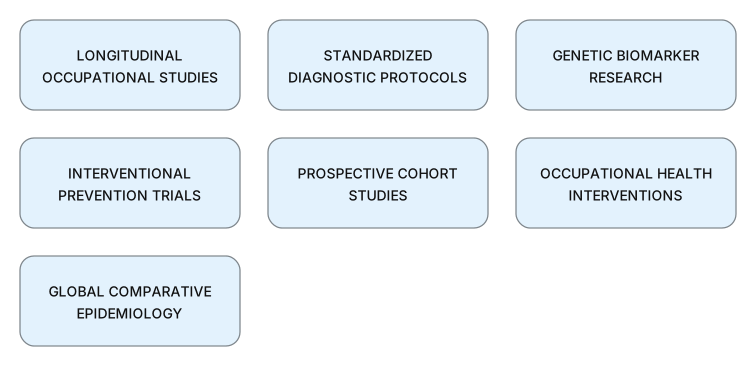
This systematic review reveals that varicose veins represent a highly prevalent and multifactorial condition, affecting a substantial proportion of the adult population globally, with an unweighted median prevalence of 25.3%. Key research topics include the significant impact of occupational factors, strong genetic predispositions, and the influence of age, gender, and pregnancy on prevalence. The widespread reliance on cross-sectional study designs represents a limitation, hindering causal inference. Moving forward, large-scale prospective cohort studies and the implementation of standardized diagnostic protocols are crucial to enhance our understanding of varicose vein epidemiology and to inform more effective preventive and therapeutic strategies.

References
SAIMSARA Session Index — session.json

Figure 1. Publication-year distribution of included originals

Figure 2. Study-design distribution of included originals
Figure 2. Study-design distribution

Figure 3. Study-type (directionality) distribution of included originals
Figure 3. Directionality distribution

Figure 4. Main extracted research topics
Figure 4. Main extracted research topics (Results)

Figure 5. Limitations of current studies (topics)

Figure 6. Future research directions (topics)