
SAIMSARA Journal

Machine Generated Science • ISSN 3054-3991

Medical Management of Abdominal Aortic Aneurysm: Scoping Review with ☸️SAIMSARA.

Cardiac & Vascular Health icon

Cardiac & Vascular Health

Issue 1, Volume 1, 2026

DOI: 10.62487/saimsara81bc962f

Editorial note
• Last update: 2026-04-12 19:52:58
What is this paper about
This review shows that the strongest medication signal in AAA is not true aneurysm-shrinking therapy, but better survival: statins and antiplatelet treatment repeatedly track with lower long-term mortality, while most putative growth-modifying drugs still rest on mixed or observational evidence. It maps where medical AAA care is already actionable today, where metformin and other candidates remain uncertain, and which pharmacologic strategies may genuinely change aneurysm biology rather than just cardiovascular risk.

Evidence preview · Did you know?
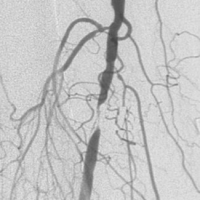
Realistic clinical scene showing an abdominal aortic aneurysm patient discussing long-term medication prevention with a vascular specialist.

AAA care is not only surveillance

Did you know? In AAA repair cohorts, statin therapy combined with antiplatelet therapy was associated with markedly better 5-year survival, with HR 0.5 reported for long-term survival.

This makes AAA medical management a survival issue, not just a rupture-watch strategy.

Medical-science image showing statin tablets beside an abdominal aortic aneurysm scan and vascular inflammation markers.

One rupture signal stands out

Did you know? Statin use was linked to lower risk of large AAA rupture, with OR 0.50 and 95% CI 0.32–0.77.

The signal suggests that anti-inflammatory and plaque-stabilizing effects may matter beyond cholesterol control.

Clinical medication-safety scene showing antiplatelet therapy, EVAR follow-up, and bleeding-risk assessment.

More medication is not always better

Did you know? After standard EVAR, dual antiplatelet therapy did not improve cardiovascular or procedural outcomes in patients without ASCVD, but increased bleeding risk with HR 1.20.

This is the safeguard message: optimization matters, but escalation needs evidence.

Swipe sideways on mobile · full evidence map opens after unlock

Abstract: The aim of this review is to synthesize current evidence regarding the impact of various pharmacological agents on AAA formation, growth rates, and clinical outcomes, including mortality and perioperative complications, across animal models and human populations. The review utilises 90 original studies with 934696 total participants (topic deduplicated ΣN). This evidence map indicates that the clearest and most consistent medication-related signal in abdominal aortic aneurysm care is improved long-term survival with statin and antiplatelet therapy, including hazard ratios around 0.5-0.6 in vascular and aneurysm repair populations and an odds ratio of 0.50 for reduced large aneurysm rupture with statin use. The mapped literature also suggests that disease-modifying effects on aneurysm growth remain less certain: metformin showed slower enlargement in observational cohorts, including about -0.23 mm/year in one veteran study, whereas a randomized trial in non-diabetic patients found no significant diameter benefit over 18 months. Additional signals support a role for targeted perioperative and secondary prevention strategies, such as avoiding routine dual antiplatelet escalation after endovascular aneurysm repair because bleeding risk increased (hazard ratio 1.20) without clear outcome gain, while adherence to preventive therapy after diagnosis remained incomplete at roughly 57-60% among baseline non-users. Mechanistic animal studies further highlight vascular smooth muscle cell senescence and inflammasome pathways as plausible therapeutic targets, but translation to human benefit is still limited by heterogeneous and largely observational clinical evidence. In practice, the current map supports aggressive cardiovascular risk reduction as the most actionable medication strategy in abdominal aortic aneurysm, while future research should prioritize adequately powered randomized trials and standardized longitudinal studies to clarify which agents truly slow aneurysm growth or reduce aneurysm-specific events.

Keywords: Abdominal aortic aneurysm; Statin therapy; Metformin; Antiplatelet agents; Antihypertensive medication; Aneurysm growth rate; Beta-blockers; VSMC senescence; SIRT1 pathway; Perioperative mortality

Review Stats

Get access to the full paper

Unlock the full evidence map

The full evidence review, including the Introduction, Methods, Results, Discussion, Conclusion, figures, and complete reference index, opens after purchase or sign-in. The Evidence Object JSON is a separate machine-readable evidence product: a concentrated synthesis of results, topic-level evidence, and discussion across original and non-original studies. It can be directly input into your LLM, agent, or RAG workflow.

Reference Index (69)