☸️SAIMSARA Journal
Online First Issues About Impressum

AI-Native Scoping Reviews & Evidence Mapping

ISSN 3054-3991 · ISSN record ↗
The Journal publishes machine-generated scoping reviews in medical and life sciences under human-editorial oversight, with transparent citations and versioning. Online First articles are continuously released by registered users. Issues are organized by domain and linked to an interactive AI RAG chatbot.
Editor's Choice papers are marked with .

Read aims & scope, publishing model & policies →

Issues

Domain issues provide a same-page filtered article view and a paired RAG agent.
Cardiac & Vascular Health icon
Cardiac & Vascular Health
Issue 1 • Vol 1 (2026) in progress

Longevity & Public Health icon
Longevity & Public Health
Issue 2 • Vol 1 (2026) in progress

Digital Health icon
Digital Health
Issue 3 • Vol 1 (2026) in progress
Mental Health icon
Mental Health
Issue 4 • Vol 1 (2026) in progress

Sports Medicine icon
Sports Medicine
Issue 5 • Vol 1 (2026) in progress
Pain Medicine icon
Pain Medicine
Issue 6 • Vol 1 (2026) in progress
Infectious Diseases icon
Infectious Diseases
Issue 7 • Vol 1 (2026) in progress
Skin & Aesthetics icon
Skin & Aesthetics
Issue 8 • Vol 1 (2026) in progress
To propose a new domain issue or suggest curation criteria, use Impressum contact.
Reset All issues
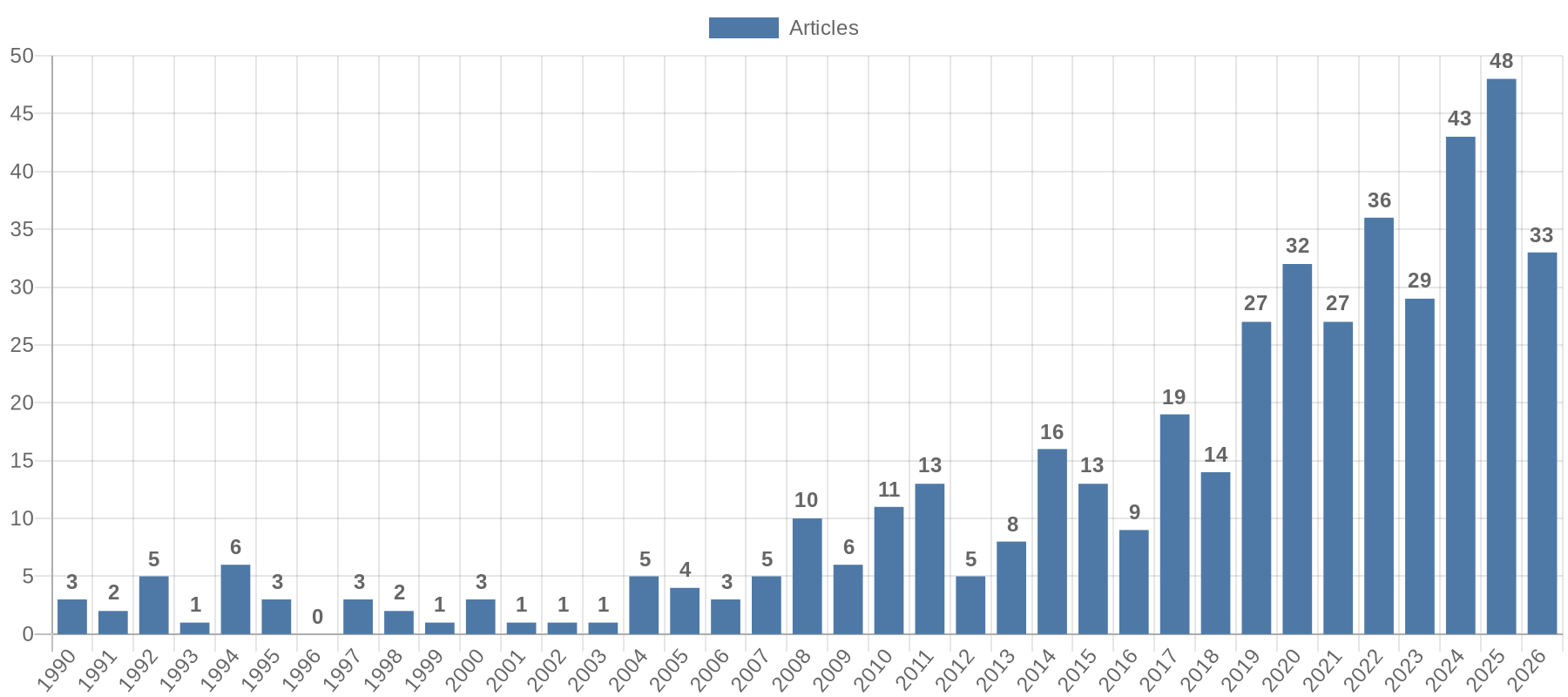
Online First: 81 article(s) • Page 1 / 7 Full archive (source) →
Showing: Cardiac & Vascular Health · Chat with this issue →
Cardiac & Vascular Health Cardiac & Vascular Health
Snuffbox AVF emerges as a clinically credible distal-first hemodialysis access strategy, offering patency broadly comparable to wrist radiocephalic fistulas while preserving future access options. The full SAIMSARA evidence map is worth reading because it separates durable signals from selection-dependent outcomes, complications, reintervention needs, vessel-diameter thresholds, and long-term uncertainty across the available snuffbox fistula literature.
Updated: 2026-05-15 • ID: snuffbox-hemodialysis-fistula-20260515-094757-785f8c8b • Editorial check 2026-05-15
Cardiac & Vascular Health Cardiac & Vascular Health
Cannabis is no longer a peripheral cardiovascular question: this evidence map shows repeated risk signals for MI, stroke, arrhythmias, perioperative events, vascular stiffness, and acute THC-driven hemodynamic stress, while also separating mixed or null findings for hypertension and atrial fibrillation. The full SAIMSARA evidence map is worth reading because it organizes 259 original studies into clinically usable risk patterns across daily use, CUD, medical cannabis, CBD, synthetic cannabinoids, pregnancy, young ACS patients, surgery, and vulnerable cardiovascular populations.
Updated: 2026-05-15 • ID: cannabis-cardiovascular-20260513-073808-242a8e10 • Editorial check 2026-05-15
Cardiac & Vascular Health Cardiac & Vascular Health
Endovascular hemodialysis AVF care is no longer only a rescue technique: the mapped evidence shows a full access-life-cycle strategy, from percutaneous creation and assisted maturation to repeated salvage of stenosed, immature, or thrombosed fistulas. The full SAIMSARA evidence map gives a structured, reference-linked view of which techniques work, where patency fails, how often reintervention is needed, and which patient or lesion phenotypes may benefit most.
Updated: 2026-05-14 • ID: endovascular-hemodialysis-fistula-20260512-113354-f23bb028
Cardiac & Vascular Health Cardiac & Vascular Health
This review shows that the strongest medication signal in AAA is not true aneurysm-shrinking therapy, but better survival: statins and antiplatelet treatment repeatedly track with lower long-term mortality, while most putative growth-modifying drugs still rest on mixed or observational evidence. It maps where medical AAA care is already actionable today, where metformin and other candidates remain uncertain, and which pharmacologic strategies may genuinely change aneurysm biology rather than just cardiovascular risk.
Updated: 2026-05-13 • ID: abdominal-aortic-aneurysm-medication-20260213-140326-81bc962f • Editorial check 2026-04-12
Cardiac & Vascular Health Cardiac & Vascular Health
PAD is not failing for lack of options — it is failing because the right options are too often used in isolation, too late, or not at all. This review shows where the strongest treatment signals truly are, from rivaroxaban-plus-aspirin and exercise therapy to IVUS-guided revascularization, and why real progress depends on combining them into one strategy.
Updated: 2026-05-13 • ID: peripheral-artery-disease-treatment-20260127-230342-fa4dc087 • Editorial check 2026-05-14
Cardiac & Vascular Health Cardiac & Vascular Health
Popliteal venous aneurysm is rare, but the mapped evidence shows why it matters: recurrent PE, saccular morphology, thrombus burden, and size thresholds above 20–25 mm repeatedly point toward clinically relevant embolic risk. The full SAIMSARA evidence map gives humans and AI agents a structured, reference-linked view of presentation patterns, operative strategies, patency outcomes, anticoagulation limits, and unresolved thresholds for intervention.
Updated: 2026-05-13 • ID: popliteal-vein-aneurysm-20260502-183122-ee3198be • Editorial check 2026-05-10
Cardiac & Vascular Health Cardiac & Vascular Health
This paper shows that Rutherford classification is not just a staging label in acute limb ischemia, but one of the clearest bedside signals for who can still be saved, who needs immediate action, and where delay turns threatened limb into loss. The full read is worth it because it separates the real prognostic and treatment signal from observational noise—showing where endovascular therapy performs well, where Rutherford IIb becomes the decisive tipping point, and why timing still matters even within the same severity class.
Updated: 2026-05-13 • ID: acute-limb-ischemia-rutherford-classification-20260213-224153-0aca7d8d • Editorial check 2026-03-29
Cardiac & Vascular Health Cardiac & Vascular Health
Superior vena cava syndrome is no longer only an oncologic emergency: this evidence map shows how malignancy, catheters, pacemaker leads, dialysis access, thrombosis, pediatric mediastinal tumors, and procedural risks converge in one clinically complex syndrome. The full SAIMSARA evidence map gives human- and machine-readable access to 1,185 original studies, clarifying when to prioritize tissue diagnosis, endovascular stenting, oncologic therapy, airway planning, or benign-disease venous reconstruction.
Updated: 2026-05-12 • ID: superior-vena-cava-syndrome-20260511-212909-ea077b6a • Editorial check 2026-05-12
Cardiac & Vascular Health Cardiac & Vascular Health
Varicose veins are not a cosmetic footnote: this evidence map shows a highly variable global burden shaped by age, sex, BMI, family history, pregnancy, and standing-intensive work, with prevalence ranging from rare in some rural populations to over 70% in nursing cohorts. The full SAIMSARA human-readable review and machine-readable JSON provide structured, reference-linked evidence across 174 original studies and 1,652,112 participants, covering prevalence, occupational risk, thrombotic associations, venous reflux, genetics, and underrepresented population gaps.
Updated: 2026-05-11 • ID: varicose-veins-prevalence-20260506-103632-4781b50b
Cardiac & Vascular Health Cardiac & Vascular Health
Renal artery stenosis is not a simple “stent or no stent” disease: this map separates broad neutral randomized evidence from the high-risk phenotypes where revascularization may still matter. The full SAIMSARA evidence map gives clinicians and AI agents a structured, reference-linked view of prevalence, imaging accuracy, medical therapy, physiology-guided selection, transplant/pediatric RAS, and remaining gaps.
Updated: 2026-05-10 • ID: renal-artery-stenosis-20260504-122918-dd7acfef • Editorial check 2026-05-10
Cardiac & Vascular Health Cardiac & Vascular Health
Stem cell therapy for cardiovascular disease is biologically compelling but clinically heterogeneous: this map separates the strongest human signals from protocol-only, preclinical, safety, and mechanistic evidence. The full SAIMSARA evidence map gives humans and AI agents a structured, reference-linked view of LVEF signals, refractory-angina outcomes, cell retention barriers, HSCT cardiotoxicity, exosome platforms, and the translational gaps still blocking routine clinical use.
Updated: 2026-05-10 • ID: stem-cell-therapy-cardiovascular-disease-20260503-140044-c42ee27d • Editorial check 2026-05-10
Cardiac & Vascular Health Cardiac & Vascular Health
Popliteal artery aneurysm is rare in the general population, but the signal changes sharply in AAA/SAA cohorts, where targeted screening may reveal clinically important bilateral and systemic aneurysmal disease. The full SAIMSARA evidence map gives humans and AI agents a structured, reference-linked view of prevalence, sex-specific presentation, co-prevalence, and emerging biological risk signals.
Updated: 2026-05-10 • ID: popliteal-artery-aneurysm-prevalence-20260502-182832-497a2936
© 2026 SAIMSARA Journal • Impressum • Published by ML in Health Science GbR